Redecorating Your Home Before the Sale: 2 Pine Ridge Drive Case Study

10.26.19 | Toronto Real Estate News

We’ve all heard the expression, ‘you can’t see the forest for the trees.’ This colloquialism also applies to people who are trying to sell their homes. While space filled with personal knickknacks that is set up specifically for the needs of you and your family may serve you well, it might also be working against getting top dollar for your home. Simple tweaks to your space may be standing between you and the sale of your home. So, what are you going to do about it?

The answer is simple: enlist the help of capable professionals dedicated to coming in with an eye for what will appeal to buyers. How to increase the value of a space on a budget is key to getting optimal value for your home. Professional Stager Luanne Kanerva from Katu Design and Ann Christie – Owner Declutter and Downsize work every day with clients to make sure that their home is putting its best face forward.  We’ve talked to them about how small changes can make a huge difference and the many ways they help homeowners channel the powers of decluttering and staging, all in the name of getting the best price possible for your home.

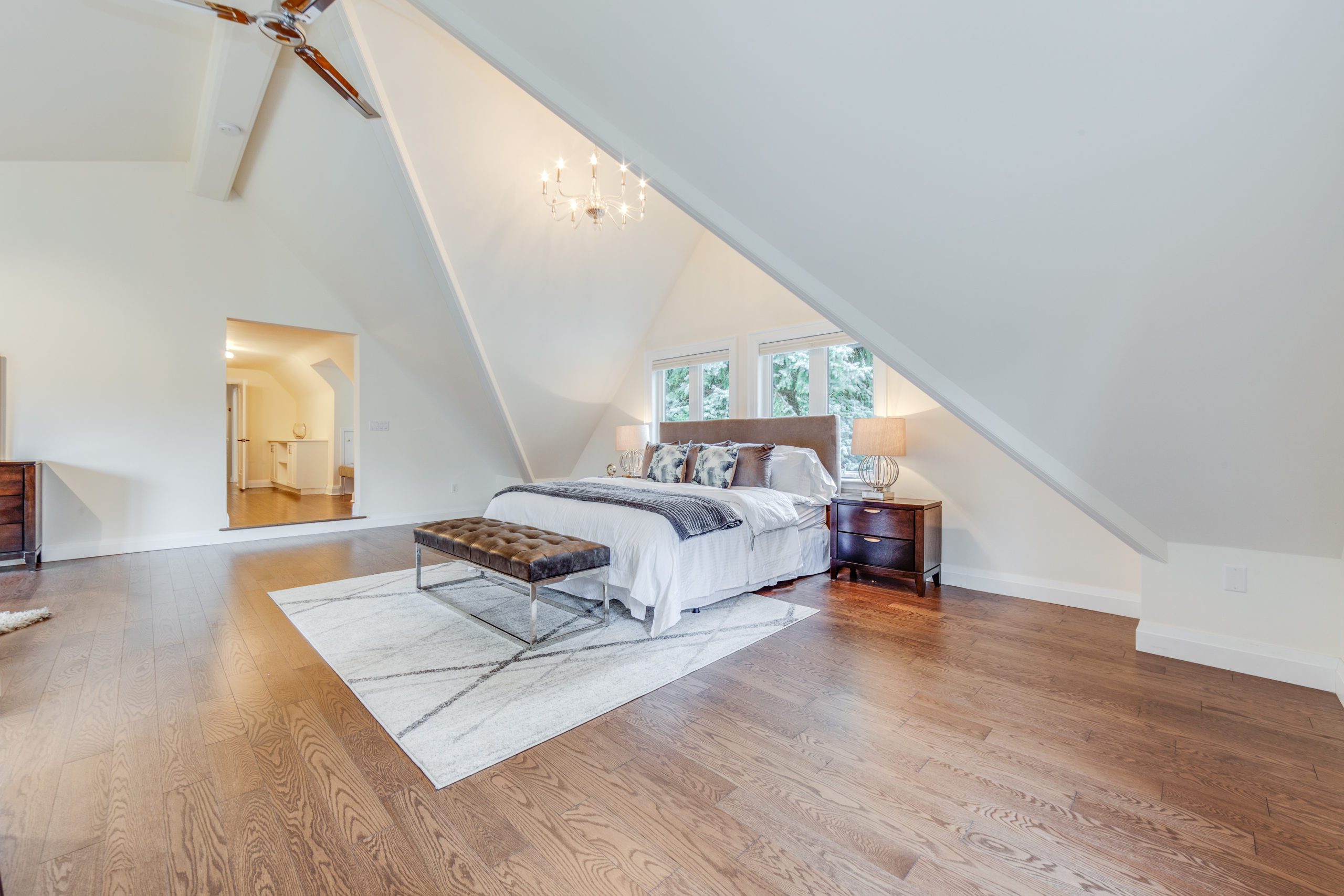
Since we recently listed 2 Pine Ridge Drive and Luanne Kanerva had the task of staging the property. She brought her 20 years of experience to her work and turned the place around by focusing on showcasing exactly what most buyers want. In this article you can find photos of the property before it was decluttered and staged to see the real value of staging. The difference is huge, see for yourself.

Decluttering when selling is all about making the best first impression

In terms of creating the perfect presentation for potential buyers Ann says,

The ultimate goal is to have your space be warm and welcoming without being overcrowded.


2 Pine Ridge Drive Master Bedroom Before

2 Pine Ridge Drive Master Bedroom After

Ann says the main reason someone should declutter their home is to ensure they make a solid first impression with potential buyers and in turn maximize the dollar value of the property.

You want potential buyers to be able to envision themselves living in your home and to understand the purpose of each room and/or space.


Read more: Real Estate Marketing: Every House Has Its Buyer


Start from the Top

Decluttering can be overwhelming. Many people don’t know where to start. Ann recommends tackling counter tops and surfaces first.

Make sure these areas are cleared of clutter leaving a few key items on them that add character without clutter.


2 Pine Ridge Drive Office Before

2 Pine Ridge Drive Office After

2 Pine Ridge Drive Office After 2

When going through closet and storage space Ann recommends a thorough tidy of the space with organized items stored off the floor, not overcrowded, and to showcase that there is a lot of storage space for a new homeowner. Luanne says that at 2 Pine Ridge Drive:

The home had a media room in the basement with shelves all the way around. We were able to show this area off as a premium storage space.  Something that everyone is looking for in a home.


2 Pine Ridge Drive Basement Media Room Before

2 Pine Ridge Drive Basement Media Room After

Find a purpose for each area of the home

We could all use our homes more effectively, with each area having a clear-cut purpose. This is something that home stagers like Luanne work towards. The advantage of hiring an experienced stager is that they can recommend uses for any space and help homeowners problem solve. Luanne says:

In any home there are spaces that don’t have defined uses. When buyers are looking at a home you don’t want them to see rooms that aren’t used, you want to show that each area of the home provides a useful space. When the effective use of space is apparent, that’s the home that’s going to sell; that’s the one that’s going to get the most money.

That’s why Luanne solved the problem of the master bedroom not having enough closet space by turning one room, which was previously unused or used as a kind-of nursery sideroom, into a walk-in closet:

Through renovation this particular space had built a beautiful master suite over the garage but it didn’t have a closet. Since to get to the master suite you needed to walk through the original bedroom, we created a spacious walk-in closet to get to the bedroom retreat. Instead of being ‘the room without a closet’ the walk-in closet we created in a room that previously had no use became a showpiece for the entire home.


Unused Master Bedroom Space Before

2 Pine Ridge Drive New Closet

2 Pine Ridge Drive New Closet

A fresh coat of paint is the most effective home upgrade

Luanne says something as simple as a coat of paint is something that can make a huge impact on bringing a space together. As a stager, in addition to recommending tweaks to a home like painting, Luanne uses her expert eye to provide colour recommendations that will make the space shine.  Recently, when working on a project at 2 Pine Ridge Drive the entire home was repainted.

The home was on the market and the house on a whole from the outside, with a beautiful landscaped lawn, wasn’t cohesive with the home’s interior.

Her solution – paint.

We modernized the whole house, which as a recommendation, in general you can’t go wrong with paint. It’s the cheapest, easiest, and most effective way to upgrade a space. People don’t necessarily notice fresh paint but they notice the house.


2 Pine Ridge Drive Living Room Before the Painting

2 Pine Ridge Drive Living Room After the Painting

2 Pine Ridge Drive Kitchen Before

2 Pine Ridge Drive Kitchen After

The furniture should suit the value of the room

Getting the right furniture in a room can create a big impact. Luanne says with respect to her work on Pine Ridge,

The furniture in the living room was big and it gave off more of a rec room vibe, and it didn’t line up with the value of the space. Instead the use of furniture to create both a living room and dining room showcased the size of the space.


2 Pine Ridge Drive Living Room Before – Old Furniture

2 Pine Ridge Drive Living Room – New More Suitable Furniture

Decluttering will also help you move when the time comes

Ann also reminds those preparing for a move that a solid declutter will help them when the time comes to pack up boxes and clear out. Since packing is generally the most time-consuming portion of a move, the more you sort, sell, donate, trash, or put in storage, the easier things are going to be as moving day approaches. Ann says,

By decluttering, the current homeowner has organized themselves and is already well prepared for the move to their new space. They know that the items they have in their current house are the items they would like to move to their new house.

To keep your home sale as stress-free as possible, we recommend reaching out to professionals. By hiring professionals to declutter and organize your home, you’re solving two problems most sellers have – preparing the home for sale and organizing your own possesions and deciding what you’re going to keep in your new home.


Read more: Downsizing? Let’s call it Rightsizing  


If you’re thinking about putting your home on the market, don’t waste any time, contact us and let us guide you through the process. We have a great network of stages, movers and declutterers to make your life easier and the sale of your home as quick and painless as possible.

cmhc first-time home buyer incentive

The CMHC’s First-Time Home Buyer Incentive is of Limited Value to Toronto Buyers

10.15.19 | Toronto Real Estate News

Buying a home in Toronto is expensive, and for many young first-time buyers, finding an affordable home may even seem impossible these days. With this in mind, the federal government recently launched the First-Time Home Buyer Incentive (FTHBI) on September 2, 2019. This article will explain the details of the FTHBI, look at the advantages and disadvantages, and whether or not it’s a good choice for you.


READ: Who is the the Toronto Millennial Buyer?


What is the FTHBI and how does it work?

Basically, if you are a first-time home buyer in Canada, and your down payment is less than 20 per cent of the home’s price, the federal government will pay either 5 per cent or 10 per cent of the price with the goal of lowering your monthly mortgage payment. Unlike borrowing from a bank, you don’t need to pay interest on the FTHBI, nor do you need to make ongoing payments.

In terms of how much the Incentive is, that depends on if you’re buying a re-sale home or a new construction. For re-sale homes, the government will contribute 5 per cent of the home purchase price. For a new construction, the government will contribute 5 per cent or 10 per cent of the home purchase price.

If you use the Incentive program, you need to pay it back to the federal government within 25 years or at the time you sell the property, whichever happens first. You can also pay back the Incentive early without any penalty.

A key characteristic of the FTHBI is that the amount you pay back is based on the market value of your home at the time you pay it back, not at the time you bought it. So if your property rises in value, you pay the government more than what they gave you. If your property drops in value, you pay the government less than what they gave you.

For example, let’s say Jane purchased her first home for $400,000 and got a 5 per cent Incentive from the federal government. The Incentive amount she gets is $20,000 at the time of purchase. Years later, Jane wants to repay the Incentive to the federal government. Now, her property’s fair market value increased to $500,000, so she needs to pay back $25,000. If instead, the property’s value dropped to $300,000, then Jane would need to pay back $15,000.

What are the requirements to use the FTHBI? 

Not all first-time home buyers qualify. In addition to being a first-time home buyer, you need to meet these conditions:

  1. You need to have the minimum down payment for the property you want to buy*
  2. Your maximum qualifying income** is $120,000
  3. Your total borrowing from all sources is no more than 4 times your qualifying income
  4. You also need to be a Canadian citizen, permanent resident, or a non-permanent resident who is legally allowed to work in Canada
  5. You are buying this first home for the purpose of living there, not as an investment property.

*The minimum down payment you need to have is 5 per cent for the first $500,000 of a home’s price, and then 10 per cent for any more over $500,000. For example, if the home’s price is $600,000, you need a down payment of $25,000 + $10,000 = $35,000.

**Your qualifying income includes your annual salary (before taxes), investment income, and rental income. If you are applying for the Incentive with a partner, you have to add your qualifying incomes together and make sure it’s $120,000 or less.


READ: Shopping for Mortgages -Millennials vs Baby Boomers 


What are the advantages of the FTHBI program?

If you are a first-time home buyer with a qualifying income of less than $120,000 this program can be a big help.

Let’s say you want to buy a $400,000 condo in Toronto. You need to save at minimum 5 per cent ($20,000) regardless of whether you apply for the FTHBI. After you’ve saved 5 per cent, the FTHBI can give you another 5 per cent ($20,000). That will reduce your monthly mortgage from $2,964 to $2,736. Over a year, that’s almost $3,000 in savings! Furthermore, you can wait up to 25 years in the future to pay back the Incentive amount without worrying about paying interest.

For most people, as they get older, their financial situation improves. So when you do need to pay back the FTHBI in the future, you should be at a much better financial position to do so. However, if you are able to pay back sooner, you should take advantage of the fact that there is no penalty for earlier repayment and get out of that debt before you decide to make any renovations and increase the value of the property.

What are the disadvantages of the FTHBI program?

Arguably the biggest disadvantage of the FTHBI program is that it’s not very helpful to people in expensive housing markets like Toronto and Vancouver. Because of this drawback, a CBC opinions article declared the FTHBI to be of “limited value”.

Since your maximum borrowing is limited to four times your qualifying income, the maximum house price you can get in this program is 4 times your qualifying income plus whatever amount you’ve saved up. On the other hand, if you don’t use the FTHBI, you can afford a house price that is 20 times whatever amount you’ve saved up.

For example, let’s say your qualifying income is $100,000 and you saved $25,000. Without the FTHBI, you could buy a home that’s $500,000 using the $25,000 as a 5 per cent down payment and then borrowing the rest from the bank. But with the FTHBI, you can only borrow $400,000 maximum, limiting the purchasing price of your home to $425,000.

According to RBC’s June 2019 Housing Affordability Report, the average house price in Toronto was about $1 million, and the average condo price was about $538,000. That means houses most likely won’t qualify for the FTHBI, but some condos may qualify.

The thing with markets like Toronto and Vancouver though is that we expect property prices to continue rising, so if you do happen to use the FTHBI to get a condo, you’ll probably be paying more back to the government in the future.

Should I apply for the FTHBI? 

If you are looking for a detached home in the Greater Toronto Area, the prices will be too high to qualify for the FTHBI. But if you are interested in a condo, the price may qualify. In that case, the FTHBI can help you reduce your monthly mortgage payments. However, you should keep in mind that the condo prices will keep on rising in Toronto and you will have to pay back more than you borrowed.

Celia Alves, a Sales Representative from Sotheby’s International Realty Canada, comments:

The program Is essentially a shared equity program – where the Canada Mortgage and Housing Corporation (CMHC) contributes part of the down payment in exchange for sharing in the appreciation of the property when you sell the home. But with a maximum purchase price of $565,000 it won’t be life changing for buyers in the Toronto market today.

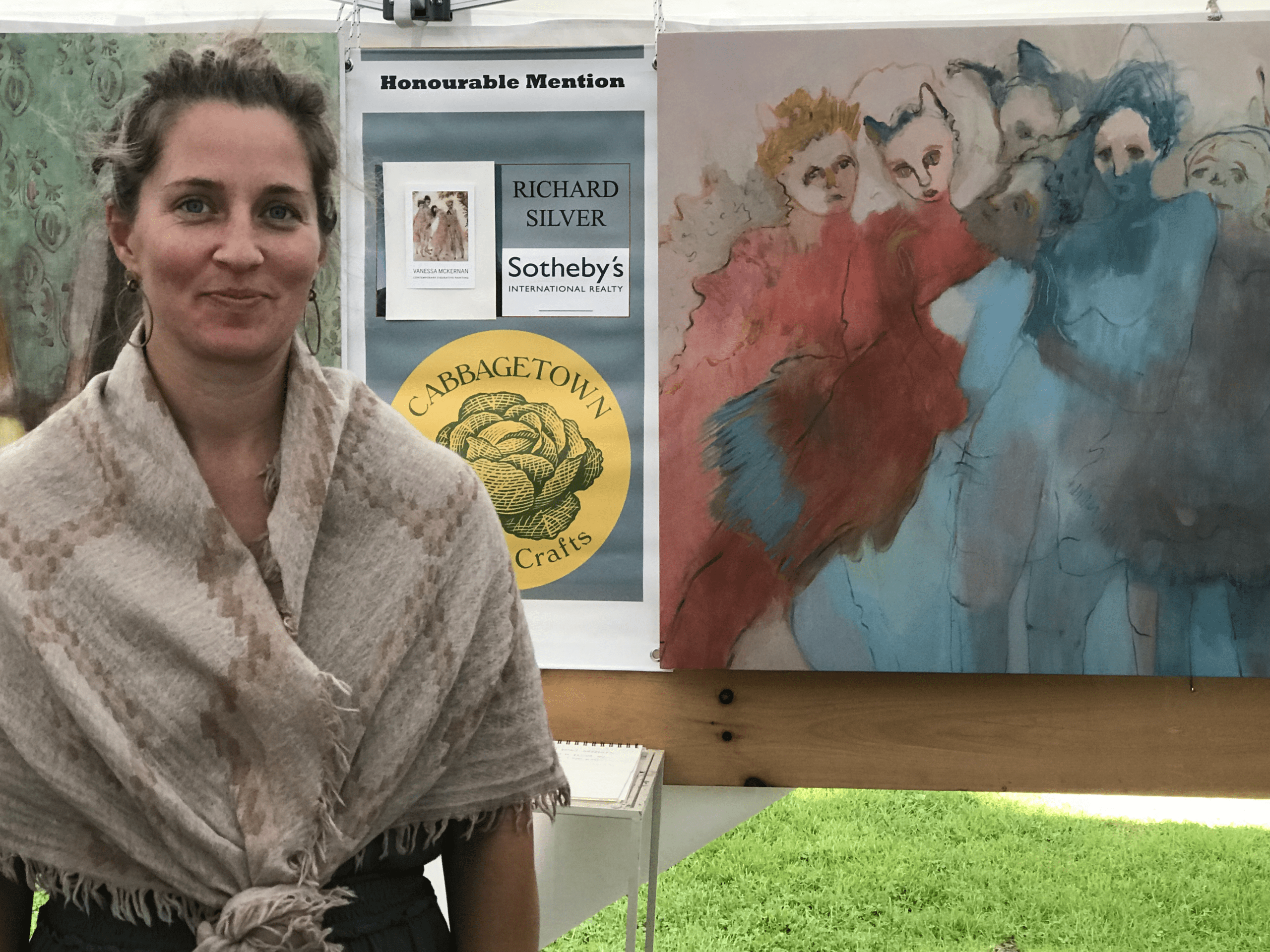
Cabbagetown Arts and Crafts Fair Winner: Vanessa McKernan

Cabbagetown Arts and Crafts Fair Winner: Vanessa McKernan

09.26.19 | People of Toronto

Cabbagetown is known for having one of the most vibrant and engaged communities within the City of Toronto. One way that the neighbourhood showcases its commitment to the arts is through The Cabbagetown Arts and Crafts Show. The event is held within Riverdale Park West during the second weekend of September each year and has become a staple of the downtown neighbourhood since 1988. The Cabbagetown Arts and Craft Show provides artists and patrons with an opportunity to sell and buy work created by the many talented people within the Toronto art community.

The winner of the 2019 Richard Silver Award is the gifted and accomplished Toronto-based visual artist Vanessa McKernan. Following her win Vanessa McKernan shares the inspiration behind much of her work and artistic process.

Vanessa McKernan in studio

How do you decide which art shows to participate in and showcase your work? Why did you select the Cabbagetown Arts and Crafts Show?

I decide which shows to participate in based on what’s going on in my personal and professional life schedule wise. I try not to pack too much in so I can ensure that I am not rushing the process of making paintings. A good friend and talented jewelry designer, Michelle Ross, always raves about the Cabbagetown Arts and Crafts festival and encouraged me to give it a try. So, this year I did!

How has being from a large, artistic family with eight children, influenced your views on artistic expression?

Artistic expression through music, theatre, and dance was always encouraged in my family. I carried with me into adulthood the belief that expression through the arts is a powerful, therapeutic, essential component to every life.


Living Room, oil and wax on panel / 18 x 24in / 2016

What was the catalyst for shifting your choice of artistic expression from dance to painting? Do you still dance?

I sort of fell into dance because my older sister was very passionate about it and I wanted to be just like her. I enjoyed dancing but never wanted to pursue it professionally and I hated performing. It gave me a lot of anxiety. I had been drawing my whole life so the decision to apply to Concordia for Studio Art in my early twenties and the shift to visual arts, came very naturally. Since giving up dance I have maintained a yoga practice and in the past five years or so I have taken a few Butoh (a form of Japanese dance) workshops with Denise Fujiwara, whose work I admire greatly.

What are some of the most important things you learned during your BFA Studies?

My painting teacher Leopold Plotek used to tell me, ‘Kill what you love’. What he meant was that if you are stuck compositionally it’s good to wipe out or paint over the part of the painting you deem most precious. If you kill what you love usually the composition opens up, and there are all kinds of new possibilities within it.

What lessons have you learned since, that a formal education can’t provide?

I have learned a lot about the business of being an artist and how to support yourself financially while maintaining a studio practice. They forgot to talk about that in art school!

Vanessa McKernan Art
Falling, oil on panel / 36 x 36in

Has your background in dance had any influence on your painting of people/the way you see and paint the human body?

Oh definitely. I can’t escape the foot of the dancer when I draw figures and I am always working with themes of costume and performance.

What is your artistic process when creating a new piece of work?

I like to start with a narrative of some sort, a dream, something I read in a book, or saw on the news. The narrative acts as a gateway for me and gives me something concrete to put on the canvas in terms of subjects or setting. As I work on the piece in the following days or weeks, I try not to hold on to the original storyline and instead let the composition go in a different direction, allowing a new narrative to emerge. It’s almost as if at a certain point I try to let the more unconscious intuitive parts of myself take the lead and then watch how those actions mingle with the underpainting that was the original story. The work becomes a layering of paint and also a layering of narratives.

What upcoming projects are you most excited about?

I just started a residency at the Toronto Heliconian Club, a women’s arts club founded in 1909. They provide a setting for engagement in the arts on many levels, across many disciplines. I will have an exhibition there in June 2020 and am planning several large paintings that explore themes around group dynamics.

Has becoming a parent influenced your work at all? How?

Parenting has had a HUGE impact on when I can paint. My studio is outside of my home so no late-night sessions anymore. I work during the day while my son is in daycare and leave the studio promptly at 4:30pm. In terms of how it has affected what I paint, a lot of my work is auto-biographical and I think parenting has put me back in touch with my own childhood and my inner child. Working with those themes has been both scary and empowering for me.


Catching Flowers, oil and graphite on mylar / 24 x 24in

What is the most challenging thing about working in visual arts? What is the most rewarding?

I find navigating the gallery scene really challenging. By this I mean figuring out where your work fits and trying to get the gallery owners to look at it. Most galleries prefer not to take submissions so it’s hard to figure out how to get your foot in the door.

The most rewarding part of being a visual artist is in those golden moments when a truth about the world or yourself is revealed through the process of painting.

What is something that most people don’t know about you that you’d like to share?

I’m having my second child in February!

What are your favourite places to experience art, gain inspiration, in and around Toronto?

Soulpepper Theatre, Canadian Stage, and the AGO.

Vanessa McKernan Painting

What artistic achievements are you most proud of?

I don’t know if this counts as an artistic achievement, but I am really proud of balancing being a mom and being an artist and continuing to prioritize my studio practice. I was so afraid I would lose that when deciding to have kids, and I didn’t.

What’s the best way for people to find out about your upcoming projects and see your work?

My website vanessamckernan.com and my Instagram account @vainter

People of Toronto: Gorett Reis

09.3.19 | People of Toronto

There is a lot of curiosity around personal coaches, who they are, what they do, and how they can help guide a person to reaching their goals and living ‘their best life.’

Gorett Reis is a Certified Life Coach, Career Coach and a speaker who helps stuck, stressed, and dissatisfied professionals advance their career or find direction so that they can achieve greater fulfillment. As a speaker, she talks about how to attain more life and career fulfilment through live events, Lunch & Learns, webinars, and podcasts. As someone who re-evaluated her career choices and started over again, Gorett is well-suited to helping people get their life on track. She is someone who embodies the spirit of ‘practice what you preach.’

Every day Gorett uses her own personal experiences, training and commitment to growth and education to help her clients, who range in background from actors to high level executives.

Your background is in teaching, what made you decide to become a teacher?

I decided to become a teacher when a university friend of mine recognized I would be a ‘good teacher.’ I wasn’t sure what I wanted to do the first and second year at Waterloo (my first university) so I thought I should pursue it. I liked helping people and had taught and tutored people in the past so I thought it could work.

Was there a specific pivotal, ‘aha’ moment that made you decide to change the trajectory of your career?

Yes and no. Yes, because after many years in education, the last few quite dissatisfying, I decided to figure out a new direction. During my Christmas break in 2014 I came up with ‘life coach’ after an hour or so of silence and working out my thoughts on a notepad. Once life coach came up, I knew that was it and fully committed myself to making it happen.

No, because, although there were aspects that I loved about teaching, I knew something was missing for many years but did not know what would fulfill me. Political views aside, there are a lot of changes coming to teaching in Ontario.

How could your personal experiences as both a teacher and a coach help teachers who are teaching but also debating exploring other options for what’s next?

Well, to put it out there, I am not a fan of the cuts. It affects the quality of education and marginalized students. I get wanting to ‘modernize’ the education system; however, I believe cuts to already strained classes and students are not the answer.

My advice for teachers who are teaching, and want to continue, is to be resilient and make classroom adjustments where necessary (i.e. more group or peer marking, anything to better the situation). For teachers thinking about other options or are out of a position, I would advise them to think of what they like to do, and what they are good at, and look into creating their own service (i.e. tutoring) or apply to roles outside of the classroom (whether in education or not). Ideally, where their teaching and knowledge is transferrable. If they need help with this, I strongly suggest they hire a coach. Someone who would be a good fit for them.

You trained and received life coach certification from Martha Beck Inc. (Dr. Martha Beck used to be Oprah’s coach), what made this training different from other certification providers?

I felt it was different from other coach training programs that I researched because it seemed more wholistic to a person’s needs and desires. Once I began the course, I found it did address what a person truly wants and how to achieve it from multiple angles. From what I read about or experienced with other schools, the tools provided more deep, sustainable change, and less quick fix, surface approaches. I also aligned with Martha Beck’s coaching philosophy about the client having all the answers and helping them find them and/or reconnect to them.

The certification, on the other hand, was optional at the end, which I decided to do. It was, however, as rigorous as an International Coaching Federation (ICF) certification. How do I know this? I heavily researched that too to make my decision, and both requirements were very similar.

Is there anything you’ve had to ‘unlearn’ or be particularly mindful of in your work as a coach?

Not really. I say this because before being trained as a coach I had been informally coaching for years, from about 12 in fact. Now that I am a coach I can look back at my life and say it was always in me; The active listening, the deep inquiries, quickly recognizing patterns and problem areas, facilitating ideas, and problem-solving. I also believe my education helped me be mindful of power dynamics, how to work with adults, etc.

This said one area to be mindful of, however, are my blind spots. Things I cannot clearly see because I have my own preconceptions or views about a subject or situation. If I feel strongly about a topic or situation, is it because of what is being presented, or my own experiences or opinions about it?

What learnings as a coach have you applied to your own personal life and career?

Definitely ‘live it to give it’ and the Ideal Day exercise.

‘Live it to Give it’ is pretty self-explanatory, however, essentially it means that for you to be able to coach or teach someone (give it) you should do it yourself first (live it). It would be hypocritical to espouse something you have not tried or applied yourself. I really take this to heart so I do what I love, which is coaching, and live my best life, like traveling and other life-affirming goals and activities, so others, who I coach, can too.

A tool I use from my training is the Ideal Day exercise. It is where you imagine your ideal, average, workday and work towards closing any gaps or discrepancies in your ideal day and current reality. I currently and consistently achieve the first ideal day I ever imagined and I am working towards the second ideal day as it can change over time.

You’ve travelled to over 30 countries for your work and personal life, are there any cultural practices or philosophies that have inspired you? How have you applied them to your own life?

I am inspired by many philosophies and practices, however, most of the philosophies and practices I learned first through reading about them. Some of these philosophies and practices are indigenous, Chinese (i.e. traditional medicine, Feng Shui, Qi Gong and yin and yang), arete (Greek), kaizen (Japanese), mindfulness, meditation, yoga, etc.

I apply mindfulness, meditation, and yoga in my life. Mostly daily for the first two. I have seen acupuncturists and Traditional Chinese Medicine doctors for prevention, and love ancient Chinese philosophies. I aspire for arete (excellence of any kind) and kaizen (improvement) and feel very deeply for our earth and how we treat it (indigenous beliefs about our earth being sacred). I try to be mindful of my ecological footprint and have daily habits of not adding to it, although I am no saint and travel from time to time so I would say that is the area where I have more of a footprint.

What professional development do you work on to stay at the top of your industry? What publications do you read/ who are your favourite thought leaders?

I constantly read books related to my profession. Mainly for more tools and ideas to serve my clients. I am continuously in one or multiple programs and I also go to mindset or business conferences throughout the year.

I read, or subscribe to, Deepak Chopra, Fabienne Frederickson, Martha Beck, and Gary Vaynerchuck. I realize Gary is not everybody’s favourite, however, I think his ideas and insights are fresh or on point. I also follow Shane Parrish from Farnam Street and Tim Ferriss occasionally.

Who are your personal mentors? Why?

Mr. Mota, my high school art teacher, was my first mentor. He believed in me when I didn’t believe in myself and encouraged me to grow. Oprah, growing up, was my virtual mentor. I would watch her show when I could and took a lot from it.

My current mentors are Fabienne Frederickson and Kiva Schuler. They both help me and others with business and empowerment.

Your clients range from actors to executives. How are these clients both different and similar? (how is your approach different and similar)?

They are different because each personality is different and their positions are different. They are similar in that they both find something is lacking in their career and lives, and want to address it. They are both seeking clarity, more financial security, and fulfillment.

I have some recurring steps and tools I use with clients. However, my packages, and approach, are specifically tailored to the individual’s goals and needs.

What is something most people don’t know about you?

Most people don’t know I am the youngest of seven and grew up in Cambridge, Ontario.

What are you most proud of (both personally and professionally)?

Personally, I am proud to be the first person in my family to go to university and not only get one degree but three degrees from the University of Toronto.

As for professionally, for acting fast on my career change and developing my clientele enough to leave my teaching position within 7 months.

What are you currently working on improving in your life?

I am working on setting up better financial structures and systems within my company.

What do you think we should all be doing to help improve the city of Toronto?

I believe a good start would be to address our housing affordability situation.

What upcoming projects are you excited about?

Digital marketing projects and hiring someone to help me with it, a potential rebrand or new look via a designer and a future group coaching program.
 

cabbagetown festival

Cabbagetown Festival and Cabbagetown Tour of Homes

08.28.19 | Toronto & Neighbourhoods>Toronto Events

According to Cabbagetown Preservation Association, Cabbagetown is the largest continuous area of preserved Victorian housing in all of North America. This neighbourhood is populated by various multicultural communities of artists, young professionals, but also researchers and scientists associated with nearby University of Toronto and it’s the ideal place to experience the diversity Toronto has to offer.

Silver Burtnick & Associates of Sotheby’s International Realty Canada would like to invite you to Cabbagetown this September to experience the amazing events this part of town has to offer and the diverse neighbourhood itself.

Cabbagetown Festival

September 7th and 8th

Each year, the Cabbagetown Festival (visit website) celebrates the diversity of this little town in the heart of the city.  Cabbagetown is one of the most diverse neighbourhoods in Toronto with residents from little under 200 countries. The Festival brings together this community, connecting local businesses, vendors and entertainers in one big family neighbourhood fun.

Silver Burtnick & Associates have been sponsoring Cabbagetown Festival for a few years now. The Festival itself has a very special meaning for Richard and his career in real estate:

“I bought my first house on the day of the first Festival in 1979 and the rest is history!”

Since it’s begining in late 70s, the Festival evolved from a local neighbourhood fun to a full-blown attraction for tourists and visitors from around town and the worlds. Here are some events that Silver Burtnick & Associates sponsor and you should not miss:

Arts and Crafts Sale & Show

Friday, September 6th, 1pm – 7pm
Saturday, September 7th, 10am – 6pm
Sunday, September 8th, 10am – 6pm

Cabbagetown Arts & Crafts Sale is an annual sale and artist showcase running for the 31st time this year. Each year there is a special prize for one talented artist and vendor that catches people’s attention.

Last year, the prize was awarded to Pierre Quesnel and Coraline Allard from Q and A Design and year before that to talented mixed-media 3D artist Stephen Hayes.  Do you want to know who will get this year’s price? Come down to Cabbagetown Festival and find out.

Pierre Quesnel and Coraline Allard

Blair’s Run

Sunday, September 8th, 9am

Blair’s Run is an annual 2k marathon in support of the Cabbagetown Youth Centre. Anyone is welcomed to run, including kids and dogs, the only rule is to register and have fun! The registration fee is $20 ($25 on the day of the run) and you can register as an individual or as a team with family or friends. Registration on Run day starts at 8 am and the Run starts at 9 at 248 Carlton Street.

Cabbagetown Short Film Festival

Wednesday, September 4th, 8pm-10:30pm

Founded in 1992 by Toronto actress and producer Gina Dineen, Cabbagetown Short Film Festival is a showcase of the best short films from around the world.

Each year, there’s a carefully selected lineup of movies that are hand-picked from hundreds of submissions annually. This way, the festival is presenting the top shorts for their audience.  A panel of industry professionals also awards the best movies in various categories like comedy, drama, experimental films, animation, and documentary.

Cabbagetown Homes

Cabbagetown Tour of Homes

Sunday, September 15th

The history of Cabbagetown Tour of Homes is a long one. In the late 70s, a group of realtors started the tradition trying to showcase the stock of all the beautiful Victorian homes in the area.
Back then, the Cabbagetown was a very overlooked and neglected area of Toronto and realtors wanted to bring more investors that would be interested in the restoration of these historic homes. And they found them! Since then the torch of organizing this amazing tradition was passed on and the tour is now hosted by Cabbagetown Preservation Association.

This year, you can visit on Sunday 15th of September to catch the tour and try to find the Silver Burtnick & Associates team. They will be volunteering at 368 Sumach Street which was previously owned by Darrell Kent. Darrell Kent and his real estate company was largely responsible for recognizing the value of the old Victorian Homes in the area and renovating them in the early 1970s, so make sure to stop by and learn more about Cabbagetown’s heritage. There are usually about 7 to 9 houses on the self-guided tour and tickets cost $35. You can buy them online or pick them up at one of the designated locations.


Related Posts

Cabbagetown Arts & Crafts Fair Winner

The Best Italian Food In Cabbagetown

Toronto Affordability Report: Is The Market Balanced?

08.15.19 | Toronto Real Estate News

Toronto’s housing market has been a difficult for people in the past few years, but prices have become more stable in 2019, resulting in a more balanced and rational marketplace. Whether you’re a buyer, investor, or seller, now is a good time to engage in this market. This article will go into deeper detail about the current affordability in Toronto, compare Toronto’s affordability to other major cities, and take a future outlook at what’s to come.

Current Affordability in Toronto

Owning a house in Toronto is tough, but it’s gotten better in 2019. We’ve seen some price stabilization since 2017, with buyers now acting more rationally and taking their time to investigate and bid on property. Conversely, sellers now need to put in the effort to make their property show-ready and ask for a price that actually leaves room for negotiation.

RBC’s June 2019 Housing Trends and Affordability Report provides some useful statistics on affordability. The report focuses on the RBC Housing Affordability Measure, which looks at the ownership cost of a house compared to the median household income; the higher this number, the less affordable housing is. This number rose steadily from 45% in 2009 to 65% in 2017. The good news is, the trend stabilized around 65-67% from 2017 to 2019.

In terms of adjusting to this more balanced market, sellers are probably having a harder time than buyers. Jim Burtnick, Senior Vice President of Sales at Sotheby’s International Realty states:

After almost a decade of Toronto being a seller’s market, with listings selling in days and multiple unconditional offers well over asking prices, things have changed. Properties are now taking longer to sell, with buyers no longer feeling pressured to bid in multiple offer situations. In fact, buyers are now adding conditions to their offers.

At first glance, this situation doesn’t seem good for sellers compared to before. But the reality is, most sellers will have to re-enter the market as a buyer after selling their property. And in this case, a more rational and balanced market is definitely better. Furthermore, a soaring marketplace may pop at any time, leading to plummeting prices. In that case, buyers, sellers, and investors would back out of the market, which is bad for everyone.

Apart from Toronto, RBC’s report also looks at other major Canadian cities. Vancouver’s Housing Affordability Measure is the highest at 82%, with other major cities like Montreal, Ottawa, Calgary, and Edmonton ranging from 36% to 47%.

Although Toronto’s housing situation isn’t the best in the country, it also certainly isn’t the worst, and it’s improved over the past few years.

Housing Affordability in Other Major Cities

To get a better idea of Toronto’s housing market, we can look to other major housing markets across the globe. The 15th Annual Demographia International Housing Affordability Survey compares the housing affordability in 2018 across major cities, including New York, Los Angeles, Chicago, London, Sydney, Singapore, and Hong Kong.

The Demographia report measures housing affordability using the Median Multiple, which is the median house price divided by the median household income; the lower the number, the more affordable that market is. A Median Multiple of 3.0 or less is considered to be affordable, 3.1 to 4.0 is moderately unaffordable, 4.1 to 5.0 is seriously unaffordable, and 5.1 or higher is severely unaffordable.

So how does Toronto compare? In short, Toronto ranks 10th (tied with London) out of 91 major cities in being unaffordable, with a Median Multiple of 8.3. Vancouver is at 12.6, second only to Hong Kong at 20.9.

Of course, Hong Kong and arguably even Vancouver are experiencing quite extreme situations compared to the rest of the world. But even apart from those two cities, there are still many cities in a worse situation than Toronto: San Francisco, Auckland, Los Angeles, and Melbourne all have a median multiple ranging from 8.8 to 9.7. That being said, some other comparable cities are doing better than Toronto: Boston, New York, and Seattle have a median multiple ranging from 5.3 to 5.6.

While Toronto does rank high on the global list of unaffordability, it is still much better than many other cities.

What’s Next for Toronto

For those who are wondering if prices will drop in the near future, it’s not likely. According to RBC, prices are “back on a slight upward trajectory… unlikely to come down much, or at all, in the near term.”

Toronto is still one of the most attractive cities in the world for immigrants, and Canada counts immigration to sustain its population. Not only is Toronto more affordable than many other cities around the world, it is also very immigrant friendly. All this means demand will continue to increase. Burtnick states:

With Toronto still being (by far) the ‘gateway’ city for most newcomers to Canada (from other provinces in Canada and especially from abroad), Toronto will still need more and more supply of housing to meet demand. Simply put, new supply cannot keep up with demand. So if you think Toronto/GTA is expensive now, just wait 10 years!

But now that prices have stabilized, it is a good time for all parties to get in the market.

Richard Silver, Senior Vice President of Sales at Sotheby’s Canada, sees a bright future for Toronto’s real estate market, especially in major areas with good access to transportation. He advises buyers to view real estate as a home for their family rather than a search for a “great deal”. He states:

There are those who look at real estate as a stock portfolio and are more concerned about value than a place to live for their family. They are always in search of a great deal when they should be in search of a home. The best ‘buy’ in real estate should always focus on location: Proximity to the subway system, great schools, shopping, and parks are more important in the long term.

So if you need a home, don’t delay, but make sure you spend some time comparing listings to find the one that best suits you. If you want to sell a home, make sure your property is showing-ready, properly priced, and realize that you will need patience to secure the best deal possible.