From Cottage To Cuisine, 12 Amelia Embraces The Rich Flavours Of Cabbagetown

11.14.17 | Toronto & Neighbourhoods

12 Amelia, a space that has evolved alongside its city, is now available for sale!


In a city landscape that is rapidly filling up with new builds and sky high condos, it’s easy to forget the rich architectural history that surrounds us. Thankfully there are gatekeepers for these landmarks who help remind us of the Toronto of yesterday, all while supporting our city’s unique and vibrant communities.

Cabbagetown is one of Toronto’s older neighbourhoods, named for the Irish immigrants who first called this region home, and who were so poor that they grew cabbages in their front yards. Today this central Toronto area is recognized by the Cabbagetown Preservation Association for it’s prominently featured semi-detached Victorian houses, as “the largest continued area of preserved Victorian housing in all of North America.”

In addition to these Victorian homes, there are a number of other lesser known spaces that many of us pass on a daily basis, proudly reflecting the Toronto of yesteryear.  These historical buildings also deserve to be celebrated. 12 Amelia Street is one of these properties, and Elie Benchitrit and his family have worked tirelessly to keep the legacy of this property thriving in its restored state.

Known to many as the quaintly cozy restaurant F’Amelia this staple in the Cabbagetown community, and member of The Cabbagetown BIA is also a part of our city’s history. 12 Amelia was originally a single family worker’s cottage, the most common type of small house in Ontario, and much of the United States of America in the late 1800’s. 12 Amelia has a deed of land dating back to July 2, 1901 and a record of the cottage itself constructed in 1903.


Read our review of F’Amelia here.


Thanks to owners like Elie Benchitrit, who purchased the cottage in 1978, the space has maintained its simple charm, even post renovation, into the form of a restaurant as it stands today. The Benchitrit family bought the land with the intent of turning it into a charming French restaurant, Le Canard enchaîné, named after the satirical French newspaper.

In the early days there were some challenges to get residents of Cabbagetown on board with changing the space. Local members of the community feared the erection of a McPub style chain restaurant that would litter their charming neighbourhood. It hit Elie how committed the Cabbagetown community was to their space.

When filing the papers for the renovation the room was filled with members of the area working to ensure that Cabbagetown preserved its historical legacy. Delightedly the Benchitrit family had a vision for the space that celebrated the landmark’s origin and endeared itself to local’s hearts and stomachs.

When Elie Benchitrit shared his plans for transforming the space into a quaint French restaurant individually to those who resided close by, one by one locals began to share their support of the plans. These same concerned neighbours later became regular patrons of the restaurant that followed:

Over the years it’s been amazing to feel the support from our neighbourhood and the city as a whole. In fact, 12 Amelia’s patio is technically on public space and wouldn’t have been possible without the support of the local residents.

Wanting to maintain the integrity of the cottage, Elie squared off the land and built around it, with a permit, in 1987. These plans included a basement kitchen, as more space was needed to successfully run the business. Today the restaurant operates with two kitchens, one in the basement and a small one upstairs. Elie notes:

What makes the space so unique is that there are so few of these cottages left and we didn’t want to lose this in creating our restaurant.

Looking at the space, and paying attention to the glass veranda and patio, those passing by and diners alike can really get a feel for how the cottage looked over a century ago.

12 Amelia continues to enrich the experience of Toronto’s residences. Elie recalls,

I remember around 25 or 30 years ago when I was working as a chef at the restaurant, an elderly couple came in for a celebration. They proudly told us that the woman had been born inside the cottage where they were dining. We couldn’t believe our fortune to meet one of the original people who lived here.

Elie noted that the same family spirit is alive and well in the restaurant since the space has hosted many weddings over the years, with happy couples returning each year on their anniversary for a special meal.

SM00KV

Stephen Hayes’ Art in Three Dimensions

11.3.17 | People of Toronto

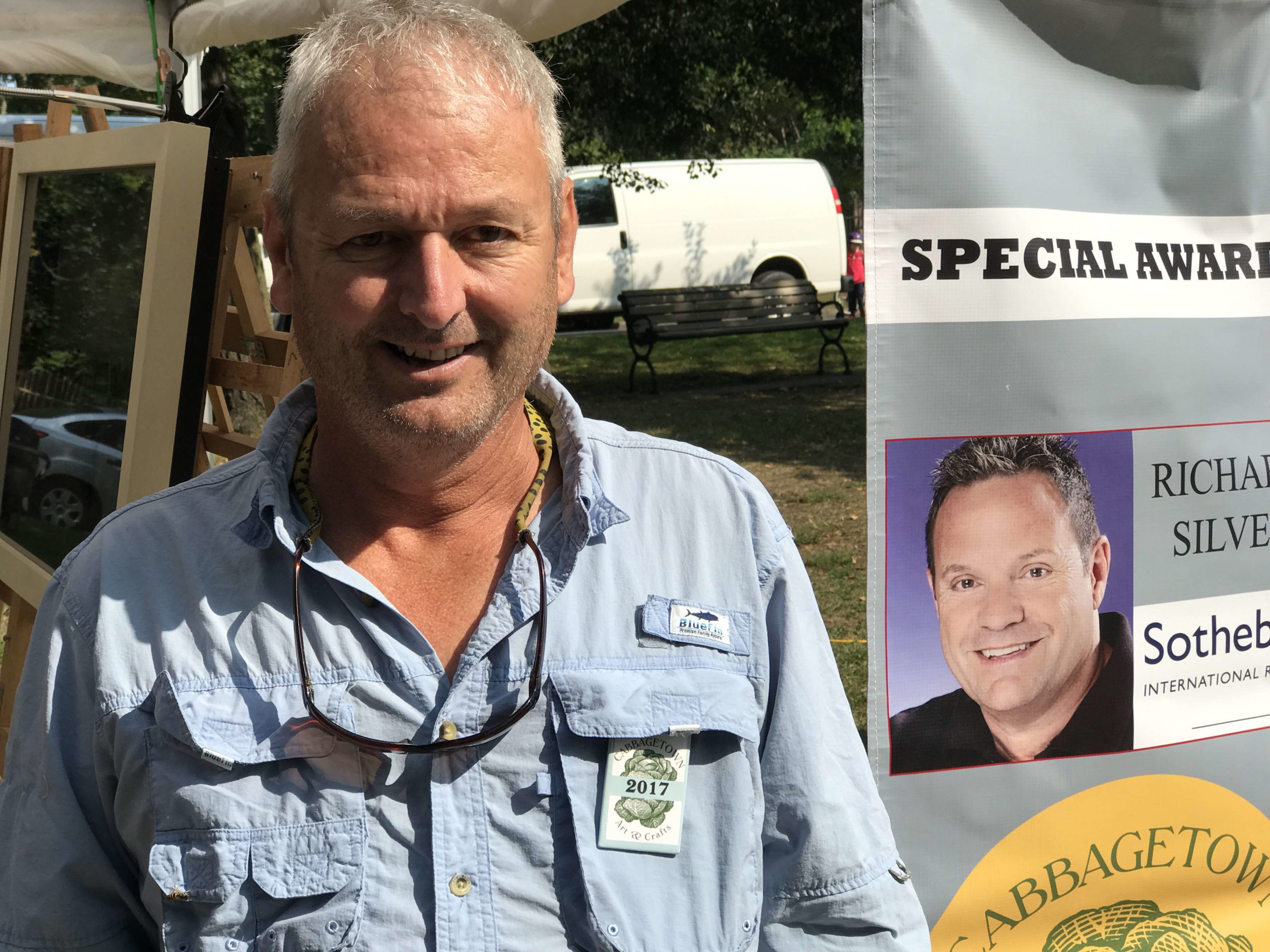
The winner of this year’s Richard Silver Award at the Cabbagetown Art and Crafts Festival had a fish to clean when I called to interview him. Stephen Hayes has been creating artwork from a range of materials for many years and has probably been fishing around his hometown of Peterborough for even longer. Despite the waiting trout, he was kind enough to explain some of the details behind his stark, enigmatic mixed media pieces. 

This was your first time at the Cabbagetown Art and Crafts show. What other shows or exhibitions have you done? 

I’ve been doing outdoor art shows for quite a while, actually. I’ve done the show in Nathan Phillips Square off and on since the early 90s. I have been with galleries, over the years, it just has never worked that well. I used to do a lot of shows in the States. For a number of years, I used to do a lot of similar type shows – outdoor art shows. There’s thousands of them in the States, and I used to just pick from the top ten. This year I did the Artist Project in Toronto, in February. And then I did a show in  Kingston, then Riverdale, then Nathan Phillips Square, and then Cabbagetown.

Connectivity 2009
Connectivity 2009

When did you start working in mixed media? 

I think even the earliest pieces that I had at the earlier shows I did twenty or twenty-five years ago were probably half mixed media, half painting. I still paint. Like, most of the skies, and whatnot there in my pieces I paint myself. I’ve just sort of broadened my vocabulary with the materials that I’ve been using. In the last few years I’ve started doing more resin casting–at least, it’s made its way into my work.

Can you describe how your art has evolved?

I’ve always done artwork, ever since I was a kid. I think I was in grade seven and my grade three teacher came up to me at recess and said ‘Are you still making those crazy drawings?’ and I was like ‘I didn’t think anybody even notices.’ But anyways, I used to paint more. I was more of a painter, and I was never satisfied… it was very difficult for me to complete a piece. I’d always end up, like, cutting into the canvas, or sticking something through it. I just needed one more dimension. So I guess I just started constructing little three-dimensional things; some from found objects, some from made objects… different, like metals and glass and different materials. I just started making these assemblages, and it just sort of grew from there.

Why He Stays 2012  24 X 27 X 4"
Why He Stays 2012 24 X 27 X 4″

What materials do you use these days? 

There’s usually quite a bit of wood. Metal. I do a lot of soldering and stuff, and make these sort of structures. There’s a lot of sculptural epoxy. I use that a lot; it’s a two-part epoxy putty, and you mix the A and the B in equal amounts, and you’ve got a working time of about, maybe half an hour, and when left overnight it hardens like a rock. It’s great to use. You can do all kinds of things with it; do it in layers, sand it and build it up, and sculpt some actually fairly fine pieces. And I’ve been using concrete quite a bit in my pieces.

How do you decide what materials to use in a piece?

Ahhhh… that’s a difficult question. Some pieces, I know exactly what they’re going to look like. I have an idea. And other pieces sort of evolve. I just start putting pieces together and they start to hum a little, and you get to a certain point and maybe you can’t go any further, and then you’re working on something else two weeks later and a light bulb goes off in the direction of the piece that you’ve put aside. It’s sort of like that. Some evolve, and some are just more concrete ideas. You know what you want before you start. It sort of runs the gamut between those two.

What inspires you?

I don’t know. Most of the themes that are present in my pieces have a lot to do with just, like, the human condition. The daily struggles in sort of a buried way. They’re not always that obvious, but that’s basically what they deal with.

A Final Love Song 2012 12 x 15 x 3"
A Final Love Song 2012 12 x 15 x 3″

Your work that I’ve seen is very stark, and some pieces have a line across them dividing them into top and bottom sections. What are you saying with that? 

Oh, I’m not going to tell you! I can’t explain everything, and a lot of people don’t like that, but sometimes, the less said the better. Some people will come up and say ‘what does that mean?’ Well, what does it mean to you? It might mean something totally different to me, and it might mean something totally different in a month from now, even though I did it with a number of ideas in mind. But I might see something that I didn’t originally realize.

Are there any other artists in your family?

My older brother Mike is an artist in Guelph. My mother became a nurse, but in her time it probably wasn’t very feasible for her as a female in the 40s to get into art as a career. But she was very talented.

Where can people buy your work?

I have a studio in downtown Peterborough, and the first Friday of most months I have an open studio. That’s one way that they can find me. I’m working on a website. I hope to have it up and running in the next couple months.

JN00KI

New Video: Why Toronto?

10.27.17 | Toronto & Neighbourhoods

There is no secret here – we love Toronto and we think it is the best city in the world! And if you are thinking of moving to Toronto, think no more, just do it! Here are some reasons to help you make up your mind!

Should You Buy or Sell First?

10.18.17 | Toronto Real Estate News

Should you sell your home first and then buy a new one? Or should you buy a new home before you sell? There is no right or wrong answer to this as the decision to buy a new home or sell one’s home first differs from person to person and every situation is unique. Let’s have a look at a few situations that might help you decide.

to-buy-or-sell-first

The downside of not buying the home first is that you might have to move into a short-term rental in case you do not find something of your choice. Moving into a rental property or living with friends or family even for a short while becomes difficult, especially if there are children involved. Not to mention the process of looking for property becomes stressful when there is a bidding war and at the same time, the clock is ticking.

You risk owning two homes including mortgages, utilities, property taxes, etc. if you buy a new property first but are not able to sell the old one. This makes the task of selling your current home more taxing and at times distressing. Besides, banks rarely ‘bridge finance’ a property if it does not have a bona fide Agreement of Purchase and Sale on it.

Not to mention that if you bought the property first, there’s a good chance that as you get closer to the moving day you might be willing to take any offer, which might not be the best you can get.

buying-or-selling-real-estate

Though it is a tough market out there these days, it is still a seller’s playground. So if the house is not selling, first you have to identify the reasons that are resulting in potential buyers shying away.

As per our experience, one usually prominent issue in such cases is the pricing of the property. So make sure the price is right when you list and don’t compare yourself to your neighbours and what they got for their house three or four months ago. Be realistic.

In addition, it is also advisable to keep the closing date of selling the house long enough, around 60-90 days for those who have not bought a property before to avoid last moment jitters.

We always warn homeowners not to back out if they have already purchased or sold off a property even if they are not convinced about its correct price or if it is a right fit. If you are thinking to do so, you risk losing more than the deposit in backing out of the deal

should-you-buy-or-sell-first

These situations are rare and during our long years in real estate business, such a situation emerged only once. A homeowner had agreed to sell the property and all the legalities were completed, signed and submitted. The seller later decided that he did not want to move because he was unable to find the property of his liking. Sadly, the situation got worse and both parties ended up in the court and Richard was acting for the buyer. The issue was seller was not listening to anyone’s advice and it proved costly as there were a number of deals that depended on the seller’s move.

Home buyers should remain patient and avoid making any hasty decisions when it comes to buying and selling. Due diligence and self-involvement are also needed from the sellers’ side including preparing their homes for its upcoming sale while conducting their house hunt. This means they should be open to the idea of painting, de-cluttering and minor renovations that were previously ignored in order to make sure their home looked appealing to potential buyers.

educated-decision-real-estate

We are still in a sellers’ market and may be moving to a balanced competitive scenario. Very often you will come across many such listings, which are being reintroduced to the market because the owner was not able to sell for the desired price or the house was listed at a much higher price than it is worth and therefore could not be sold. And the only way the sellers were able to get this second chance was because they did not purchase the property before selling the current one.

Trying to make this decision can be a bit overwhelming, but we always advise our clients to sell their property first and later go to buy a new one. The idea is to always play safe, but selling first and then buying is always a lot easier than being stuck with two mortgages until your property sells. List your property, price it right and keep the closing date around 60-90 days. And then browse for the next property of your dreams.

PS00KI

People of Toronto: Barbara Hall

10.11.17 | People of Toronto

In the decades since she first moved to Toronto in the 1960s, Barbara Hall has woven herself into the city’s social history. First elected to City Council in 1985, Hall went on to become Toronto’s second female mayor (and the city’s 61st overall) in 1994. In 2005, Hall was appointed to the Ontario Human Rights Commission as chief commissioner, and after serving in that capacity for almost ten years, she chaired the panel reviewing the floundering Toronto District School Board. A park named in her honour can be found near Church and Wellesley.

You’ve moved around a lot in your life. How did you come to live in Toronto?

I was born in Ottawa. And then I lived in Victoria, moved back to Ottawa, then London England, Halifax, Victoria, rural Nova Scotia, and Toronto. So I came to Toronto in 1967. I lived in a number of places in Cabbagetown, but I bought this house about 30 years ago.

How did you get into city politics?

I was a lawyer, practicing family law, and I had a client who moved back home with her children even though her husband was violent, and several years later she was killed—by her husband—and I saw that as being partly the result of a lack of affordable housing. She wasn’t able to find affordable housing for her and her children. And so I got involved with some non-profit groups as a volunteer, working on issues of affordable housing. It was probably this that caused people to approach me about considering a run.

I was a councillor for three terms, and then I was concerned about the lack of leadership— positive leadership—and looking around for who I could support to run for mayor, and the finger kept pointing at me, so I ran, and was successful.

How did you approach the job of Mayor?

My philosophy was that successful leaders build teams—wherever the leadership is—so I spent a lot of time building teams, and I think that the things that were most successful about my time in politics were all things where WE did it, as opposed to I did it.

Can you give an example of that philosophy in action?

Probably the thing that I’m most known for is bringing together people from diverse backgrounds to support what’s called ‘The Kings’, which many people say has been the most important and most successful city initiative in many decades. If one took King-Spadina and King-Parliament as the centres of circles drawn in each place, those were basically fairly derelict industrial lands.

via The Globe and Mail

There was no residential building permitted in those areas. The industrial buildings didn’t suit 21st century industry, and so many of them were vacant. Many had ‘for sale’ signs. Many had already been torn down because the owners could generate more revenue from surface parking lots. My concern was that if these areas continued to become more derelict, that was going to impact the core—which is always fragile—and that we could end up the way many large American cities did—with no one downtown and unsafe downtown areas.

So I brought together a group of people, including Jane Jacobs, and developers, heritage buffs, planners and economists, and we ultimately put forward a plan that would change the zoning in those areas to permit…basically, a flexible zoning that would allow the full range of uses. So we’ve seen large amounts of residential housing, and streets where you couldn’t buy a quart of milk or a loaf of bread, now have supermarket wars because there’s so much residential housing that all the businesses are coming back, along with vibrant city life.

What is one of your most enduring memories of being mayor?

Well, one is that first time marching in Pride in 1995, and the screams and yells and affection of the community was very powerful.

You were the first Mayor of Toronto to march in the Pride Parade. Do you think it’s still important for mayors to do that?

I do think it’s important. I think it sends a message of acceptance and diversity and inclusion that I think is important. It’s hard now to remember what it was like before; before I was mayor, I had marched in the parade a number of years, in support of various AIDS organizations, for example, and I saw that there would be people in various parts of the parade—either with signs or yelling— jeering negative things towards the parade.

For me, it was a no-brainer that I would march in Pride as mayor, but back then, the leaders from the community were not there. The police chief, the fire chief, politicians from all levels were not there at all, so it was not just a national story. There were reporters from the States, from Europe, because the mayor of Canada’s largest city was going to be in Pride. And it’s still a community where there are significant numbers of hate crimes…and certainly, there are still issues of discrimination that exist, so to me, leadership should be about projecting what can be and what should be.

His Excellency presents the Members insigna of the Order of Canada to Barbara Hall, C.M.

You were the chief commissioner of the Ontario Human Rights Commission from 2005 to 2015. What exactly does that job entail?

Well, the Chief Commissioner chairs a board of commissioners, but also a staff of a hundred or so, who develop policy and education for Ontarians about Human Rights, and work to advance Human Rights in the province.

For example….

I think we all know that disability is an area that’s protected under the Human Rights Code, but when I got to the Commission I was surprised to learn that almost all of the issues that came up were related to physical disability, and that in the same way that mental illness was in the closet in families and in our society, it was in the Human Rights Commission closet as well. So what are the issues there, and how could we educate people, and support people with mental health issues to come out, and be protected when they come out? And what are their needs?

What should the big Human Rights focuses be in Ontario now?

Well, systemic racism continues to be an issue. We see a lot of things that come up in the context of policing and racializing people. We see studies that say that if you’re applying for a job and your name is, you know, Smith, as opposed to Mohammad, or Singh or something else, that you’re more likely—much more likely—to get an interview.

I think that Toronto—and Ontario and Canada—are the best in the world. I’ve travelled a lot, and you know, I love our city, and country, and I love our diversity and the things that we do that really are an example to the world. But, having said that, I think what we have is fragile, and we have to keep working on it.

Barbara Hall Park
Barbara Hall Park

You’ve had a rather varied career; family law, politics, HR Commission, and most recently, heading the panel that ran public consultations on the Toronto District School Board. Is there a connecting factor?

Well, all of them are about how people live together in society. And I think my role has always been to think about a healthy community—a healthy city, in a very broad sense. All of these things contribute to how we live together, either in our personal relationships or in our various roles. How we have the opportunity to live in safe, healthy communities, to have an equal chance of fulfilling our dreams and abilities. Those are the things that I’ve had the privilege of working on in different ways, and those are the things that still generate passion in me.

The city named a park after you in 2014. What’s it like when someone wants to name a park after you?

Well, you’re thrilled. You’re humbled. You think ‘does that mean I go and weed every night?’ I told you that I came here in 1967, and because my family moved a lot, I lived in sixteen different houses as a child. And I— if asked where I was from—would say’ Canada’, in those days. But I have really put down roots in Toronto, and I’ve lived here longer than anywhere else. And to have a park named after me, that’s very, very special.

Barbara Hall Lights by thinc design

What are some of your favourite spots in Toronto?

I love walking down Broadview, South of the Danforth, and looking across at the skyline. That view of Toronto, I think it’s a gorgeous view. I like the ravines—walking in the ravines, and riding my bike along the bike trails there. But I also love marching down University Avenue, or running down University Avenue as part of a marathon or a fundraiser or whatever, with thousands of other people out enjoying the life…. Smelling the curries in Little India on a hot summer evening. My list of favourite places is very long.

Do you consider yourself retired at this point?

Sort of retired. I’m still on the boards of a couple non-profits, working on similar issues to those I’ve done over my life. I guess I still get quite a few invitations to speak to groups, and in the next couple of weeks, I’m going to Thunder Bay to speak about women and politics. So I do quite a few things like that. I laugh sometimes trying to think of how to describe me, and I guess I’m… I’ve always been an activist, and I’m still an activist-citizen.

JN00KI

Lawrence Park – Voted One of the Top Five Neighbourhoods in the GTA to Live in

09.28.17 | Toronto & Neighbourhoods

 By Sherille Layton

Canada has just celebrated 150 years of history. As an immigrant, I thought it would be instructive for me to look at the history of the community where my family and I now live. The Lawrence Park Community has been voted among the top five areas in the city over the last few years in various publications – and this just reaffirms how lucky we are to live in this diverse neighbourhood.

It goes without saying that the major demographic in the area is families, which is reflected in both the housing stock and highranking schools in Lawrence Park. The area is home to lush parks and walking trails, and our Yonge Street corridor has plenty of restaurants and shops to give residents enough choice and a reason to champion local businesses.

So, when did this all take shape? The assembly of Lawrence Park began in 1907 by the Dovercourt Land Building and Saving Company, which acquired the north parcel of the park from John Lawrence (who was a tanner and farmer), after whom this neighbourhood is named. English-born Wilfrid Servington Dinnick, the young company president, was the new visionary for this undeveloped subdivision. He felt that Toronto had reached a level where it could support another Rosedale or Moore Park.

lawrence-park-2

Dinnick saw this creation as a “garden suburb” akin to the garden suburbs being developed in England. Dinnick later referred to Lawrence Park as the “Hampstead Garden Suburb of Canada.” (Being an ex-Londoner myself, I can especially identify with this, as one of my favourite areas in London is Hampstead, which is situated in Northwest London.) He wanted to build a housing subdivision, mainly high-quality homes on larger lots designed to attract business executives and professionals. We can see this trend continuing to this day.

The original founders of Sheridan Nurseries (now on Yonge Street) were commissioned to do the landscape architecture for many of the new homes, boulevards and parks in the area. To this day you can see evidence of real gardening enthusiasts in the colourful, manicured residential gardens in the area. Lawrence Park’s first advertisement to attract new home owners described the new subdivision as “an aristocratic neighbourhood.” The Good’s Atlas of 1924 showed 225 houses in Lawrence Park.

lawrence-parkLawrence Park

Strict guidelines dictated that residential houses had to be detached, constructed of brick and stone, and have a value of at least $4,000. Today, Lawrence Park’s houses display a variety of architectural styles, including English Cottage, Tudor Revival, Georgian and Colonial. Most of these homes were built between 1910 and the late 1940s. Over the last few years, some lots in Lawrence Park have been redeveloped with larger houses that do not match the scale of the original housing in the neighbourhood.

Although it is hard to imagine in 2017, at the time lots sold for $15 to $75 per square foot, a world away from the current market value of approximately $900 to $1,000 per square foot. According to current Toronto Real Estate Board data, homes in the area have increased in value by over 100% in the last decade alone.

Only in 1949 was the area’s residential tradition compromised slightly with the construction of the Toronto Public Library branch at Yonge and Lawrence, and the establishment of the Lawrence Park Community Church. Two notable social institutions that now serve the residents of this district are the Rosedale Golf Club and the Granite Club.

Sherille quote

I think it’s safe to say that Wilfrid S. Dinnick’s vision has come to fruition. What we see today is a picturesque “garden suburb” in Toronto with a strong sense of community and one that our friends, children and neighbours get to enjoy on a daily basis.

If you are interested in learning more about Lawrence Park, or if you’re looking to sell, upgrade or buy in the area, please call me at 416-419-5893. I am always happy to share neighbourhood statistics with you and help you with all your real estate needs.