A Guide to Preparing Your Condo for Sale

11.20.17 | Toronto & Neighbourhoods

Preparing your condo for sale can be tricky business. You have to take into account everything from the history of the market, where the market sits currently, the value of your condo, the value of the area around your condo, and even the perception of potential buyers. That’s a whole lot of material, and there’s an objectivity that’s necessary but difficult to achieve without the help of professionals—so that’s why we’ve gathered some for you.

Our first professional, Rizwan Malik, Sales Representative at Sotheby’s International Realty Canada, and he’s provided some advice about the sale process. Our second professional is Luanne Kanerva of Katu Design, who stages houses and condos for sale for Torontoism. She’s got the tips necessary to bring the best out of your condo, making it as appealing as possible. So let’s dive in!

Getting Started

Rizwan-Malik-smaller1

What are the basics? How different is preparing to put your condo up for sale versus, say, a house? Chances are you or someone you know has done the latter before, but maybe not the former; however, with condos gaining in popularity more and more every year, it’s important to nail down the differences so you’ve got them locked in when you finally make the decision.

Luckily, it’s pretty simple says Rizwan:

Putting a condo up for sale is quite similar to putting up a home for sale, however, there are some differences. When it comes to freehold, you own the property and can decide where to put the for sale sign or even the lockbox to assist agents in showing the property. This isn’t the case with a condo. The Condo board or property management will dictate where you’re permitted to place the lockbox. Also, you’re not allowed to have a For Sale sign because the lane outside the front door is common. Lastly, the condo board may not allow open houses. That is another thing to keep in mind.

When you’re in control of only one part unit in a whole building, it becomes a lot more about working with the management of that area than with your own wishes, but you should want to work together. The condo board doesn’t always have to serve as a gatekeeper, they want business as much as you want to make a sale, so why not work out the kinks with them and then find out a way you can use the rules to your advantage.

Don’t forget to order the status certificate

Rizwan provides insight into the kind of mistakes even the most experienced people don’t realize they make:

One of the biggest mistakes I’ve noticed that people make when selling… is not ordering the status certificate. This document is generally $100 and is purchased from the property management and speaks to the financial health of the building. Most condo purchases are conditional on the new buyer reviewing this document with their lawyer.

Ordering this in a timely fashion (read: early) means the sale can run smoothly and efficiently, because it’s something the prospective buyer doesn’t need to ask for, wait for, and then review. It can conceivably be kept at the ready for anyone interested and they can immediately take it to their lawyer.

Sellers or realtors who wait until the property is sold to order this document run the risk of holding the property for more than 10 days. The condo management, based on the condominium act, has only 10 days to do process this, or face consequences. 
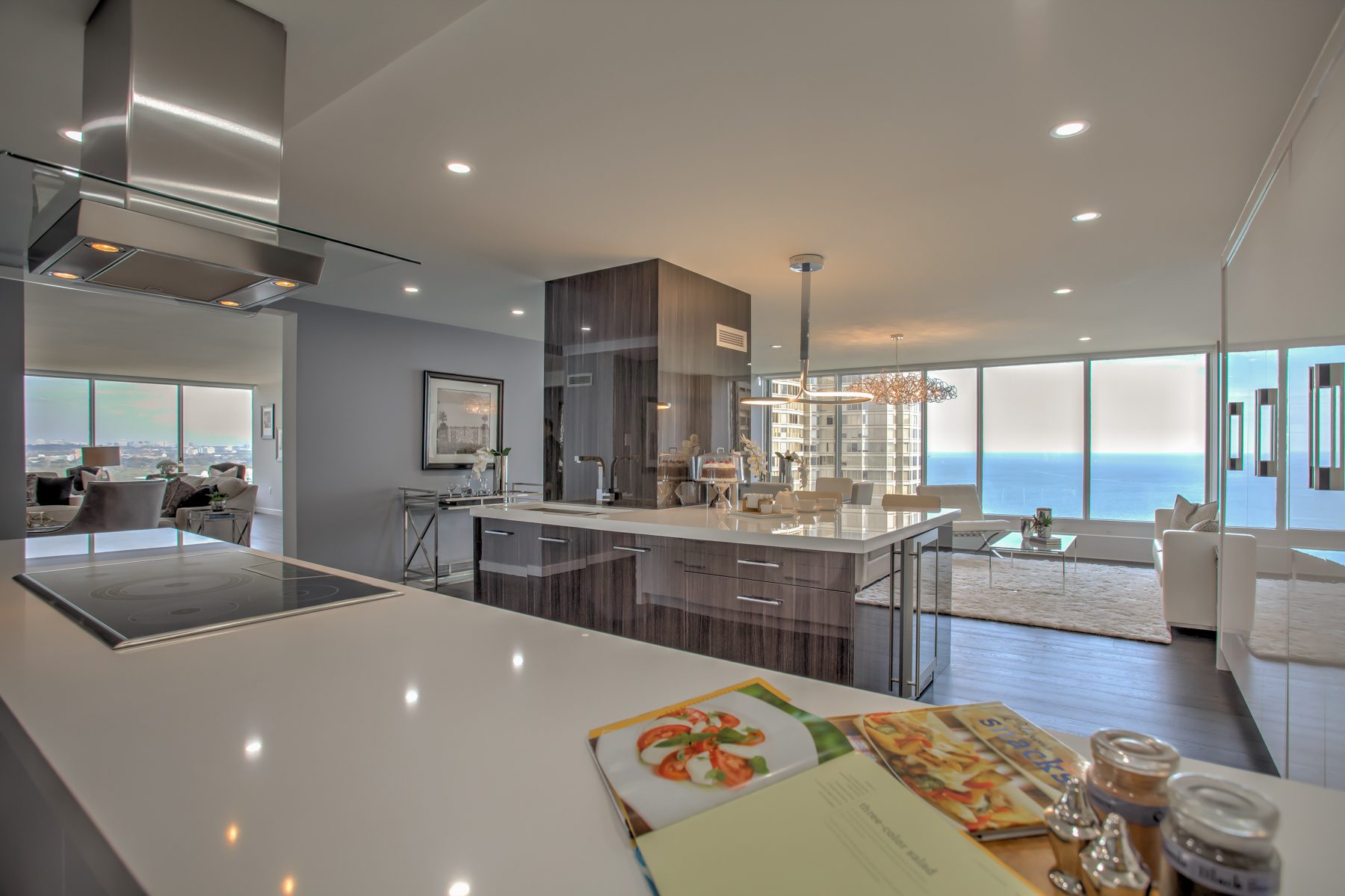
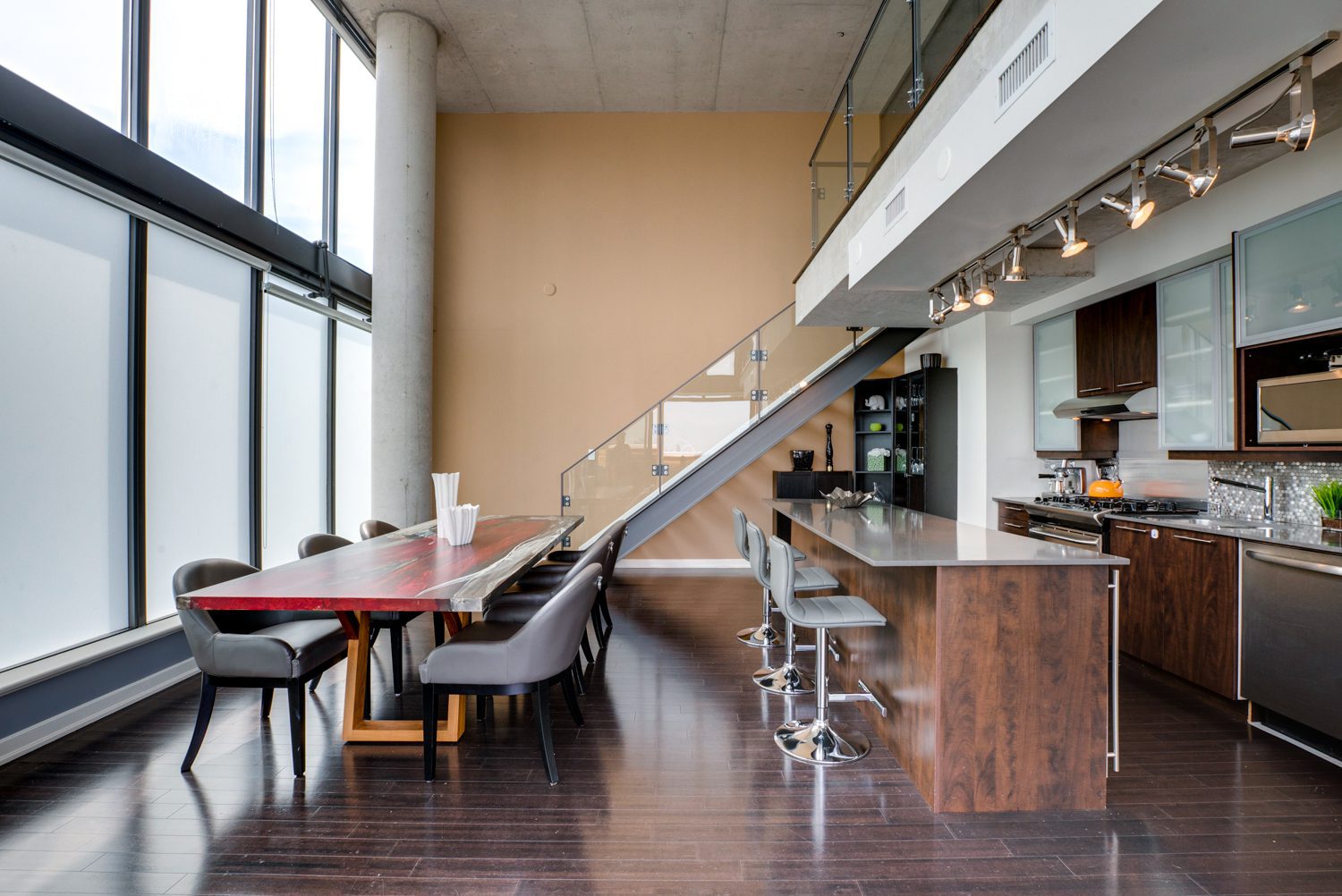
lakeshore-boulevard

Make sure the property looks as close to the photos as possible

On the day of, a lot can go over your head or slip your mind because of how much else you’ve had to do to prepare on the back end. Rizwan’s got some practical advice about the showings:

Try to make sure the property looks as close to the marketing photos as possible. It doesn’t have to be 100 percent but as close as possible, because that is what the buyers fell in love with and that is what got them to arrange for the visit.

If you sneak attack a prospective buyer, they won’t just become disinterested, they’ll be turned off of the whole idea. The greatest method of selling is to just put your best foot forward (or, in this case, pictures), and act honestly.

Put your valuables away! If there is a potential that something might fall/break then pack it away. Don’t tempt fate!

Rizwan understands there’s a real danger that comes with strangers in your home, no matter how innocent the situation. Things can always go wrong and it’s not worth having your priceless vase on display for only the possibility of a sale.

These are the questions you need to prepare yourself for

So what are some of these oft-forgotten questions? Rizwan listed these:

  • How much money is in the building’s reserve fund?
  • When was the last financial audit?
  • Any special assessments from the condo board?

The best way to have these answers is by ordering the status certificate at the start of the listing or even before you’ve moved on to the listing portion of the selling process. With that piece of material, any relevant question will be easily answered.

If you have tenants, here’s what you need to do

If the property is tenanted, you have to provide 24 hours notice before all showings. I usually suggest offering tenants a complimentary cleaning every two weeks while the property is being shown, because it is in the Seller/Landlord’s interest for it to show at its best.

So, be civil, and be accommodating. Give your tenants time, and they’ll appreciate it.

When it comes to informing the buyers about tenants, don’t be afraid to do it. It’s not so difficult and they may want the property for exactly the same reason! 

It will appear on the listing that the property is tenanted. In some cases if the purchaser is an investor they may choose to keep the tenant (if the tenant wishes to stay).

If not, once again, you’ve got to be accommodating to both parties. Ultimately, it’s your property, and you may do with it what you will, but treat the subject gingerly and express your support to the tenant during the process, whether it’s just a transition of the landlord or they must leave.

Remember: Space sells

Once you have all your documents ready, it’s time to prepare the property:

Sellers should prepare the condo no different than a home. Condos are typically much smaller than homes so therefore, should have even less clutter. It is crucial to show the space in its best possible way.

This is a perfect way to segue into the excellent advice we received from Luanne! Let’s explore the more aesthetic, appealing side of the process.

533 Richmond Street
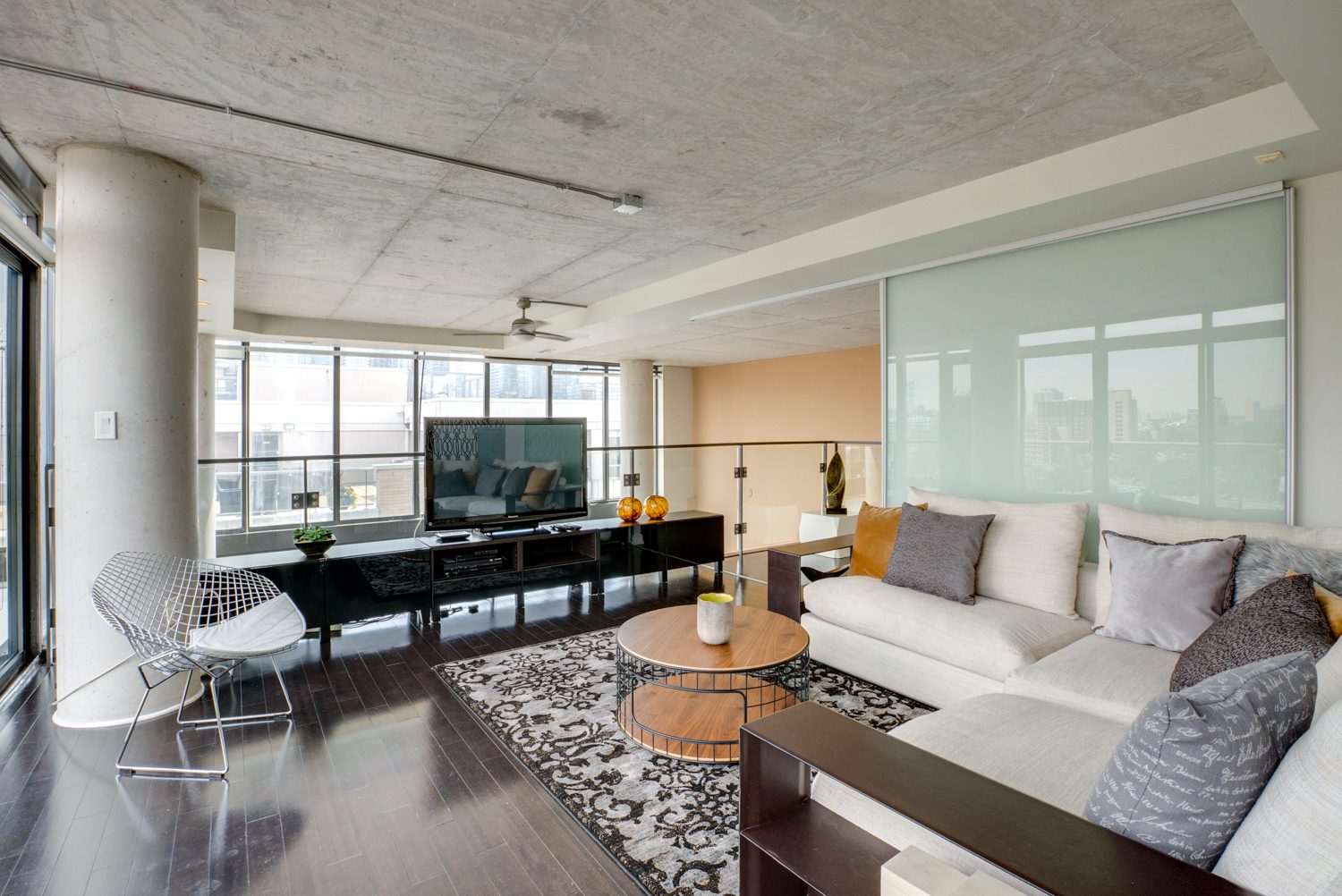
533 Richmond Street

The tentpoles of staging

Luanne Kanerva starts off simply. These are the tentpoles of making a condo look great:

Lighting, flow, and perception of size and use of space.

Show off your property’s capabilities. Leave the space open to imply how much could go on there, and how it could be used for a variety of purposes, or work with a variety of aesthetic looks.

Buyers comment on the above characteristics because as prices increase the condos that are in their price range become smaller. Sellers need to ensure their spaces are bright and well lit. Some condos don’t have windows in all the rooms so it is very important to have sufficient light… [and] selling is not the time for mood lighting. Layers of light are great. Even if there is an overhead light, there is no reason not to have a lamp to create light at different levels.
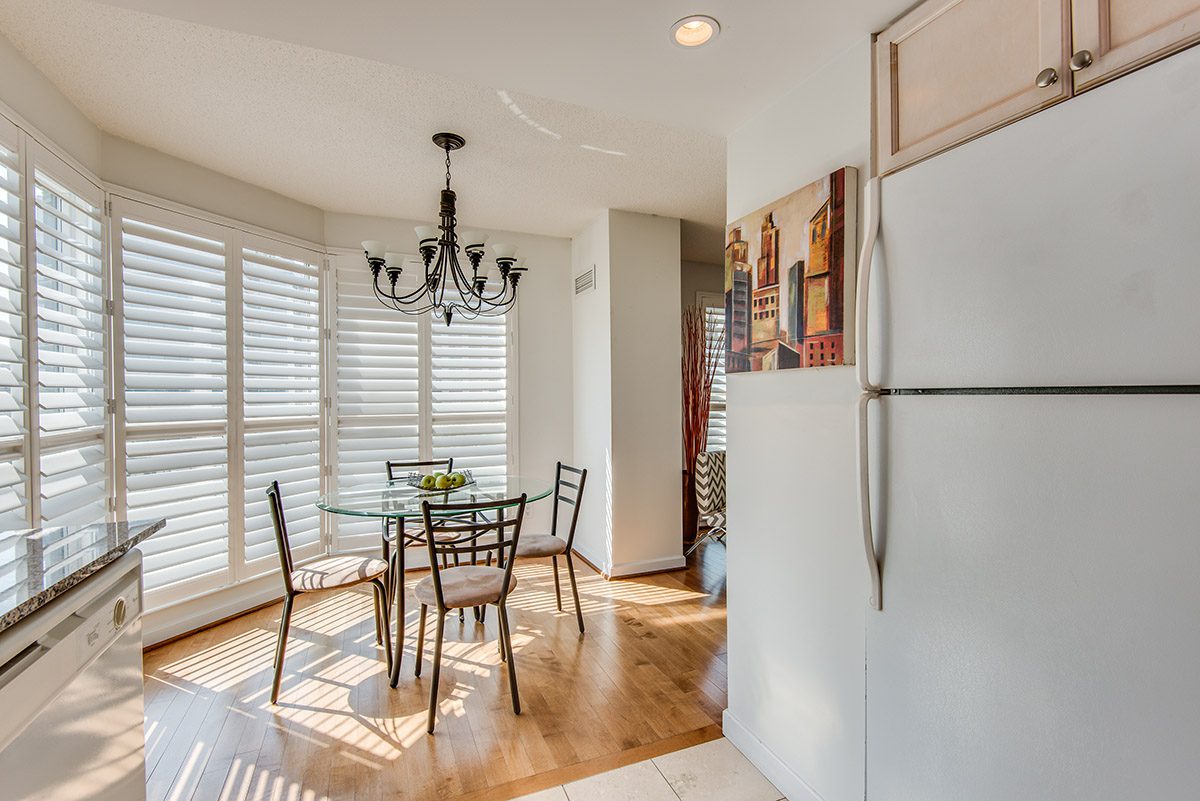
8-park-road-toronto-2

Without the aid of natural light, which almost always brightens and opens up a room, use multiple lights to achieve the same effect. Keep quality high, with bulbs at their brightest unless purposefully dimmed – though avoid that as much as possible, as you want the buyer to create their own ambience, not inhabit yours.

Make sure there is a natural flow to the space

Next very important thing is flow, says Luanne:

Flow is how the buyer or buyers’ gaze moves from room to room. Is there a natural feeling?

This is where de-cluttering, and thinking smartly about where you place your furniture comes in handy. You, again, want the potentially small space to seem open. That means creating a path with which the eye follows easily, to the point that it doesn’t even know it’s following a path. That natural look and flow is exactly what makes somewhere foreign feel homey, and inviting. 

Paint rooms the same or similar colours, and use the same design elements throughout.

Luanne’s Rules on Clutter

  • Clutter has to go. Buyers want to see your house, not your stuff.
  • Every surface should have no more than three decor items on it.
  • If it is not furniture, then it should not be on the floor.
  • Don’t buy more storage, get rid of stuff.
  • Never have the back of your furniture facing the entrance of the room or cutting the room in half if there is any other option.

The buyers want to see a finished home, not a half-done project

Buyers do not want to look at a half-finished project. They want to see a finished home and imagine themselves living in it, their way. And this is where sellers usually make a mistake by doing it “their way”. This just makes the property seem less accessible, since the seller’s taste might not be what the buyer is looking for. On the other hand, it’s important for the property to be in move-in condition and buyer usually pay more for such properties. Just make sure to keep it neutral:

Repair, upgrade, or paint. Getting it done first will pay off. It shows you care about your property. Sellers should not undertake projects that they are not going to do well or that are of a particular taste – such as country theme dining room. The risk is too high.

Pick neutral colours for the walls

Colours, furniture placement, lighting, and flow: the elements of a good staging. We’re back to it, but with a harder focus on specifics—colours, furniture and trends.

Colours tend to change with the trends and the seasons. Right now… light grays and warm grays for neutral walls; neutrals and light colours. Add colour in the art or accents. Blues are on trend right now, blue accents can be added anywhere.

Keep the larger stuff simple, and add specificity and flourish in the details, so they don’t detract. 

I wouldn’t paint a living room blue but a bathroom or bedroom would be great. Red or burgundy dining rooms, and green or yellow kitchens and baths are bad choices for selling.

8 Park Road | Lots of light
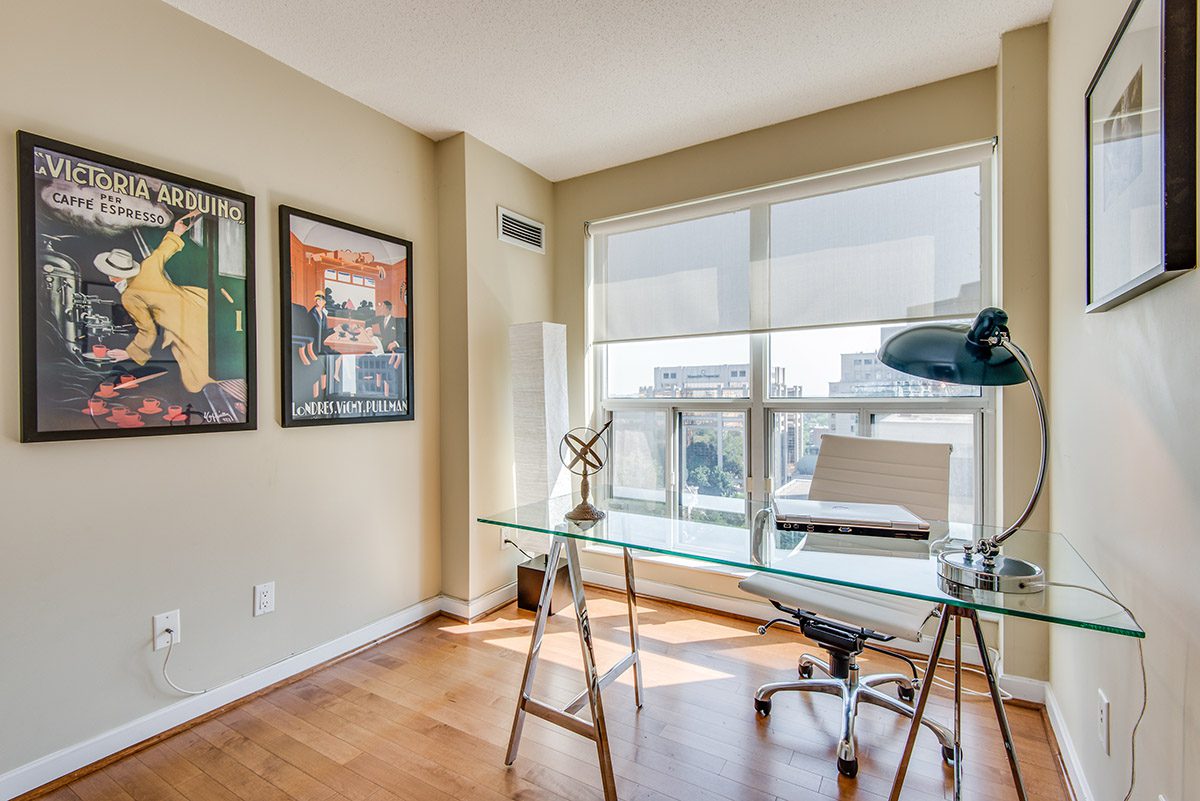

Every room should have a purpose..and the purpose should show!

Rooms should be set up so a buyer can immediately see the purpose of the room. That means you need furniture, even though it might seem that the rooms look bigger without it:

If you have a small bedroom, show a bed which fits. Always show the largest bed that will fit comfortably. Some people think rooms without furniture look bigger but that is not true at all. With furniture, a buyer can see what fits and what else might fit.

You must think about the sale from a buyer’s point of view, not from your own

You might think about how the room looks from where you sit at your desk, or from in your bed, but the buyer isn’t going to sit on your bed or at your desk, they’re going to keep with the flow and take a cursory look at all of it from the best vantage point they have: the entrance. 

Luanne says it’s important to bring in an outside perspective.

Have an honest friend walk around and tell you what they see when they are in your condo. We often become oblivious to our space because we see it every day.

Remember, buyers are buying a dream of what their lifestyle could be like if they lived in your condo, says Luanne:

Sellers need to show the best possible lifestyle—not overcrowded closets and broken-down furniture they have had since college.
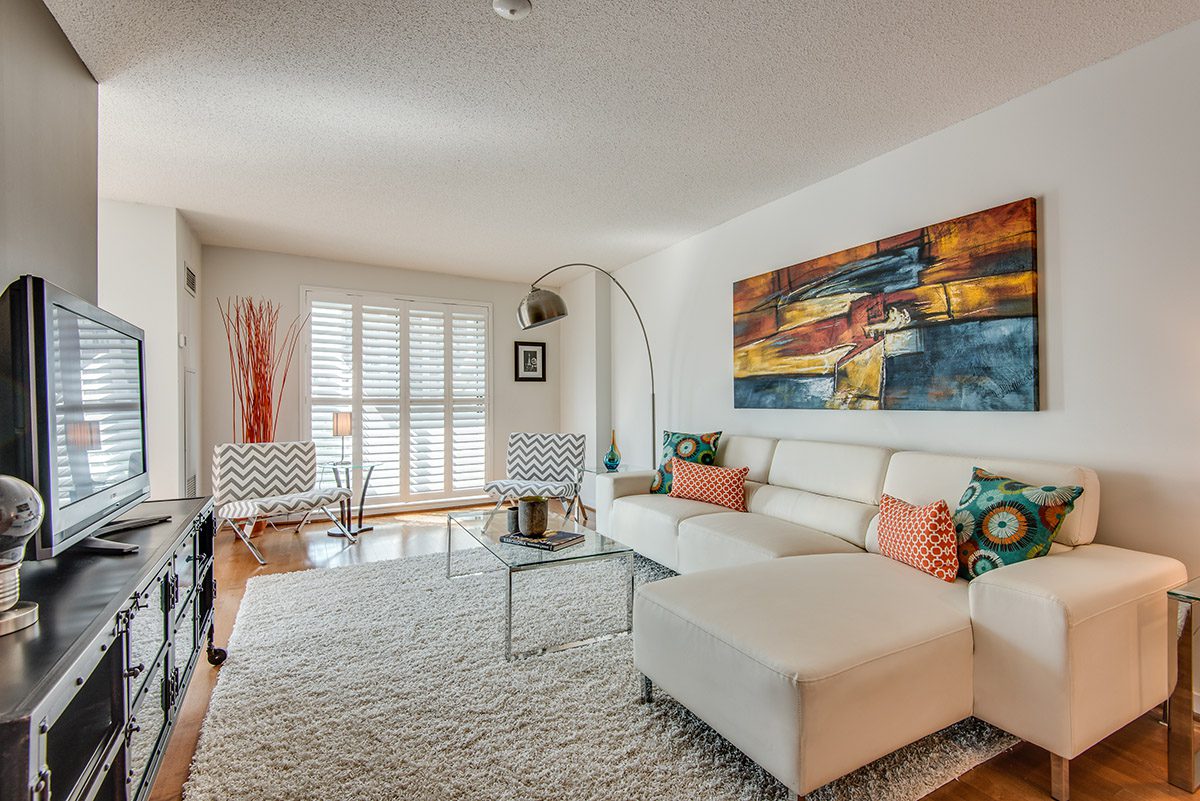
8-park-road-toronto-4

Last Thoughts

There are updates buyers will notice, and updates they won’t notice at all, so you’ve got to keep in mind what may at first seem important but later seem frivolous because of how little attention was paid to it:

Sellers often focus on what they wanted to change while they lived in a space. But the things buyers notice are updated paint, light fixtures, switches and outlets. The things that date a space. So frivolous would really only be something seller is hyper focused on that most buyers wouldn’t notice. I find it is usually something specific to each seller! That is where a professional can really help focus on the most cost efficient updates.

The market is now, and if you have the ability, this is exactly the kind of information that’s going to put you at ease in what can normally be a pretty stressful situation. But you don’t have to go through this alone. If you want to sell your condo, contact us and we’d be happy to help you and answer any of your questions.

AS00KV

Richard Silver: The Changing Face of Canada

11.15.17 | Business

Richard Silver 0013 small

It’s all a question of mathematics and global economies. China and India lead the world in growth and their growing middle classes are each the size of the population of Canada and the United States combined.

Asia Pacific is now and will continue to be the leading player in the world and will continue to extend into our markets and community in the Greater Toronto Area. Parents realizing this change will push the second language as Mandarin and it may become the second language in non-Asian homes supplanting French.

We are still in the foothills of Asian investment in Canada. Property rights as we know them in Canada do not exist in most countries and in China, the land is leasehold to the government for 70 years. There are also restrictions on home ownership…If you live and work outside of a centre like Beijing or Shanghai, you need government’s approval to move to those cities.

[clickToTweet tweet=”Asia Pacific is now and will continue to be the leading player in the world and will continue to extend into our markets and community in the Greater Toronto Area.” quote=”Asia Pacific is now and will continue to be the leading player in the world and will continue to extend into our markets and community in the Greater Toronto Area.”]

The ultra-wealthy have money and property all over the world and they are looking for security, health care, education and relatively clean air. They are very family oriented and will buy legacy properties for their children and parents. They are very pragmatic in purchasing, not driven by architecture as much as a community with proximity good schools, universities and hospitals. Community gardens and parks are also seen as having great benefit.

As you have probably heard the Chinese government has tightened restrictions ($50,000 per family member per year) but the growth there is so large, that companies and “High Net Worth Individuals” (HNWI) are looking overseas for Investment. As long as Canada is the clean, safe location for foreign investment, we will continue to be in the top five destinations for foreign consumers. Just as it did decades ago and will in decades to come, the face of our neighbourhoods will be changing.

RS00KV

From Cottage To Cuisine, 12 Amelia Embraces The Rich Flavours Of Cabbagetown

11.14.17 | Toronto & Neighbourhoods

12 Amelia, a space that has evolved alongside its city, is now available for sale!


In a city landscape that is rapidly filling up with new builds and sky high condos, it’s easy to forget the rich architectural history that surrounds us. Thankfully there are gatekeepers for these landmarks who help remind us of the Toronto of yesterday, all while supporting our city’s unique and vibrant communities.

Cabbagetown is one of Toronto’s older neighbourhoods, named for the Irish immigrants who first called this region home, and who were so poor that they grew cabbages in their front yards. Today this central Toronto area is recognized by the Cabbagetown Preservation Association for it’s prominently featured semi-detached Victorian houses, as “the largest continued area of preserved Victorian housing in all of North America.”

In addition to these Victorian homes, there are a number of other lesser known spaces that many of us pass on a daily basis, proudly reflecting the Toronto of yesteryear.  These historical buildings also deserve to be celebrated. 12 Amelia Street is one of these properties, and Elie Benchitrit and his family have worked tirelessly to keep the legacy of this property thriving in its restored state.

Known to many as the quaintly cozy restaurant F’Amelia this staple in the Cabbagetown community, and member of The Cabbagetown BIA is also a part of our city’s history. 12 Amelia was originally a single family worker’s cottage, the most common type of small house in Ontario, and much of the United States of America in the late 1800’s. 12 Amelia has a deed of land dating back to July 2, 1901 and a record of the cottage itself constructed in 1903.


Read our review of F’Amelia here.


Thanks to owners like Elie Benchitrit, who purchased the cottage in 1978, the space has maintained its simple charm, even post renovation, into the form of a restaurant as it stands today. The Benchitrit family bought the land with the intent of turning it into a charming French restaurant, Le Canard enchaîné, named after the satirical French newspaper.

In the early days there were some challenges to get residents of Cabbagetown on board with changing the space. Local members of the community feared the erection of a McPub style chain restaurant that would litter their charming neighbourhood. It hit Elie how committed the Cabbagetown community was to their space.

When filing the papers for the renovation the room was filled with members of the area working to ensure that Cabbagetown preserved its historical legacy. Delightedly the Benchitrit family had a vision for the space that celebrated the landmark’s origin and endeared itself to local’s hearts and stomachs.

When Elie Benchitrit shared his plans for transforming the space into a quaint French restaurant individually to those who resided close by, one by one locals began to share their support of the plans. These same concerned neighbours later became regular patrons of the restaurant that followed:

Over the years it’s been amazing to feel the support from our neighbourhood and the city as a whole. In fact, 12 Amelia’s patio is technically on public space and wouldn’t have been possible without the support of the local residents.

Wanting to maintain the integrity of the cottage, Elie squared off the land and built around it, with a permit, in 1987. These plans included a basement kitchen, as more space was needed to successfully run the business. Today the restaurant operates with two kitchens, one in the basement and a small one upstairs. Elie notes:

What makes the space so unique is that there are so few of these cottages left and we didn’t want to lose this in creating our restaurant.

Looking at the space, and paying attention to the glass veranda and patio, those passing by and diners alike can really get a feel for how the cottage looked over a century ago.

12 Amelia continues to enrich the experience of Toronto’s residences. Elie recalls,

I remember around 25 or 30 years ago when I was working as a chef at the restaurant, an elderly couple came in for a celebration. They proudly told us that the woman had been born inside the cottage where they were dining. We couldn’t believe our fortune to meet one of the original people who lived here.

Elie noted that the same family spirit is alive and well in the restaurant since the space has hosted many weddings over the years, with happy couples returning each year on their anniversary for a special meal.

SM00KV

Stephen Hayes’ Art in Three Dimensions

11.3.17 | People of Toronto

The winner of this year’s Richard Silver Award at the Cabbagetown Art and Crafts Festival had a fish to clean when I called to interview him. Stephen Hayes has been creating artwork from a range of materials for many years and has probably been fishing around his hometown of Peterborough for even longer. Despite the waiting trout, he was kind enough to explain some of the details behind his stark, enigmatic mixed media pieces. 

This was your first time at the Cabbagetown Art and Crafts show. What other shows or exhibitions have you done? 

I’ve been doing outdoor art shows for quite a while, actually. I’ve done the show in Nathan Phillips Square off and on since the early 90s. I have been with galleries, over the years, it just has never worked that well. I used to do a lot of shows in the States. For a number of years, I used to do a lot of similar type shows – outdoor art shows. There’s thousands of them in the States, and I used to just pick from the top ten. This year I did the Artist Project in Toronto, in February. And then I did a show in  Kingston, then Riverdale, then Nathan Phillips Square, and then Cabbagetown.

Connectivity 2009
Connectivity 2009

When did you start working in mixed media? 

I think even the earliest pieces that I had at the earlier shows I did twenty or twenty-five years ago were probably half mixed media, half painting. I still paint. Like, most of the skies, and whatnot there in my pieces I paint myself. I’ve just sort of broadened my vocabulary with the materials that I’ve been using. In the last few years I’ve started doing more resin casting–at least, it’s made its way into my work.

Can you describe how your art has evolved?

I’ve always done artwork, ever since I was a kid. I think I was in grade seven and my grade three teacher came up to me at recess and said ‘Are you still making those crazy drawings?’ and I was like ‘I didn’t think anybody even notices.’ But anyways, I used to paint more. I was more of a painter, and I was never satisfied… it was very difficult for me to complete a piece. I’d always end up, like, cutting into the canvas, or sticking something through it. I just needed one more dimension. So I guess I just started constructing little three-dimensional things; some from found objects, some from made objects… different, like metals and glass and different materials. I just started making these assemblages, and it just sort of grew from there.

Why He Stays 2012  24 X 27 X 4"
Why He Stays 2012 24 X 27 X 4″

What materials do you use these days? 

There’s usually quite a bit of wood. Metal. I do a lot of soldering and stuff, and make these sort of structures. There’s a lot of sculptural epoxy. I use that a lot; it’s a two-part epoxy putty, and you mix the A and the B in equal amounts, and you’ve got a working time of about, maybe half an hour, and when left overnight it hardens like a rock. It’s great to use. You can do all kinds of things with it; do it in layers, sand it and build it up, and sculpt some actually fairly fine pieces. And I’ve been using concrete quite a bit in my pieces.

How do you decide what materials to use in a piece?

Ahhhh… that’s a difficult question. Some pieces, I know exactly what they’re going to look like. I have an idea. And other pieces sort of evolve. I just start putting pieces together and they start to hum a little, and you get to a certain point and maybe you can’t go any further, and then you’re working on something else two weeks later and a light bulb goes off in the direction of the piece that you’ve put aside. It’s sort of like that. Some evolve, and some are just more concrete ideas. You know what you want before you start. It sort of runs the gamut between those two.

What inspires you?

I don’t know. Most of the themes that are present in my pieces have a lot to do with just, like, the human condition. The daily struggles in sort of a buried way. They’re not always that obvious, but that’s basically what they deal with.

A Final Love Song 2012 12 x 15 x 3"
A Final Love Song 2012 12 x 15 x 3″

Your work that I’ve seen is very stark, and some pieces have a line across them dividing them into top and bottom sections. What are you saying with that? 

Oh, I’m not going to tell you! I can’t explain everything, and a lot of people don’t like that, but sometimes, the less said the better. Some people will come up and say ‘what does that mean?’ Well, what does it mean to you? It might mean something totally different to me, and it might mean something totally different in a month from now, even though I did it with a number of ideas in mind. But I might see something that I didn’t originally realize.

Are there any other artists in your family?

My older brother Mike is an artist in Guelph. My mother became a nurse, but in her time it probably wasn’t very feasible for her as a female in the 40s to get into art as a career. But she was very talented.

Where can people buy your work?

I have a studio in downtown Peterborough, and the first Friday of most months I have an open studio. That’s one way that they can find me. I’m working on a website. I hope to have it up and running in the next couple months.

JN00KI

New Video: Why Toronto?

10.27.17 | Toronto & Neighbourhoods

There is no secret here – we love Toronto and we think it is the best city in the world! And if you are thinking of moving to Toronto, think no more, just do it! Here are some reasons to help you make up your mind!

Should You Buy or Sell First?

10.18.17 | Toronto Real Estate News

Should you sell your home first and then buy a new one? Or should you buy a new home before you sell? There is no right or wrong answer to this as the decision to buy a new home or sell one’s home first differs from person to person and every situation is unique. Let’s have a look at a few situations that might help you decide.

to-buy-or-sell-first

The downside of not buying the home first is that you might have to move into a short-term rental in case you do not find something of your choice. Moving into a rental property or living with friends or family even for a short while becomes difficult, especially if there are children involved. Not to mention the process of looking for property becomes stressful when there is a bidding war and at the same time, the clock is ticking.

You risk owning two homes including mortgages, utilities, property taxes, etc. if you buy a new property first but are not able to sell the old one. This makes the task of selling your current home more taxing and at times distressing. Besides, banks rarely ‘bridge finance’ a property if it does not have a bona fide Agreement of Purchase and Sale on it.

Not to mention that if you bought the property first, there’s a good chance that as you get closer to the moving day you might be willing to take any offer, which might not be the best you can get.

buying-or-selling-real-estate

Though it is a tough market out there these days, it is still a seller’s playground. So if the house is not selling, first you have to identify the reasons that are resulting in potential buyers shying away.

As per our experience, one usually prominent issue in such cases is the pricing of the property. So make sure the price is right when you list and don’t compare yourself to your neighbours and what they got for their house three or four months ago. Be realistic.

In addition, it is also advisable to keep the closing date of selling the house long enough, around 60-90 days for those who have not bought a property before to avoid last moment jitters.

We always warn homeowners not to back out if they have already purchased or sold off a property even if they are not convinced about its correct price or if it is a right fit. If you are thinking to do so, you risk losing more than the deposit in backing out of the deal

should-you-buy-or-sell-first

These situations are rare and during our long years in real estate business, such a situation emerged only once. A homeowner had agreed to sell the property and all the legalities were completed, signed and submitted. The seller later decided that he did not want to move because he was unable to find the property of his liking. Sadly, the situation got worse and both parties ended up in the court and Richard was acting for the buyer. The issue was seller was not listening to anyone’s advice and it proved costly as there were a number of deals that depended on the seller’s move.

Home buyers should remain patient and avoid making any hasty decisions when it comes to buying and selling. Due diligence and self-involvement are also needed from the sellers’ side including preparing their homes for its upcoming sale while conducting their house hunt. This means they should be open to the idea of painting, de-cluttering and minor renovations that were previously ignored in order to make sure their home looked appealing to potential buyers.

educated-decision-real-estate

We are still in a sellers’ market and may be moving to a balanced competitive scenario. Very often you will come across many such listings, which are being reintroduced to the market because the owner was not able to sell for the desired price or the house was listed at a much higher price than it is worth and therefore could not be sold. And the only way the sellers were able to get this second chance was because they did not purchase the property before selling the current one.

Trying to make this decision can be a bit overwhelming, but we always advise our clients to sell their property first and later go to buy a new one. The idea is to always play safe, but selling first and then buying is always a lot easier than being stuck with two mortgages until your property sells. List your property, price it right and keep the closing date around 60-90 days. And then browse for the next property of your dreams.

PS00KI