Our New Team Member: Erin Haas

09.27.18 | People of Toronto

Erin Haas is a new addition to our team at Silver Burtnick & Associates. Born and raised in Toronto, Erin is very familiar with the lifestyle and neighbourhoods of our city which allows her to help both local clients as well as potential international buyers. We’ve interviewed Erin about her relationship with Toronto and her decision to pursue a career in real estate. So read on and meet our Erin!

What was it like growing up in Toronto?

Toronto has provided me a lot great opportunities throughout my life, and exposed me to so many people and places that perhaps I would not have experienced elsewhere. I have so many memories in all areas of the city, and have loved growing up in Toronto with the different seasons, opportunities to be in nature and benefits of the city life. With all the outdoor activities during the summers and winters, and large companies that make their home here providing careers for many, the opportunities are endless.

What is your favourite Toronto memory?

One of my favourite Toronto memories is when I used to sit on The Yorkville Rock on Cumberland Ave with my Father on a hot summer day relaxing and catching up. It so refreshing to be in the middle of a bustling city and find a peaceful place to relax and spend some quality time with your family. Toronto has so many places like that, which I love.


The Yorkville Rock at Village Of Yorkville Park, photo by Toronto.ca

What is your favourite spot/neighbourhood in Toronto and why?

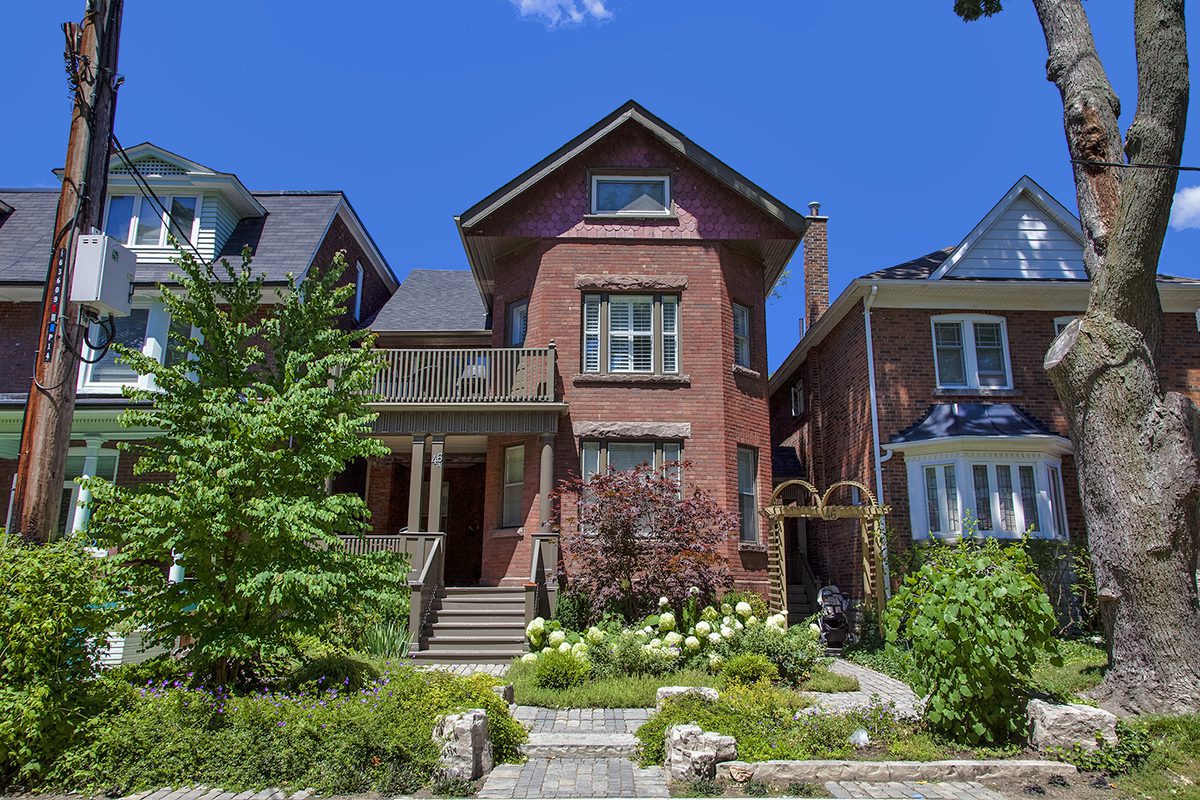
I have more than one favourite spot/location in Toronto. But, I have always loved walking around the Annex, looking at all the old Victorian Heritage Properties. I also love going to the Danforth for some delicious Greek food. I recently moved Midtown, and am loving being surrounded by neighbourhoods of families, restaurants, and parks, which is not what I’m used to living downtown. I certainly love every neighbourhood for their own unique reason.

What is your favourite thing about Toronto?

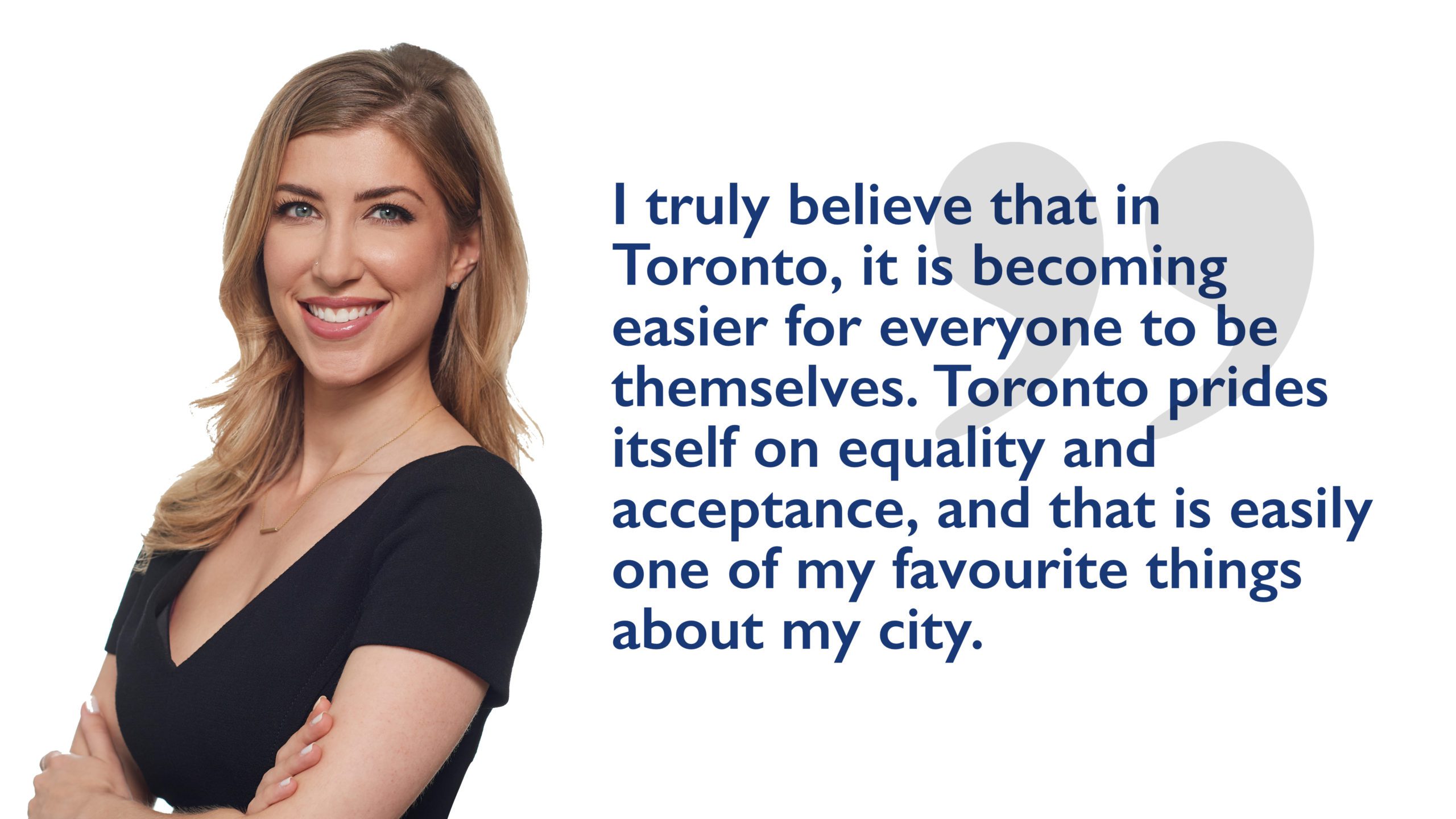
My favourite thing about Toronto is the diversity. I never find myself bored or without anything to do. With the amount of events, festivals, new restaurants opening and places to see, there is always somewhere to go and something to do. I also value the acceptance and pride our city offers. I truly believe that in Toronto, it is becoming easier for everyone to be themselves. Toronto prides itself on equality and acceptance, and that is easily one of my favourite things about my city.

Why did you decide to work in real estate?

I decided to work in Real Estate because it seemed like a natural fit for me. Being born and raised in Toronto has given me an advantage, in that I am very familiar with the city, and I have an educated insight into the lifestyles and cultures, and the true heartbeat of the city. My background is in sales, and I have always had an appreciation and admiration for Architecture and Toronto boasts some of the worlds most beautiful properties in Forest Hill, Rosedale, Bridle Path, just to name a few. If you love Real Estate, then Toronto is a great market to join!

Why did you decide to join Silver Burtnick & Associates?

When I first received my licence, the first thing I did was call all my Realtor friends to get advice on how to choose my brokerage, team or no team, etc. As a new agent, there are many factors to consider when choosing your new brokerage. I was looking to work with a team, as I enjoy working with others, and to find mentors that I could look up to, who will help me grow and train me to be the best agent I can be. The first time I met with Richard, there was an instant connection. With his wealth of knowledge, charming personality, and years of experience, I knew this would be the beginning of my journey with Silver Burtnick & Associates. The team has welcomed me with open arms, and I am so grateful and honoured to be working alongside Richard Silver, Jim Burtnick, Rizwan Malik and Celia Alves, who are all pioneers in the Toronto Real Estate Industry.

How do you see the future of the city? It’s growing, more and more people are coming here to live and work…but housing supply seems to be problem. What do you think is the solution to this?

With the growing population and limited housing inventory, I certainly think it’s going to become increasingly important to make the best use of our space so we can continue to grow. As an example, on June 28, 2018, City Council adopted the Official Plan and Zoning By-law amendments permitting laneway suites in Residential areas in the Toronto and East York District, which will increase the city’s ability to supply the increasing demand for housing in the GTA. I do foresee, that a new generation of condominium owners will be increasing versus freehold home ownership in the future due to increasing prices and lack of supply in the GTA.

What do you think are the current up-and-coming neighbourhoods in Toronto, that will get just more and more popular in the next few years?

With the limited supply and high demand for housing in Toronto, a lot of families and young professionals are moving farther North, East, and West to find affordable housing. New developments are quickly on the rise all over the city to try and meet those demands but some neighbourhoods are still developing and are quickly becoming popular. Riverdale, Upper Beaches, Junction Triangle, Danforth Village, West Don Lands, and Rockcliffe- Smythe, are just a few of Toronto’s up-and-coming neighbourhoods and will become increasingly popular over the next few years.

SK00SK

A Guide to Closing Costs For Sellers

09.21.18 | Toronto Real Estate News

Buying or selling a home doesn’t come cheap. There are taxes, lawyer and mortgage fees, and not to mention your realtor’s commission. And some fees consistently catch buyers and sellers off guard.

Richard Silver, Senior Vice President – Sales at Sotheby’s International Realty Canada, finds that land transfer taxes and the Foreign Buyer’s Tax are usually the ones people don’t see coming:

[The closing costs that catches sellers and buyers off guard is usually] the 2% land transfer tax for the Province and [the other 2%] for the City of Toronto. If they are foreign without their permanent residency, they would also be subjected to a 15% Foreign Buyer’s Sales Tax.

A buyer and seller both have their own closing costs to worry about, but this article explains the fees to expect when you sell your home.

It includes:

Legal fees

While it’s a relatively minor fee compared to the commision, a real estate lawyer can still cost upwards of $1,000 depending on the complexity of the deal. However, the service is well worth it as a lawyer protects you throughout the transaction, makes sure that all the terms in the offer are fulfilled, and that requirements by the buyer and other third parties are met. Silver confirms the service is worth it:

The lawyer makes sure that the buyer has a clear title on closing. Sometimes this is alleviated by title Insurance but [title insurance] cannot replace good due diligence.

In addition to paying for these services, a lawyer charges you for disbursements, which are fees your lawyer had to pay to other companies on your behalf in the process of selling your home. This can include courier services, postages, photocopies, etc… Your lawyer pays these fees on your behalf due to convenience reasons.

Title Insurance

Title insurance is another part of the legal fee. It’s often part of the disbursements, although it’s a little more complex than photocopies and postages. Title is the legal proof that you provide to the buyer and to third parties to show that you currently own the property being sold. The title shows any registered mortgages, liens, and other important details.

Title insurance, on the other hand, protects you from any errors or misrepresentations on the title that could impact you negatively. The coverage usually costs a few hundred dollars but can save you thousands and protect you from fraud, survey errors, encroachment issues, and much more. And this is usually purchased by your lawyer.

If you discover that your last renovation encroached onto your neighbour’s property because of a survey error, title insurance would pay to rectify this issue.

Prepaid fees

Lastly, a lawyer prepares a statement of adjustments to show any fees that you paid in advance that the buyer would have to pay you back for upon closing. These prepaid fees can include tax or utilities, and the final adjustment statement includes these into the closing price.

If you paid for the full year’s land tax in January and the sale of your home closes at the end of March, the buyer has to compensate you for the April-December portions of the land tax—or ¾ of what you paid.

Taxes

Land transfer tax is a common term you may hear in real estate transactions, but it’s not something to concern yourself with if you’re doing the selling. Land transfer tax is usually never paid by the seller and is usually paid by the buyer.

If you’re selling an investment property, however, you need to consider capital gains tax. If the property isn’t your primary property, it’s considered an income or investment property. When you sell, you’re taxed on the appreciation (how much you bought it for – how much you sold it for). 50% of the appreciation value is taxed as income, and this can also push you into a higher tax bracket for the year.

For example, if you make $100,000 annually and sell your investment property with a capital gain of $50,000 (maybe you bought a condo for $700,000 and sold it for $750,000), then your annual taxable income for that year is now $125,000 ($100,000 + (50% of $50,000)) Suddenly, your income tax for the year goes from $27,860 to $33,286.

Mortgage prepayment/breakup penalty fees

If you have a mortgage, selling your home may result in a mortgage prepayment/breakup penalty or a porting charge. This depends on the contract you signed with your lender when you first got the mortgage.

Mortgage prepayment/breakup penalties occur when you pay off your mortgage in advance of the payment schedule and leave the mortgage contract. When selling your home, this is typically done because a new mortgage at current interest rates can save you more money than the cost of the penalty. Every bank is different, but Canada’s Big Five typically charge a prepayment fee of three month’s interests or the interest rate differential—the difference between current interest rates and the interest rate on your mortgage—whichever one is greater.

Calculating the exact penalty can be complicated, but to give you a taste, if you have $400,000 remaining on your mortgage, the penalty can be over $8,000! If you don’t want to pay the penalty or want to keep your current mortgage rates then porting your mortgage is the better solution.

Porting is moving your mortgage contract from the property that you’re selling to your newly purchased property. The fee associated with porting is usually a lot less than a prepayment/breakup penalty.

Porting may not always be possible, however. Some mortgage contracts don’t have this option, or if you’re upsizing, your mortgage broker may need to confirm that you have the income and debt-equity ratio to maintain a bigger mortgage. It’s best to understand the terms and conditions when you first get your mortgage, so you’re not stuck with more unnecessary fees when you sell.

Survey Fees

Surveying is not done as often as it should be, but is highly important to the real estate transaction. A survey is done by a professional who examines the deed and maps of a property to identify what the seller actually owns. By completing a survey before the sale, the parties can buy/sell with the confidence of what is being bought/sold.

Although issues due to land surveys are usually covered by title insurance, title insurance cannot replace a land survey. This $750-$1,000 expense can save you the stress of your deal falling through after the buyer realizes that there are issues with land ownership.

So how do you know if you should get a new survey? Silver advises,

A new survey is always warranted if the building has been added to and/or if fences were moved or removed since the last survey.

AZ00KV

How to Price Your Home to Sell

09.4.18 | Toronto & Neighbourhoods

Real estate prices in Toronto are fickle and month-to-month prices for homes can go from double-digit declines to positive growths in a matter of 30 days. So, in a market such as this, how should you price your home? What factors affect the price? And what are the different pricing strategies that can help you sell your home quickly and for top dollar?

Pricing factors

You should learn what determines the price of a home before learning how to price it. There are a plethora of factors, ranging from bathroom renovations to nearby schools, that affect price, and some factors are valued more than others. When asked what features of a home affect its price the most, Richard Silver, Senior Vice President of Sales at Sotheby’s Canada, says,

Location is tops and then any updates and renovations of course. Then there’s also comparable sales.

The location is affected by other factors such as the nearby schools, the proximity to employment and amenities, and the overall community. Standardized tests like the EQAO or Ontario elementary/secondary school rankings such as the one by Fraser Institute is how many homebuyers assess local schools. Depending on a school’s test scores and rankings, it can either improve or reduce the value of the homes in the area.

Proximity to employment and amenities, such as public transit and highways, is another factor affecting a home’s location. No one likes long commutes, so either living close to or living in an area that provides easy access to where people work can make a location worth that much more.

A second important factor to price is renovations and maintenance. Though it may be obvious, newly renovated homes sell for more money—however, some buyers prefer a fixer-upper that they can renovate themselves. Bathroom and kitchen renovations are known to get the most bang-for-your-buck when it comes to increasing home value.

Lastly, the square footage of the home, the size of the lot, the number of rooms, and the existence of a garage are a few, but not the only, other price factors. The value of all these items ultimately depends on market demand in the area.

How to find your price

Comparisons to homes in the area and evaluations done by a real estate agent or a home appraiser are the most common way to start working on the price. Of the three methods, looking for similar houses or comparables/comps is the most simple for the average seller to do. It involves finding houses in the neighbourhood that have a similar square footage and a similar recency in terms of renovations. Ideally, you want your comp to be on the market, but recently sold listings work too. Walking into an open house in your area can provide a better idea of the comp’s similarity to your property and whether you want to list it for more or less than the comp. Your real estate agent can also provide you with a comparative market analysis that shows all the homes recently sold in your area within a certain price range.

If you don’t want to find a price yourself, having a real estate agent or an appraiser can help. To assess your property’s price, real estate agents also use comps as well as leverage their colleagues. Having a team of real estate agents with years of experience with the homes in the area can provide a more accurate price. An agent also has more experience evaluating prices through comps than the average seller, so their estimations tend to be more accurate. A step up from a realtor estimate is hiring an appraiser who provides a more detailed look at your home’s features. An appraiser usually costs $300-$400, but this cost can be worth it when you’re selling a $1 million property and the difference between a proper estimate and an improper estimate can cost you thousands of dollars.

Overall, Silver’s best tip is,

In today’s market one must look at the asking price on comparable properties and at what the end price was, especially if the sale was over-asking. A lot of sellers price [the home] at the end price and forget that it is the asking price that helped achieve that end price.

If you overprice, you won’t even reach most of the buyers

Pricing strategies

On most occasions, sellers follow one of three strategies: underpricing, overpricing, and pricing at market value.

Underpricing

Underpricing is knowingly listing your home at a value that’s lower than its market value with the intention of getting top dollar through a bidding war. This method is highly popular and sometimes brings great results; however, you can also end up with only a few bids and take a loss on the sale. Many in the real estate industry, from sellers to sales representatives, are highly against this tactic. Intentional underpricing lures individuals who can’t afford the property into thinking that they can. This ultimately leads to disappointment for many home hunters when the sale goes for a significant amount over asking price. The underpricing strategy can get a seller well over 15 bids, but realistically, only 3 of the 15 buyers can actually afford it.

Silver chimes in on his thoughts on underpricing:

If you intentionally underprice and don’t achieve the price you are hoping for, then you are caught between a rock and a hard place. You should always ask, ‘Can I live with the price I am asking?’ If not, you need to amend the price higher.

According to Richard, there really aren’t any situations where you should underprice:

Listing under market by too much is dangerous unless you are prepared to accept that price and majorly underpricing says that you are trying to manipulate the marketplace

Overpricing

There are a variety of strategies that involve listing a house for more than its market value, and it can also be the sign of an overly ambitious seller. There are many risks involved with overpricing, as potential buyers may be afraid to offend the seller by offering less than the listing price. This may lead to no bids which result in a stale listing that has no interest.

If you overprice, you do yourself an injustice as it will take longer to sell and you may get a lower price. You create a situation where there is no sense of urgency to offer and the property hangs on the market. That is not a big issue in a up-moving market but when the tables turn, you are left hanging.

Not to mention, if you overprice your home, you’re losing potential buyers, because they won’t even see your property when browsing.

Pricing at market value

As mentioned prior, you need to do your research and/or hire a real estate agent/appraiser to find a proper market value for your home. This requires looking at the current market, the surrounding areas, and the home’s features and qualities. Selling at market value is the strategy to use in most situations, as it gives potential buyers a realistic expectation for the capital they’ll need for a winning bid and reduces the likelihood of a stale listing.

But you might be thinking, what if I could get more than market value? Why not increase the price?

Richard says:

I always suggest to list close to the market and allow a week of showings before you entertain offers. It is important to know that no stone was left unturned and the price is acceptable.

In the end, it all comes down to doing research before deciding on the price:

The market sets the price. If you underprice or are right on you should sell quickly. If you overprice, you will stay on the market and there is a loss of value in the eyes of a buyer.

AZ00KV

Who is The New Affluent Real Estate Buyer?

08.9.18 | Business

A research conducted by Sotheby’s International Realty US reveals that ‘new affluent’ consumers are more self-reliant than established consumers when it comes to looking to buy or sell property. This has revolutionised the real estate market; stirring agents to think out of the box to provide more personalised services and amenities, which this new global band of rich ultras have not looked for or thought of themselves.

Who is the new affluent consumer?

New affluent consumers are generally young and urban. Their employment profile aligns with their educational qualifications and achievements. Most affluent households have multiple earners and homeownership is extremely important for them in order to be affluent.

The new affluent are technology savvy and conduct their own research when purchasing or selling a property. Therefore, real estate agents have to alter their traditional role in order to keep up. The report suggests that there has been a considerable decrease in the use of real estate associates by new affluent consumers when selling their properties as compared to established consumers.

In 2017, only 26 per cent of new affluent used the services of a real estate agent while 64 per cent of established affluent seek the expertise of real estate agents.  Similarly, when buying a property, 28 per cent of new affluent reported using professional services in contrast to 72 per cent of established affluent. This is because this group is highly confident and motivated as well as independent when it comes to tasks being accomplished.

In addition, they are also getting help from technology. In the age of digital advancement real estate websites like Knock, REDFIN, Opendoor, Zillow, realtor.com, etc. have made the work of real estate agents extremely challenging especially when the answers to most of your solutions are just a few clicks away.

What is important to the new affluent consumer?

The study reveals three important factors that determine the decision of new affluent consumers when selecting an individual or company for buying or selling property. These factors are brand, attentive service, and use of latest technology. When it comes to brand these consumers want to experience something that is highly worth their time to justify their spending. They want the services and amenities to be memorable. That means that a real estate agent should concentrate on selling the experience rather than products.

This wil also make real estate agents work harder to provide personalised services that cater to one’s needs and requirements, creating a niche for themselves in regards to the services they are providing to their clients. Here, active learning comes to play as the aim is to make it right the first time, saving the client’s time and money and not make them look at properties, which do not match their lifestyle at all.

The research also reveals that the new affluent consider Sotheby’s International Realty as a brand that stands apart from other real estate brands. In fact, Sotheby’s International Realty is considered a highly prestigious commodity outside the real estate arena. It ranks fairly high when compared to Louis Vuitton, Prada, Gucci, Cartier… New Affluent also consider Sotheby’s International Realty as luxurious, high quality, exclusive, classic and global. The research suggested that the company is able to build a long lasting connection with the new affluent group because of the customised services they provide. The study further states 27 per cent of consumers who have homes over $1 million (US) avail the services of Sotheby’s International Realty.


The new affluent prefers experiences over products

Canadian affluent consumers

From the Canadian perspective, Richard Silver, Sales Representative and Senior Vice President-Sales at Sotheby’s International Realty Canada states that there are some traits common to all new affluent consumers.

Our new affluent clients prefer shorter commutes; choosing to spend more family time and less time travelling. They insist on good schools and easy access to restaurant, shops and entertainment.

Good real estate agents should be aware of some of their clientele needs and requirements even before they meet.

Take for example an agent today has to be keenly aware of schools, their ratings as well as proximity to playgrounds and other family amenities. They should know clients with children consider parenting their top most priority. In this case agents should start their neighbourhood search with this important nugget in mind.

Silver also notes that the new affluent are very busy people and that is why it is imperative that a thorough research be conducted before presenting the properties to them.

Most of our new affluent are young couples who are both motivated to work and have careers. If they are stay-at-home parents, they are equally busy in their daily chores. They are highly determined and will challenge the most seasoned agent in getting what they desire. These are the traits of about half of our clientele.

Silver adds that their clients are technologically sophisticated and like using different types of gadgets and online resources to get information.

This is why it is more important than ever for an associate to speak their language and communicate with them at their level of digital suaveness. Real estate agents should continuously educate themselves of latest devices and gizmos that are being used in transmitting information to the clients faster and conveniently.

The new affluent are born in the age of digital revolution, they feast on information, which they get on the internet and use different tools to remain online 24/7. This band of social media savvy are aware of new trends and innovations in real estate as well also other sectors compared to established affluent. In the world of start-ups, people are not shy of taking risks and doing things by themselves. The new affluent have embraced this mantra and with technology on their side, businesses have to be on top of their game while catering to this section of clientele.

PS00KV

Welcome to Lawrence Park

08.8.18 | Toronto & Neighbourhoods

Let Jim Burtnick give you a tour of Toronto’s Lawrence Park neighbourhood.

If you work in the city and you’re looking for a very family friendly neighbourhood, not too pretentious, with great public schools and private schools, and a short commute to Downtown – Lawrence Park is for you.

People of Toronto: Yollanda Zhang

08.1.18 | People of Toronto

Yollanda Zhang is the founder and the leader of Panda Mandarin, a Mandarin school for children and adults in mid-town Toronto. Panda Mandarin is unique in that it aims to make the language fun, engaging, and authentic. Zhang’s newest venture is Girl.Strong., a girl empowerment program for young girls to gain confidence and to take charge. Girl.Strong. is a project that is inspired by Zhang’s late grandmother, who was her role model and continues to be her muse.

What’s your connection to Toronto?

I immigrated with my parents from China to Toronto in 1990. I went to engineering school and worked in the corporate world for a few years. Afterwards, I decided to make a career switch to teaching math and physics in high school. I made another career switch into entrepreneurship when I started Panda Mandarin in mid-town Toronto. I chose mid-town Toronto because I live here with my husband and daughter. My husband and I love the area and really wanted our daughter to learn Mandarin in the community.

What makes Panda Mandarin unique compared to other Mandarin schools?

We can summarize our teaching methodology in three words: fun, engaging, and authentic. When we train our teachers, we tell them that “before you teach this lesson, you need to look at it through the eyes of the child and actually see if they would have fun and feel engaged. If you feel that they wouldn’t, you need to re-examine your methodology and make it fun and engaging.”

Additionally, for us, authentic means giving students things that they can actually use. From my husband’s and my own experience, we were tortured with memorizing Chinese poems in our Chinese schools, and I often wondered why these schools spent so much time teaching us these things we would hardly ever use. Now, I understand the cultural relevance, and how it’s great for kids to learn and stay connected to the heritage. However, it’s still really hard for children to learn a language when memorizing poetry is a big part of the curriculum. For Panda Mandarin, it’s very important to teach children language that they can actually use. We’ve heard stories of our students and their families going to Asia and having their child’s Mandarin help the family during the trip. That’s what we’re really proud of.

Why is Mandarin becoming more important in Canadian society?

There are a few different reasons. First, many first-generation Chinese-Canadians can’t speak their heritage language anymore, so we want our kids to learn it. The second reason is that China is becoming a huge economic power and there’s a lot of attention on how this will affect the job market going forward. So speaking Mandarin can increase one’s employability. The third reason is that learning a second language is really good for children. Studies show that learning tonal languages—like Mandarin, Cantonese, and Vietnamese—can unlock a part of the child’s brain that no other learning of languages can do. The more of a child’s brain that can be developed through different activities, the better it is for their future learning. Studies have also shown that people who can speak two or more languages have a lower chance of developing Alzheimer’s.

The pictures and videos on the Panda Mandarin website show that your student body is very multi-cultural. Where do non-Chinese parents find value in their children learning Mandarin?

The key benefit that parents find is that we allow children to see the world through a different lens. Anytime we give a child or person a chance to speak a new language, they gain access to a whole new world. Panda Mandarin gives students the tools to access this new world. Because Toronto is so multicultural, it’s easy for our students to go to a Chinese restaurant and order in Mandarin, and instantly, they’re building relationships that they wouldn’t have without these language skills. Parents are very proud of this and so are we.

Of all the Panda Mandarin classes, do you have a favourite?

How do you pick a favourite child? It’s really hard to pick a favourite mainly because each class is so different. For example, the corporate program, which we taught at Sotheby’s, is a really fun experience because the participants are amazing people. Teaching children is a totally different thing. They see the world through such fresh eyes. And for us to have the experience of seeing it with them is incredible.

At the moment, we’re launching a new program to focus on girl empowerment. It’s called Girl. Strong. I can easily say that this program is one of my favourites right now because I’ve spent so much time getting it off the ground. Girl. Strong. is like my baby in its infancy stage whereas all the other programs are more mature and able to function on their own.

Girl. Strong. is inspired by your grandmother. Can you elaborate on your relationship with her and exactly how she inspired Girl. Strong.?

My grandmother raised me from almost the day I was born until I was three-and-a-half years old. She had a very tough upbringing, and it really shaped who she became. She was always told that she wasn’t smart and that she was fat. She really didn’t have any positive role models in her life other than her mother who was often away trying to make a living. As a result, she became socially withdrawn and had really low self-esteem. But in reality, she had had so many accomplishments in her life. She was very smart and hardworking and patient. She just didn’t see that in herself.


Yollanda learning to use the abacus with grandma.

I thought that it’s incredibly unfortunate for girls now to feel the same way. Even girls who live in privileged communities don’t always see themselves positively. I’ve interviewed many moms and daughters to launch this program, and I realized so much of what I saw in my grandmother might be happening to girls in my own community. I really want to do what I can and use the skills and experiences that I have—coming from a male-dominated engineering sector—to offer girls in the community the ability to live limitless lives. I think this could be an incredible gift that I could give.

Girl. Strong. focuses a lot on the mother-daughter relationship. Why is that and why do you feel that the mother-daughter relationship is important for female empowerment?

I think it really comes from the research that a girl’s (or any person’s for that matter) view of the world is shaped by the time that they’re 14. In a girl’s early life, her time is spent with her mom as the primary role model. If a girl’s relationship and foundation with that primary role model is not a positive one or if it has underlying issues, it could really impact the way a girl views the world at large.

From personal experience, I had experienced an attachment injury because I was raised exclusively from a young age by my grandparents, and it was challenging getting over that. My mom and I had to work hard to rebuild some missing pieces of our relationship, even if the event happened at a young age. This gave me a really unique perspective on the importance of mother-daughter relationships, and it also gave me a sense of urgency and importance in this relationship. If you don’t deal with it earlier on, when you get older, harder issues will accumulate to prevent your relationship from flourishing. The mother-daughter relationship is always known as the most beautiful but complicated relationship.


Yollanda with her daughter

Going from a high school teacher, with a secure income and a legendary pension, to an entrepreneur, how did you feel about this transition?

I have to fully admit that going from teaching to entrepreneurship has been really hard. It’s not something that I thought would be so hard to overcome. I’ve always been a successful professional and part of people’s judgments of a successful professional is that they make a good living. So for me, it has been a bit of an identity issue. I’m not earning the level of income that I used to earn, but as an entrepreneur, I’m paid in different ways—for example, I have more flexibility to volunteer at my daughter’s school or to pick her up every day. I think the hardest part of this transition is that identity issue. I’m no longer that successful individual who’s contributing to my family financially. However, my husband is super supportive—he has never cared about my reduced income. I sometimes fantasize about going back to my full-time job and making a stable income and pension, but I think a lot of entrepreneurs go through this.


Panda Mandarin Team

In your Globe and Mail article, Lost in Translation, you’ve expressed frustration about the lack of emphasis on integrating an international language in the Canadian school system. What is the first step you’d like to see in the Ontario education system in accommodating students from different linguistic backgrounds?

If I had a magic wand that could make some significant changes, I would love to have international languages offered as immersion languages in public schools the way French is. Since this article was published two years ago, nothing has really changed. These laws are really difficult to modify, so I know no magic wand can change laws immediately. But perhaps immediately, they can look at their funding model to see if there’s a better way to integrate heritage languages, like Mandarin, into day-school curriculum. Since students would also learn with their peers in a familiar school environment, it makes a big difference with acceptance. I think is more achievable than a full immersion model and will make a huge impact on language retention and accessibility.

AZ00KV