People of Toronto: Brendan Dolan

04.26.18 | People of Toronto

Brendan Dolan is a recently registered Acupuncturist and Traditional Chinese Medicine practitioner working with Ryan Tze-Wai Longenecker out of their Avenue Acupuncture Clinic in North York.

He claims he’s afraid of needles.

Perhaps this is why he very generously offered to give me a free acupuncture demonstration as an accompaniment to our conversation. Lots of people are wary of having little, pointed things stuck in them, and I think he hoped that a written account of an actual ‘needling’ session might allay some fears.

Avenue Acupuncture is located at 1896 Avenue Road, in one of those upstairs-only offices with a front door so modest and shy, that I nearly walked past it. Inside and up the stairs, the office is a light, serene place with interesting artwork on the walls and meditative music playing the background. Various credentials and awards (the clinic has won the Consumer’s Choice Award four years in a row now) decorate the wall in one of the treatment rooms, along with a shelf full of dried, crystallized herbals.

[fvplayer src=”https://www.youtube.com/watch?v=E6_8DwN0g6M” splash=”https://i.ytimg.com/vi/E6_8DwN0g6M/maxresdefault.jpg” width=”780″ height=”450″ caption=”About Avenue Acupuncture”]

This isn’t a ‘high-volume’ clinic, Dolan explained after I arrived, but they can be fairly busy and some patients come from as far away as Europe to see Mr. Longenecker, who is a very rare specialist in degenerative eye diseases. Before you ask, yes; they are treated with acupuncture, and no, the needles don’t actually go into your eyes.

Since this was a one-off demonstration, Dolan decided to put me through what he called a ‘feel good’ treatment, designed to bring a sense of calmness and well-being. This involved lying on something a bit like a massage table while Dolan carefully placed needles in my arms, legs, feet, and forehead.

Although not every needle was completely painless (apparently, they can hurt if they hit a stressed or ‘blocked’ area), none of them were much more than a prick, and most weren’t even that. One or two I simply didn’t feel at all. I was, however, a bit disappointed by their size. I’ve always envisioned acupuncture needles as very long, elegant implements, but Dolan’s are tiny, short, disposable things no longer than a regular sewing needle, and much, much finer.

Once all the needles were in, the next phase of the treatment consisted of me lying still for 20 minutes while they did – whatever it is that acupuncture needles do. There are several theories, and all of them may be right. Dolan himself readily admitted that a large part of his craft is still, basically, a mystery. He knows what works, but he doesn’t always know why it works. The same is true in all branches of medicine if you dig deeply enough, but I’m not sure if many doctors are willing to admit it.

Sadly, I didn’t experience the almost euphoric reaction to the treatment that Dolan had said was possible, but I was certainly calm – dozing off on the table seems to be quite acceptable, and may even be encouraged. The office is even equipped with a heat lamp to keep your toes warm while you wait.

What’s your connection to Toronto?

I was born and raised in Toronto. I’ve lived here all of my life. And I’ve actually worked in this neighbourhood for some reason ever since my early teens. One of my first real jobs was working at Videoflicks which just closed down after 30 plus years across the street. Then when I graduated from university and I was looking for a job I worked at the Safari Bar and Grill. And here I am, almost 30 years later – I’m 44 now – still working in this neighbourhood. So there’s something about this strip. I have a personal connection to this strip.

You went straight from running a construction company to studying traditional Chinese medicine. How did that come about?

We did high-end renovations and custom homes. Once, when I was doing a job in Forest Hill, a ladder slipped and I fell down from the second-storey window onto the flagstone below. Luckily I didn’t break anything, but I did get pretty banged up; I was in a lot of pain. And there was an older framer that I worked with who was still doing this really heavy labour – whereas I was a bit more of a pencil pusher – and he gave me a list of the people who had helped treat him over the years. And from that I got exposed to Asian medicine; I was blown away by the results. I was just captured.

So I decided to make a mid-life career change. I went back to school for three years, full time. I did the Registered Acupuncturist program, [at the SSC Acupuncture Institute in Toronto] and then I did an additional fourth year of advanced studies for prescribing herbs and learning herbal formulas.

How did you end up back in your old stomping ground on Avenue Road?

For practical reasons, I wanted to be somewhere relatively close to where I live. I live near Bathurst and St. Clair, so I can get here in 15 minutes if I’m driving, which is great. I liked working in this neighbourhood, as I mentioned with my past history, it was very appealing to me to come back here and see some familiar faces and some of the same businesses still going here.

And Ryan and I developed a kinship because of continuously running into each other at these workshops. We kept going to the same workshops, then we started having lunch together, and I had one lunch with him and I thought ‘you know, I’d really like to work with this guy’, and thankfully he left the lunch thinking the same thing. And the rest was history. We have a good synergy together.

Tell me a bit more about your training. You did a lot of extra stuff.

I did as much as I could. I was very lucky I have my wife – it was very difficult, but she was able to support me. I figured if I was given this period of time, I was going to do everything I could to make the most of it. So I volunteered at a lot of clinics, I interned with a lot of people, and I went to every workshop on the planet until I found this one teacher about two years ago. And I was just captured, and now I follow her teachings almost exclusively.

Who was that teacher?

She grew up in Quebec, her name’s Suzanne Robidoux. She moved to China about 18 years ago, and she was trying to find these old teachers while there was still a chance. And after proving herself and mastering the language and dedicating herself, they realized ‘Ok, this person is unique. We are going to pass on this information to her’. Because what they’d come to recognize is if they get it back to the West, it’ll survive. Now Suzanne spends half of the year travelling around the world teaching people like myself, and the other half treating very severe neurological cases in China. MS. ALS. Parkinson’s. Stuff that we say is incurable. She’s my hero.

The type of medicine that you and Ms. Robidoux practice was in danger of dying out in China?

My passion – what I really, really, really love – is Classical Chinese medicine. Classical Chinese medicine is what existed before the Cultural Revolution in China. When the Cultural Revolution happened, all these great doctors who were associated with royalty or who treated the royal court or the emperor himself – they were put in jail, they were executed, or, if they were lucky, they got the most demeaning job possible.

So the story with Suzanne’s herbal teacher is; there was a guy named Wang Xian Zheng who treated the royal court. When the Cultural Revolution happened, he was given the job of teaching young children– not even teaching grade-school kids, that would be too high up. Just young, young kids. But he was smart. There’s a very famous book written about medicine, and it’s written in little paragraphs. He told the kids that they were like, little parables or nursery rhymes. And they would memorize them and recite them back to him.

And one of those students was Dr. Hu. Dr. Hu went on, grew up, had various different jobs, and he realized at some point with everything that was happening around him, that if he didn’t save this knowledge it would be gone forever. So he would meet, in private, illegally on Sundays, and he had this little group of students that he taught. Professor Hu, of course, is not alive anymore, but he taught Dr. Feng, and Dr. Feng taught Suzanne.

Acupuncture has become fairly mainstream in Canada now.

The industry has changed dramatically. About five years ago regulation came into play. So in the same way that somebody would say that they’re an RMT, or Registered Massage Therapist, now you’re an RAC, a Registered Acupuncturist, and or a Registered Traditional Chinese Medicine Practitioner. Those are the two designations that we have in Ontario. And that means that there’s an independent body, the College of Traditional Chinese Medicine Practitioners Association of Ontario, that regulates us on the public’s behalf. Their mandate is to make sure that I’m properly educated, that I’m treating people safely, that there’s professional conduct.. and if anything goes haywire and things aren’t good, it’s dealt with. And that’s changed things a lot. It helps us get coverage through insurance, which is growing, and that’s obviously important because the cost can be prohibitive for people.


The Avenue Acupuncture Clinic

What are some of the biggest differences between the traditional Chinese approach to medicine and what’s generally practised by Canadian doctors?

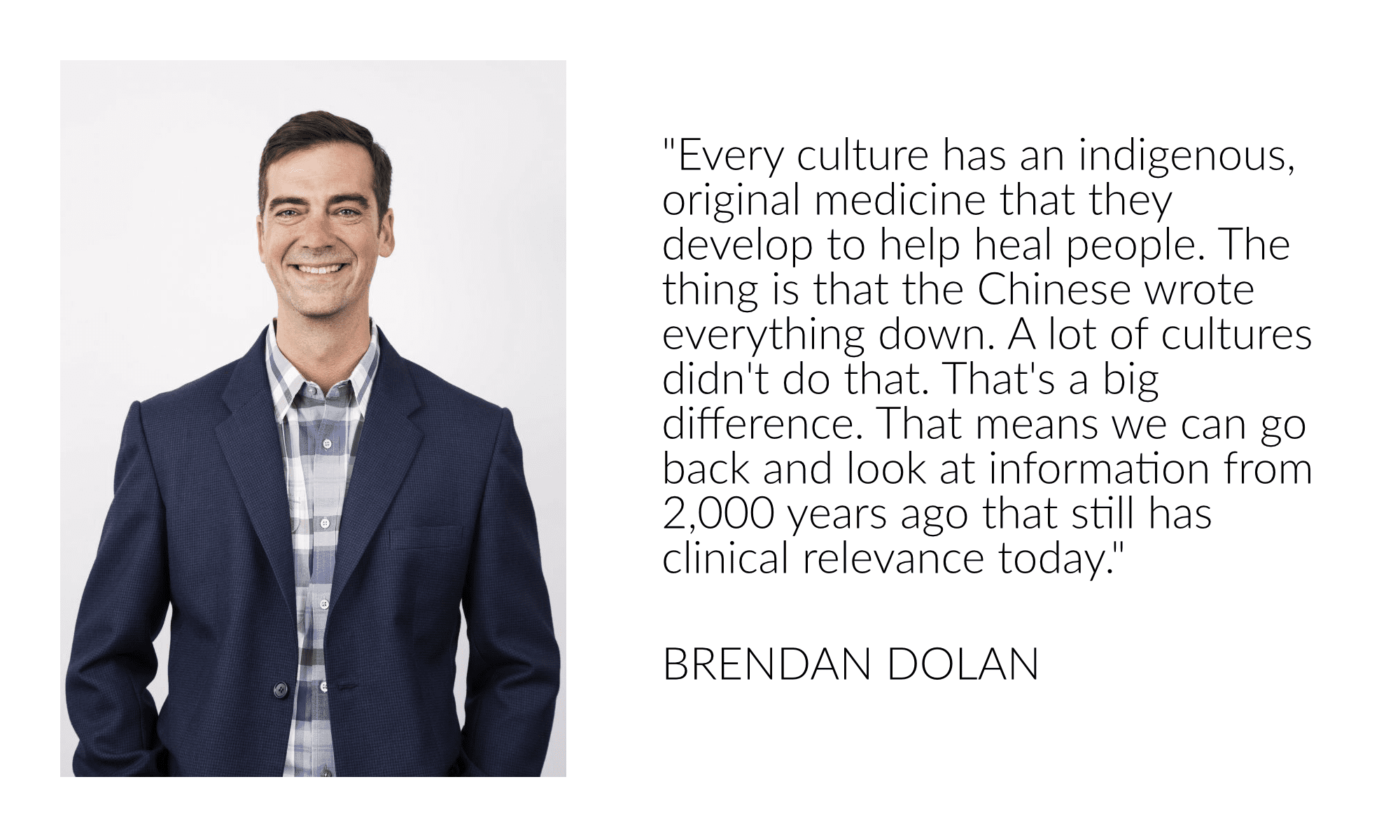
First off, it’s very old. Every culture has an indigenous, original medicine that they develop to help heal people. The thing is that the Chinese wrote everything down. A lot of cultures didn’t do that. That’s a big difference. That means we can go back and look at information from 2000 years ago that still has clinical relevance today. Also, several thousand years is a lot of troubleshooting. That’s a lot of time to kind of figure out what works in this case, what doesn’t work in this case. We just don’t have that history.

You know, modern Western medicine is mind-blowing with the stuff that they can do. My father had an irregular heartbeat recently, and they made a little incision in his groin, took a laser up to his heart, found the part that made the irregular heartbeat, zapped it, pulled it back out, and I picked him up that night. That’s mind-blowing, right? But it’s also mind-blowing that there are formulas based on liquorice that can treat irregular heartbeat, and are very, very effective.

The thing is – the way the Chinese medicine works is – it’s a pattern-based diagnosis. So one example I give people is headaches. So you have headaches, you want to get rid of your headache. You take an Advil, headache goes away. But for some people, the headaches keep coming back over and over again. And the Advil never gets to the root problem.

What’s unique about Chinese medicine – traditional Chinese medicine and Classical Chinese medicine – is we take that pattern which is unique to you. Where is your headache? Oh, it’s at the front of the head. Oh, no, it’s on the side. Oh, it’s on the top. It feels like this wet band around my head and I have trouble concentrating. These are all different diagnosis for us. And asking about sleep, your bowel movements, menses, your emotions… because all of these things are clues for us to find this pattern. When you can unlock the pattern, you get to the root cause. The person never has headaches again. It’s very individualized and personal, which I think is missing in some medicine… Now, that said, one thing I always emphasise is; I love Western medicine. I don’t think ‘Oh, give up Western medicine, just do this.’ I think they work amazingly in conjunction with each other.

Speaking of those 2000 years of troubleshooting, how has acupuncture evolved in modern times?

A great example would be a doctor in the United States who’s done a lot of work – contemporary work, some fascinating stuff – named Dr. Niemtzow. And he got in with the U.S. Navy. He developed something they called ‘Battlefield Acupuncture’. The idea is that you can use a specialized needle called an ASP. If you look at it under a magnifying glass it looks like a little arrowhead. And it’s gold plated. And what you do, is you insert it into specific areas of the ear. When you do this effectively and properly, the person’s pain instantly goes down from an eight out of ten to a two out of ten.

The needle itself is very very painful when it’s inserted. It’s not for the faint of heart. And it stays in for five to seven days, and then it will just naturally fall out. But during that time it’s giving constant stimulation to this area. And the U.S. Navy has done a ton of research on this to try to figure out why this is happening. So if you look at [an acupuncture chart of] the ear, there’s a map of the human body upside down. So when you needle in, say, the sacrum [lower back] area of the ear, it causes the same response in the body as if you actually stimulated the sacrum. And they’ve been able to show this. It’s wild.

Do you ever treat patients with ‘Battlefield Acupuncture’?

The last time I used that was for a patient who’s had migraines for twenty years. He doesn’t care that it hurts. He’s miserable. His life sucks. He can’t function. I said ‘let’s try this. It’s had really good studies done on it. It’s going to hurt, are you up for it?’ ‘Yes.’ It hurt, but his migraine was gone. But if you come in the first time I’m not going to be using ASP needles on your ear and torturing you. You’d never talk to me again. But in the right case that would be the right thing.

So where do the needles normally go?

In the classical system, it’s five points on six channels from the elbow down and from the knee down. That’s the only place you have to do. It will treat every part of the body and the internal organs.

But you also perform scalp acupuncture?

One of the things I specialize in is scalp acupuncture. With scalp acupuncture, we can treat neurological disorders like post-stroke paralysis. So I’m treating a post-stroke patient. We know that certain parts of the brain are associated with different things. There’s the motor line. This is fine motor control. This is the speech area. So I’ll needle in those areas, and we know that the right side of the brain controls the left side of the body, ok? So this patient has right-side paralysis, so I’ve been needling on his left. There’s a lot of redundancy in the brain, and by stimulating those areas and having the patient do a movement, you can re-light up those areas and they can get back movement much faster, or in cases where they wouldn’t get it back. His speech has improved, his gait, his walking, has all vastly improved. It’s an uphill battle, but it works.

What are some of the most common problems that you treat?

Pain is obviously a big one because we’re good at it, and so many people have problems with it. Fertility treatments are very popular. There’s a bunch of baby photographs at our front desk – Avenue Acupuncture Babies.

How do you treat the ‘untreatable’ conditions like Parkinson’s, ALS (Lou Gehrig’s Disease) and Multiple Sclerosis?

Scalp [acupuncture] and herbs. Scalp, body and herbs. But with neurological disorders, in my opinion, you need to include the scalp, because it’s a neurological disorder. But then, there’s a reason why that person has ended up there, and that really benefits from being treated internally. Tennis elbow? 100% you can treat with just acupuncture. Can you get faster results if you combine it with herbs? Definitely. Anxiety, stress, insomnia, all respond really well to acupuncture but can also be treated conjunctively with herbs. Eczema, psoriasis, complex skin disorders; much much much better and faster with herbs.

You’ve mentioned treating depression. How do you go about that?

It can be just acupuncture, but it works well with herbal too, because again, there’s always a cause. And we want to remove the cause. And usually, the cause is our diet and our lifestyle. A depressing diet is one that consists of a lot of dairy, a lot of cold-temperature foods, a lot of sugar, a lot of fat, and a lot of processed foods. Do you ever eat anything that makes you feel kind of clogged up? Like, phlegmy? Think of it, like, getting gummy in your mind. I have a particular interest in depression because I went through a fair amount of depression when I was younger. So, you know, if you can cure something in yourself and really understand it well both from the patient’s perspective and the practitioner’s perspective, then you can really empathize and you can really help.

25% off your first appointment when you book with Brendan!

JN00KV

Over a Pint with Andrew Fogliato

04.18.18 | Media Mentions

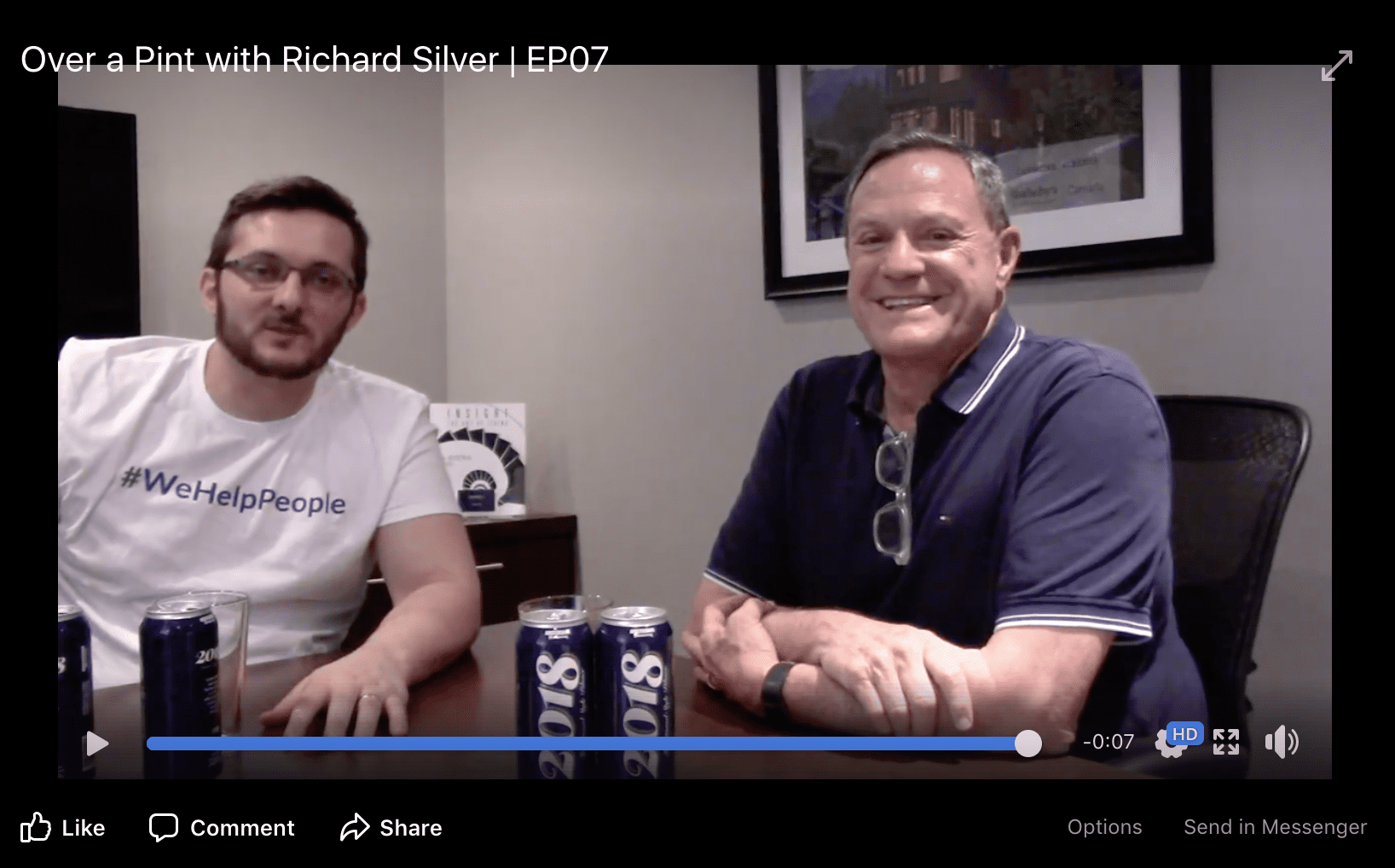
Andrew Fogliato interviewed Richard for his podcast called “Over a Pint.” Tune in and listen to Richard talk about his real estate beginnings, travelling and meeting new cultures, leading a team and real estate marketing evolution over the years.

SK00SK

A Guide to Canadian Mortgage Rule Changes

04.9.18 | Toronto & Neighbourhoods

Canadian financial regulators announced their seventh rule update since July 2008 to tighten mortgage rules. Announced last October and effective since January 1st, 2018, this new “stress test” will make sure that homeowners can afford the house that they’re looking to buy and also, hopefully, cool the Toronto and Vancouver housing markets.

This stress test is designed to see if the borrower can pay back their loan at a higher rate than they actually have to, thus, accounting for potential interest rate hikes. As well, it will prove that the borrower can continue to meet mortgage payment obligations in times of personal financial turmoil, such as job loss.

Toronto Mortgage Advisor Darlene Hanley of the Hanley Mortgage Group thinks the stress is a good idea:  

The consequence of not putting in a stress test is that in the event of a recession we could have a collapse of the real estate market. Ultimately what we want is a stable reliable market with low price volatility where people can buy and maintain their homes with confidence. These [new mortgage rules] create a foundation for that environment.

The new criteria for uninsured mortgages, under the 2018 mortgage rules, include a qualifying rate equal to the Bank of Canada’s five-year benchmark (5.14 per cent as of March 2018) or the borrower’s contract rate plus 2 per cent—whichever number is higher.

For insured mortgages, the qualifying rate is the greater of the Bank of Canada’s five-year benchmark and the borrower’s contract rate. Additionally, secured line of credits are qualified with either the line of credit’s contract rate plus 2 per cent or the Bank of Canada’s five-year rate—again, depending on which is greater.

Mortgage Approval Criteria

For example, if Sally had an uninsured mortgage at a rate of 3.3 per cent and the Bank of Canada’s five-year benchmark sat at 5.14 per cent, then Sally’s qualifying rate would be 5.3 per cent (her mortgage rate of 3.3 per cent plus 2 per cent). Additionally, if Sally’s looking to purchase a $500,000 property with her 3.3 per cent mortgage rate, a five-year fixed closed term, and a 25-year amortization, she’ll have a monthly payment of $1,960; however, Sally needs to prove that she can make monthly payments at 5.3 per cent or $2,409 to get approved.

On the other hand, if Fred had an insured mortgage at a rate of 3.3% and the five-year benchmark was 5.14 per cent, Fred’s qualifying rate would be 5.14 per cent because the five-year benchmark is greater than his mortgage rate.

Example of Mortgage Rules

Who will and who won’t be affected

Anyone securing a mortgage after January 1st, 2018 will fall under the new rules. Additionally, borrowers looking to refinance or to change lenders will also need to qualify under the new criteria. So, if a homeowner is looking to borrow against their property for renovations or has found a better rate at a different lender, they will have a harder time making such an action due to a higher qualifying rate.

In contrast, individuals who bought a pre-construction condo, secured their mortgage before January, 1st or are renewing a mortgage will qualify under the old rules. Alternative lenders, such as credit unions, are also not required to follow new qualifying rates but can voluntarily do so; however, these lenders tend to charge much higher interest rates. Lastly, in the scenario that someone had a pre-approved mortgage before Jan 1st, lenders, at their own discretion, can provide a 120-day window (starting January, 1st, 2018) for the borrower to buy a home under the old rules.

The mortgage rule changes will primarily affect those with uninsured mortgages—homebuyers paying a down payment of at least 20 per cent of their property value and, thus, aren’t required to buy mortgage insurance. Individuals with insured mortgages have already been undergoing another stress test which came into effect in 2016. Therefore, people in the market who are looking to switch to a more expensive home or who can afford a 20 per cent down may have a harder time than before searching for a new mortgage.

Overall, these changes are expected to affect over 100,000 Canadians, according to a report by Mortgage Professionals Canada. Many buyers will have to adjust to buying a smaller home or renting for a while longer.

Richard Silver, Senior Vice President-Sales at Sotheby’s canada says the new rules had a cooling effect on the market, as expected:

The new mortgage rules are affecting the buying power and borrowing power of all Canadians and has had a chilling effect on the market for those hoping to make substantial movements up in housing. Sadly it affects those that really need the assistance that mortgages can provide. Young families are probably the hardest hit and [the new rules] will also make stay-at-home parents head back to the workforce sooner.

To the Canadian economy, however, Darlene Hanley doesn’t believe much will change:

There is still a need for housing. All this will do is change the levels of affordability for given types of homes. Ultimately it shouldn’t make any difference [to the economy].

Tips for Obtaining a Mortgage in 2018

Tips for obtaining a mortgage in 2018

Paying off your debt

Any debt that a potential homebuyer carries can affect the mortgage that they qualify for. Eliminating outstanding loans or outstanding credit card debt can help a homebuyer find the best mortgage arrangement.

Avoid big purchases

Similar to paying off debts, bringing in new debt while looking for a mortgage is not the best idea. Lenders typically re-check a borrower’s credit before closing, and any new debt could prevent an approval. While a $4,000 vacation may seem like a great idea, it can wait till after the mortgage is approved.

Stick to your job

Lenders need to know that you have a secure source of income to make monthly mortgage payments. While quitting a job one hates may seem like a great idea, proving a reliable and secure income is crucial to getting approved.

Keep within your means

The new 2018 mortgage rules will reduce purchasing power for many homebuyers, but this may be for the better. Just because a lender approves a million-dollar mortgage, it doesn’t necessarily mean the borrower can afford it. Approval amounts are based on income and credit reports and do not usually factor in personal expenses.

AZ00KV

Buying a Property in Costa Rica

Buying a Property in Costa Rica

04.3.18 | Toronto & Neighbourhoods

It’s April. Yet, we’re still anticipating another snow storm to hit Toronto. The winter jackets just aren’t ready to hit the storage but many Canadians were (mentally) done with winter weeks or months ago.

The thoughts of nightmare snowstorms drive us to board airplanes to the warmer climates of Central America. Costa Rica is one of the spots that are top of mind for those sick of the freezing outdoors and, with enticing real estate prices and a recent decade of development, some Canadians are permanently leaving the wintery north for a home in Costa Rica.

While uprooting yourself and your family to move to a country in Central America may seem like an outlandish idea, buying property in Costa Rica, whether as a home or as an investment, is becoming a more common trend among North Americans, says Gabriel Araya, a property specialist at Costa Rica Sotheby’s Realty.

Costa Rica has no army, low taxes, amazing weather, and a lot of flora and fauna. The country is also foreign friendly from a variety of perspectives and a short flight from the US and Canada.

The Process

Foreigners can purchase property in Costa Rica the same way locals do. The first step is to find an agent to draft an offer and negotiate the pricing and terms. When the buyer and seller reach an agreement, there is typically a 10% deposit. A government-registered escrow account should hold the deposit. And final closing typically occurs 30-60 days after both parties agree on terms and pricing.

Reserva Conchal Costa Rica
This condo at Reserva Conchal is for sale at $1,100,000.

Types of Property

There are some restrictions on where individuals can purchase property. Maritime land zones are one of said restrictions and consists of the first 200 metres from the average high-tide line. The first 50-metre belt is completely off limits to ownership of any kind, while the subsequent 150 metres are subject to concession rights. The respective Costa Rican municipalities are in charge of granting such concessions as well as receiving payment for them. Concession properties are usually loaned out on 20-year leases and come with a plethora of building restrictions.

On top of that, there are also rules that bar foreign entities from owning more than 50% of any corporation with Maritime-zone land in its portfolio. Hence, those looking for a beach-front property will have a bit of trouble finding a permeant home facing the water.

Bougainvillea Golf Course - Costa Rica
Golf Course

As a foreigner, you can purchase titled property, which is the most common type of property to buy in Costa Rica. Titled property is property where information about it is accessible through the public registry of its respective municipality.

Foreigners commonly purchase these properties as a corporation, due to the various corporate benefits, as opposed to purchasing as an individual. Corporations have several tax advantages on rental income and capital gains and, upon sale, a corporate status can lower transfer taxes by simply passing over the corporation instead of the estate. Lastly, in the event that the estate owner passes away, a lawyer can distribute shares of the corporation to the beneficiaries instead of distributing parts of the estate.

This Spanish-Colonial style condominium is for sale. Click for more info!
This Spanish-Colonial style condominium at Reserva Conchal is for sale at $369,000.

Costs

Property prices vary, says Araya:

Prices depend on the buyer’s objective and the property’s locations. Variations are high, from the range of $100,000 to $1M is all fair game. [However], prices are the same for anyone, regardless of where they are from.

Therefore, unlike many places in Canada, buyers are not subject to foreign buyer taxes.

Buying property in Costa Rica comes with a variety of fees:

  • Title transfers can cost between 3-4.5% of the property value and is split between buyer and seller.
  • Fees include a 1.25% notary fee, 1.5% or 2.5% for government stamps (1.5% if it’s transfer of corporation shares and 2.5% if it’s transfer of property), and 0.25% for escrow fees, as well.
This condo in Santa Cruz is for sale. Click for more info!
This condo in Santa Cruz is for sale at $640,000.

Costa Rica has a relatively low property tax of 0.25% of the public registry’s record of the property value. For more expensive properties, there is also an additional “luxury tax” which can range from 0.10-0.25%.

Things to be cautious of

While property investments in Costa Rica tend to be safe (Costa Rica is the longest standing and stable democracy in Central America), there are a few things to watch out for. Costa Rica has an unregulated real estate market, warns Araya:

The rest estate market is not regulated—there is no way to compare pricing or to have full transparency of what is available on the market. Proper due diligence is a must in order to not be a ‘sucker’.”

There are also no official criteria to meet for individuals to become a real estate agent; however, you can inquire whether an agent belongs to a national association, such the NAR (National Association of Realtors), CCBR (Costa Rican Real Estate Association), or CRGAR (Costa Rican Guanacaste Association of Real Estate), to make sure that they’re legitimate.

Bedroom Ocean Views at Santa Cruz

After your deal closes, work with your lawyer to make sure that the property is registered under your name/corporation and that you keep documentation in a safe place. Araya advises to

make sure to get a reputable attorney, as well. Do not attempt to cut corners and do not overestimate how much you know.

After the deal closes, squatters can be another concern due to Costa Rican laws that allow a person to acquire rights to a property if the property owner allows a person to use or maintain the estate for more than a certain timeframe.

Beach at Reserva Conchal

The property owner should evict any squatters within the first three months or else the squatter may not be evicted at all, and if there is no action within the year, the squatter can demand compensation for any improvements to the land. To avoid squatter problems, hire a property caretaker to inform you if a squatter invades. However, make sure to keep records of your payment to them or else the caretaker can turn into a squatter, as well.

Toronto Basement Apartments: Retrofit Doesn't Mean Legal

Toronto Basement Apartments: Retrofit Doesn’t Mean Legal

03.29.18 | Tips from the Trenches

The popularity of Torontonians living comfortably in their home while earning an additional income by renting out their basement is on the rise. It offers convenience in affordability for renters that are students, young professionals or seniors. Aside from it being a trend, Ontarians need to be familiar with real estate codes and bylaws before turning a basement into a rental property. It also applies to homeowners renovating an unfinished basement for renters to live.

If you have an interest in purchasing a property with a basement apartment or plan to earn extra income through renovations, this information will help.

Thinking about creating your first investment property? Click here to read our list of Dos & Don’ts of Being a Toronto Landlord.


Basement Apartment Terms to Remember

In an interview with Richard Silver, the Senior Vice President of Sales at Sotheby’s International Realty Canada he stated:

It is important for home buyers to find out if a property is an auxiliary apartment if it is legal and all fire code requirements are met.

As you search for a new single-family home that has a retrofit and legal basement apartment, here is a list of words to remember. The words listed below are used to describe a basement apartment:

  • Auxilliary apartment
  • Dwelling unit
  • In-law suites
  • Granny flats
  • Two-unit house
  • Second suite

Another important point to remember is that a garage in a single family home can be renovated to serve as a basement apartment.

Rental basement apartments are a lucrative business, but they can be a concern to neighbours at the same time. A house that is not legal or retrofit can have an unfit parking space, overflowing garbage and could post a safety concern for all individuals living in the property and the property of neighbours. There are cases where a homeowner purchased property while under the impression the dwelling unit was legal and retrofit, later to find out their home is not fit for the safety of a renter.

So how to make sure you’re in the clear with your basement apartment?


Looking for more tips about real estate investment? You might like these blog posts. 


THE DEFINITION OF LEGAL STATUS

A basement apartment is considered ‘legal’ if:

If you’re thinking of buying a property with a basement apartment, pay attention to online advertisements, contracts or documentation on the specifics of a property with a rental unit in the basement. In reality, almost 80 per cent of all advertised basement apartments don’t comply to the rules and wouldn’t be considered legal.

As Bob Aaron, Toronto real estate lawyer, stated in his article about retrofit:

If a real estate sale listing describes a home with a basement apartment using the toxic word “retrofit” — which applies only to Fire Code — the best thing to do is to find out why the unit doesn’t comply and what would be necessary to legalize it.

Always your realtor to confirm if the property is legal before purchasing a property and request an inspection to confirm this information.

Basement-apartment-requirements-Toronto

If you’re a home owner and you’re thinking of adding a basement apartment or renting out your not-entirely-legal apartment, here’s what you need to know.

Adding a new unit

The concept of a basement apartment needs to be inline with the Zoning Bylaw which is available at your local City Hall. An application for a building permit needs to be completed and handed in.

If you have a property with a basement apartment, request a Certificate of Compliance from your nearest Fire Department. The certificate is granted after the fire department reviews the home first. You can contact the Municipal Property Standards for this certificate.

The Electrical Safety Authority can help with reviewing your electrical system. If the unit fails inspection, they will give you recommendations for the necessary upgrades. It is the responsibility of the homeowner to complete upgrades before renting the unit to tenants.

  • Inspections for fire code compliance cost between $120 and $300.
  • Inspections for electrical safety cost $79.

WHAT A BASEMENT APARTMENT NEEDS

The requirements for a basement apartment will depend on your location. There are a few rules that apply:

  • Basement apartment ceiling must be 6 feet 5 inches
  • Bathrooms require an exhaust fan and a window
  • One parking spot for basement renters
  • The door needs to be 32 inches by 78 inches
Basement-apartment-retrofit-Toronto

Building code vs. fire code

Building code is a code that applies the day the property was built, it changes over the years, but you don’t have to upgrade your house to comply with the new changes, since the code doesn’t apply retroactively.

The Fire code is a part of the building code, and it prescribes construction and saftey issues related to how the property should perform in the case of a fire. The fire code CAN apply retroactively.

So what does retrofit mean then?

Since the Fire code applies retroactively, that’s where the phrase “basement retrofit” comes from. Once a Fire Code is developed, it applies to all basement apartments, existing and future ones, which means that the owners of existing apartments have to upgrade their properties to comply with the new code.

The Ontario Fire Code was established in 1994. It holds the owner of property responsible for the safety of renters living in their basement. Before the request for a Fire Code in 1994, single-family homes with basement suites built between July 14, 1994, and November 16, 1995, were exempt from the Zoning Bylaw.

Basement Suite
Basement Suite

Today, if you’re thinking about adding a basement apartment you have to:

  • check the zoning bylaw (Bill 140) at the City Hall Buildings Division to find out if basement apartments are allowed in your area
  • if they are allowed, apply for a building permit, keeping in mind that you will have to comply with today’s building codes

The Bill 140 was created by the Government of Ontario in 2010 for the Affordable Housing Act. The bill applies to single family home zoning laws which include a townhouse, detached or a semi-detached house.


What makes a basement apartment retrofit?

A few examples that make a basement apartment retrofit include:

Fire containment

The fire in the unit must be contained long enough to get all the tenants out of the property. That means that the walls, floors and ceiling of your basement apartment should be able to control the fire for at least a couple of minutes.

The usual requirement is that the component lasts at least 30 minutes. According to Carson Dunlop’s report on retrofit, drywall and plaster are acceptable but suspended ceilings are not. You can’t have expoised joists in the furnace room, te celing must be continuous. Any doors should be metal or solid wood, at least 1 3/4 inch thick.

Basement Exit
Basement Exit

Means of egress – Escaping the home

There needs to be easy access to exit in case of a fire. If each unit has its own exist, that’s the ideal situation. A shared exit for all units is allowed only if it’s ‘fire separated’ from both units with a 30 minutes rating. If this is not true, you can still use this common exit, but only if there is a second exit from each unit and the fire alarms are connected. Carson Dunlop lists and example:

There is a common exit area but the common area does not have a 30 minute fire separation between both the units. If there is an “acceptable” window for an escape route and the smoke alarms are interconnected, we are all set.

An “acceptable” window means:

  • it has a windowsill within 3 feet of grade
  • the smallest dimension is 18 inches
  • the opening is at least 600 square inches
  • if there is a window well on a basement window, it must extend 3 feet out from the wall, to allow enough room to crawl out

Electricity is up to par with safety codes

The owner has to ask the Electrical Safety Authority for an electrical inspection. Any discovered deficiencies must be addressed.

Basement-apartment-types-Toronto

Fire detection

Each unit has to have a smoke alarm. The owner is responsible for making sure that there are smoke alarms and that they’re maintained. The alarms don’t have to be interconnected unless the fire separation to the common exit area doesn’t have a 30 minutes rating. (It has to have at least 15 minutes rating.)

A common mistake home buyers often make is assuming that retrofit means a legal basement apartment. There is a difference between fire code requirements and the requirements of a legal basement apartment.

The owner is responsible to make sure the apartment is up to the above mentioned rules. If the renter or neighbour report the owner for having a basement apartment that is not up to Fire Code standards they can be sent to prison or fined. The fine can be up to $25,000 for an individual and $50,000 for a corporation. Remember that anyone can make a request to the city to have your basement apartment inspected. A tenant has the legal right to request their landlord to bring their dwelling unit up to Fire Code requirements.

Richard Silver explained that a common mistake home buyers make is “assuming that retrofit means a legal basement apartment, There is a difference between fire code requirements and the requirements of a legal basement apartment.”

Remember that while these guidelines are still fairly loosely enforced, enforcement has become stricter over time and it’s only likely to become even stricter.

So remember, just because your basement apartment is retrofit, it doesn’t mean it’s also legal.

Many Torontonians are living the basement rental dream. It is a lucrative business that comes with hard work with long-term benefits. Think of the vacation or personal debt that can be taken care of with the extra income. Not to mention it is a big selling feature if you decide to sell the property one day. Just make sure that the dwelling unit meets the Fire Code, safety code, and legal requirements.

Looking to purchase or build a profitable income property? As seasoned experts in Toronto real estate, our team would be happy to assist you. Click here to get in touch.

Done Deal: Queen West condo snatched up sight unseen

03.22.18 | Media Mentions

  • 11 SOHO ST., NO. 403, TORONTO
  • ASKING PRICE: $879,000
  • SELLING PRICE: $931,000
  • PREVIOUS SELLING PRICE: $599,000 (2007); $324,441 (2003)
  • TAXES: $4,095 (2017)
  • DAYS ON THE MARKET: one
  • LISTING AGENT: Jim Burtnick, Sotheby’s International Realty Canada

Jim’s listing at 11 Soho St., #403 was featured in the Globe and Mail’s Done Deals section today. The two bedroom corner suite in the boutique building “Soho” was sold in a day to a buyer who never even visited the condo! Here is the whole story, originally posted on theglobeandmail.com.


The Action: Around the end of last year, units at Phoebe on Queen took anywhere from a few days to a few weeks before trading hands. But this two-bedroom corner suite was quickly snatched up by a buyer who never set foot inside.

“It sold over asking in multiple offers, unconditional, within a day of it hitting the multiple listing service,” agent Jim Burtnick said.

“This shows that the condo market is still leading the way in terms of real estate demand out of all housing types.”

windows

What They Got: In a mid-rise building with about 30 units, this 1,165-square-foot suite is anchored by an open kitchen. The dining area and living room has nine-foot ceilings, west-facing windows and terrace doors.

kitchen

Off to the sides are bedrooms and bathrooms. The private master ensuite also has laundry facilities.

master-bedroom

Parking is included. Monthly fees of $738 pay for water, heating, concierge, fitness and party rooms.

The Agent’s Take: “This unit was larger than most,” Mr. Burtnick said.

“And when these were built about 15 years ago, builders took more care to make decent sized bedrooms and separate them. In newer buildings, they try to fit more in a smaller space and put the bedrooms side by side.”

balcony

Originally posted on The Globe and Mail by Sydnia Yu.

SK00SK