TOP 5 Food Spots in Cabbagetown

04.27.17 | Food & Dining Out

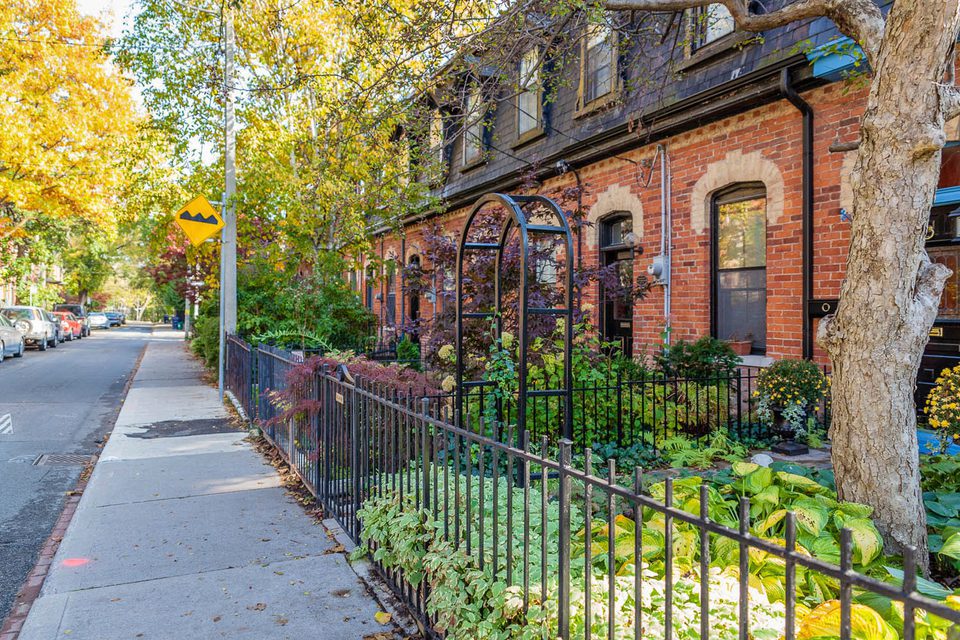
Cabbagetown – the village in the middle of the city. The “Thing” about Cabbagetown is it’s a small town in a big City. It has its own shopping area, park, schools and everyone knows their neighbour.

Restaurants are plentiful as well as ethnic diversity in food. I’ve decided to share some of my local favorites. Feel free to share your favourites in the comments, good food suggestions are always welcome!

HOUSE ON PARLIAMENT

Address: 454 Parliament St, Toronto, ON
Opening Hours: 11:30 – 02:00
houseonparliament.com

hop
Source: Facebook

Purveyors of Fine Fare, Libation & Diversion.

House on Parliament is one of the few places where you’re encouraged to dine with your bare hands. It actually says so on the menu, which is divided into four categories, according to the type of utensils the meal demands: Fork and Spoon, No Cutlery Needed, Utensils Optional, Silverware Required, Sweet Spoon.

The meal selection at HoP is what you would expect to find in a normal pub. What is more, Now magazine said House of Parliament serves the best pub food in Toronto. And I couldn’t agree more!

Source: Facebook
Source: Facebook

I work a lot of evenings, I am here for brunch or lunch at least once a week. I consider this place the original gastro pub! And in the summer, make sure you enjoy your meal on their top floor deck! Great outdoor eating experience!

And the vibe at the House on Parliament in perfect balance with the Cabbagetown neighbourhood – it’s quirky, artsy, historical, comfortable, and friendly. We’ve covered the restaurant before on Torontoism.com, so if you’re not convinced yet, don’t leave without reading our full-scale review here.

Source Facebook
Source Facebook

SALT & TOBACCO

Address: 521 Parliament St, Toronto, ON
Opening Hours: MON-THU, SUN 17:00-21:00, FRI-SAT 17:00-21:30
saltandtobacco.com

salt-and-tobacco-2Source: Salt & Tobacco

If you want to do something, like propose to the love of your life, and you aren’t into waiting for a seat then call us – we can work with you on that.

Salt & Tobacco is the newest addition to the Parliament food scene. The location is central, the food is excellent. They’re already famous for their great service and a welcoming and bright ambience.

One important thing to note, this restaurant is small and has limited seating, only a couple of benches. And because of their popularity, even their website says “you’re likely to be sharing a table when you arrive. Don’t worry, everybody is nice”. And you shouldn’t worry indeed. The seating allows for a very friendly atmosphere to enjoy their speciality pizzas.

salt-and-tobaccoSource: Salt & Tobacco

And as far as pizza goes, it doesn’t get better than Salt & Tobacco. The crust is like a super model – thin and crisp. Wash it down with craft beer or sparkling water on tap. It’s your choice, but do choose this place as it deserves your attention!

Salt and Tobacco Pizzas
Source: Salt & Tobacco

THE IRV GASTRO PUB

Address: 195 Carlton St, Toronto, ON
Opening Hours: MON-FRI 11:00-01:00, SAT-SUN 10:00-01:00
theirvpub.ca

Source Facebook
Source Facebook

All of our meat is locally raised without the use of any hormones and antibiotics. NEVER FROZEN.

Local is not only a word at Irv’s, but a commitment: “It is very important for us to give back, its not only a part of our business model but it is a part of who we are.” And you know a restaurant is serious about its ingredients when it uses caps lock to emphasize it.

I think the best description of this neighbourhood eatery would be “a great spot for relaxed eating of comfort food.”

Source Facebook
Source Facebook

The Irv Gastro Pub is a Cabbagetown favourite for its coziness, informal setting, sports broadcasting and overall friendly atmosphere. There’s no reason to believe otherwise when the place averages 4,5 on Yelp.

Their sandwiches alone do a great job promoting the chefs but don’t hesitate to come for brunch. Wash your meal down with local craft beer and craft cocktails.

Also, their patio is great. I must admit to being a patio sitter, and Irv has a really nice patio! I love the ambiance there and the street views.

patio-gastro

F’AMELIA

Address: 12 Amelia St, Toronto, ON
Opening Hours: MON-FRI 17:00-22:00, SAT-SUN 11:00-14:00, 17-22
famelia.com

famelia-exterior

Come and visit – your taste buds will thank you!

The great thing about big cities is their diversity and what it brings to the table. In F’Amelia’s case, it is Northern Italian cuisine and wine.

Located on the Amelia St in our lovely Cabbagetown, the name seems to hint at a playful combination that sounds like ‘Familia’ meaning family. The homelike place is praised for its service, wine and authentic food. Often times you will notice it is called a hidden gem. This is because Cabbagetown is one of those neighbourhoods that don’t feel busy, yet there’s no shortage of business.

fameliaSource: Facebook

F’Amelia accommodates their guests on the patio, or in the cozy interior.

And it’s always a good choice, for any occasion, whether you’re celebrating something, or you’re just in the mood for some delicious Italian food. They have wonderful bread, tasty Italian food and the atmosphere at the restaurant is Cabbagetown at its best.

Source Facebook
Source: Facebook

RASHNAA RESTAURANT

Address: 307 Wellesley St E, Toronto, ON
Opening Hours: MON-SUN 11:30-22:00
rashnaa.com

rashnaa-exterior

Rashnaa was first opened in 1990 in the heart of Cabbagetown, Toronto.

Almost three decades later and Rashnaa is still one of my neighbourhood favourites. Rashnaa means Tasty in Sanskrit, a language associated with India.

What is it you can find here? Spicy Indian and Sri Lankan meals. More than on the fancy interior, the place is focused on good quality dishes. Don’t worry, though, the ambience is very authentic even without overwhelming decorations. Less is more when it comes to this place!

Source: Facebook
Source: Facebook

Rashnaa offers Great Sri Lankan delicacies, but it’s not for the light eater. Make sure you have lots of water near you! Kothu Roti is one of the most popular dishes. If you have never had Sri Lankan food before I encourage you to try it here. They’re also a great choice for take-out or UberEats.

Source Just Eat
Source Just Eat

ML00ML

People of Toronto: Jennifer Keesmaat

04.12.17 | People of Toronto

Our city is a work in progress. Even before the new Crosstown LRT project peppered Eglinton Avenue with work sites, Toronto often felt like a lively, lived-in construction zone. But as chaotic as it can sometimes be, there is at least a little method to the madness. There is a Plan, and behind it, a whole department of city planners.

Jennifer Keesmaat came to the job of Chief Planner in 2012, after nearly a decade of private-sector urban planning that saw her help design – or in some cases, redesign –city spaces across the country.

Somewhere in between meetings, she found the time to answer a few questions about how Toronto is changing, and why.

Just to clarify things, what does the Planning Department actually have control over?

We have control over every part of the landscape of this city. It’s embedded in the Official Plan, and we write and maintain and recommend the Official Plan to City council. So for example, in the Official Plan, we have policies about affordable housing. We have policies about parks and open spaces. We have policies about the character and design of transit, as well as the design of streets and roads. And then we also have policies related to the built form and the uses of the city.

What’s your vision for Toronto?

The vision is contained in the Official Plan, and that’s a vision that I, you know, deeply believe in – passionately believe in. Essentially the vision is to create a city for all, that has vibrant and dynamic places for people to live, but also places for people to work and play. So there are policies related to culture, to employment, to housing, to parks and recreation.

Can you give me some examples of things you’re doing to achieve this vision?  

I just came from a meeting right now on the Lawrence-Allen neighbourhood, where we have a typical suburban social housing development – it’s a pretty large site, over a hundred acres –and we are deep into phase one, where we are adding main streets, density, market housing, new housing, and redesigning the streets for pedestrians.

So where the streets today are primarily for cars, we’re adding cycling lanes and sidewalks. We’re narrowing the streets to make them more urban. So that’s an example where the vision becomes very specific on one specific site, and I can give you hundred of those sites.

[fvplayer src=”https://www.youtube.com/watch?v=vp549gsdjnk” splash=”https://torontoism.com//images/2017/04/Screen-Shot-2017-04-12-at-11.12.55.png” caption=”Walk to School: Jennifer Keesmaat at TEDxRegina”]


You’re talking about redesigning streets meant for cars, but the city right now seems full of cars – what do you see as the correct role for cars in Toronto?

It’s important to note that we keep adding people, but we don’t keep adding cars. We’ve been adding to the region 100,000 people on an annual basis, but we haven’t been adding any more cars for over thirty years to our road network. It’s been at capacity for thirty years.

The role of cars is going to change over time, as we’re already going through a shift because of things like Uber and Lyft, and we’ll go through another shift with autonomous vehicles. And the best role for the car in the city is to play – not a primary function, but a supportive function. Meaning that when there are instances where it’s not possible to get where you’re going on transit, or when you have the last mile challenge – the last mile of a trip, needing to get from transit – those are the opportunities where a car can play an important role.

How do you get people to shift to using cars in this limited way?

The first thing you need is, you need to have options. So one of the challenges in our suburbs in many areas is there aren’t a lot of options. The only way to get from point A to point B is in a car. So this is why we’ve created a really comprehensive transit network plan because we need to fill the gaps in our transit network so that people have the choice. But it’s also the reason why we’re focusing on the intensification of our avenues. Because you need to add destinations within walking distance.

And of course, we’re building our ten-year cycling plan because we know that over 75 per cent of the trips in the city of Toronto is within five kilometres from home, and five kilometres is obviously an easily bikeable distance. So adding cycling lanes is also about providing more choices.

‘Walkability’ is a big deal in Toronto planning these days. What other factors enhance walkability, aside from sidewalks?

There’s sidewalks, but also the design of buildings. If you think about walking on a sidewalk, beside a Walmart, for example, you have a big blank wall. You know, the wind is going to hit that building and be driven down and is going to make it a very uncomfortable place for you.

So, the design of buildings is one of the factors. Bringing buildings up and creating a street edge is a really important part of walkable communities. And making sure that the destinations are in close proximity to one another; a really important part of creating a walkable city is actually how land uses are planned and designed.

You’ve worked on urban planning projects all over Canada. What makes Toronto distinctive from a planning point of view?

Well, the first thing that makes it distinctive is our astronomical growth. We’re just adding so many people on an annual basis. But the other piece that makes it distinctive is that Toronto is truly a city of neighbourhoods, and people already live in neighbourhoods and do undertake many activities associated with everyday life in their neighbourhood.

Another thing that makes Toronto really distinctive is that we are a city of extremes because we’re both regional and we’re urban, as a result of amalgamation. So if you compare downtown Toronto to the city of Vancouver – which is actually a good comparison because Vancouver is not amalgamated as part of the region – we have some pretty phenomenal stats around our success in the downtown core. 75 per cent of the population living in the downtown – which is a population of 250,000 people and it’s going to double over the next twenty years – either walks, cycles, or takes transit to work. That’s on an international scale a real success.

What about the divide between urban and suburban that we’ve seen in the last few municipal elections?

I’m not sure how much of that is a construct of the media and how much is real. I think people across the city want the same thing; they want to live in safe communities. We already know – there’s great research that’s been undertaken – that people want destinations within walking distance of home. They want to live in walkable communities. People want great transit across the entire city. People want excellent public spaces across the entire city. People want affordable housing across the city.

The term ‘liveability’ gets used a lot when it comes to Toronto. What does it mean to you’?

If you don’t have employment, it’s not very liveable. If you don’t have stable housing, it’s not very liveable. You need access to green space – in a city, even more so than if you were living in other places. So access to green space, to parks, to ravines, to nature, is a critical part of liveability.

I would argue that, for reasons that are almost incomprehensible, an entire generation has bought into the idea that a long commute is acceptable. And I would argue that it’s not. It’s not liveable. The average person in Toronto – the Average – commutes 45 minutes each way. That’s an hour and a half every day. The idea that we’ve normalized this as being a normal part of everyday life as opposed to being a last resort I think demonstrates how far we’ve come from really believing in the idea of liveability.

Liveability inherently means having the opportunity to choose to live close to where you work and where you undertake the activities of everyday life, as opposed to being trapped in a car, or trapped by a long commute, because that long commute can also happen on transit.”

You’ve said that access to nature is a key component of liveability. Obviously, this means not paving over parks and ravines, but what other, less obvious things can you do, as a city planner, to design a more nature-friendly city?

Our Ravine Strategy is a key component of this. We need to protect the ecological functions of the ravine system and invest in making it function better – enhancing water flows, adding better infrastructure (like stairs, bridges and boardwalks) to get into the ravines and to walk through them, without disturbing their important ecological functions.

Our Green Infrastructure Unit is also working on taking back ‘unused parts of the roadway to reclaim this space for the public and for storm water management. See Raindrop Plaza Park, the new public gathering space at the north-west corner of Dundas and Coxwell for example. The permeable paving and rain gardens at this park will be directing storm water runoff from Coxwell Avenue to soil stored below plaza, which will water the newly planted trees and also eliminate basement flooding in the surrounding areas.

Can you give me a few examples of city planning for our growing senior population?

The most important thing we can do for our senior’s population is to plan walkable, complete communities with amenities that are close to home, that foster a strong sense of neighbourhood. Our infill projects on our Avenues are about providing more housing choice, and ensuring that we have all of the uses in every neighbourhood to make them complete.

What can we learn from other cities?

New York City is doing an amazing job right now at building affordable housing; they’re building 20,000 units of affordable housing on an annual basis. And they have done an amazing job of creating – back in the 70’s, actually – excellent rental housing that has been protected, and as a result, the vast majority of the population lives in rental housing.

I think as Toronto matures, we’re going to need a significant increase in the rental stock of housing in the city, as an affordable housing choice. It’s difficult to look at a lot of Asian cities, because they’re just growing at such an astronomical rate, but of course, when you look at transit, they do transit in a very aggressive way, and there’s probably some lessons we can learn from that, because we’re very slow at developing our transit infrastructure.

In terms of becoming more people oriented in our design, Copenhagen is a very good example of a city that has focused on – over the course of the past thirty years – transitioning from really being a city that primarily moved people in cars, to being a city that now primarily moves people on bikes. So there are different things that we can learn from different cities around the world.

JN00ML

Can You Sell a Condo In The Pre-Construction Phase? Yes, But…

04.6.17 | Business

Condos have become a part of Toronto life. They’re as omnipresent as the CN Tower or signal problems on the TTC. Between 2012 and the end of 2016, 683 projects were completed, boasting 91,855 units.

For many people, buying a condo is the only way to break into the housing market. Most folks will become acquainted with the real estate process through purchasing their first condominium: the hunt, the offer, the contracts, and all the other minutiae that go into buying a home.

But there’s one aspect of the process that may be less familiar to many people: Assignment purchases.

Essentially, an assignment purchase is when someone pays for a pre-construction condo unit and then sells the deed to the property before it’s registered.

A Complicated Matter

“They’re a little more complicated,” explains Jim Burtnick, a member of the Torontoism team for Sotheby’s International Realty. “What you’re doing is selling someone your agreement of purchase and sale. The idea is to sell it for more than your purchase price.”

The person selling the agreement is referred to as the assignor and the person buying is known as the assignee.

Burtnick says he’s done a few assignment sales in his career, but because of their complicated nature, they aren’t very common. He guesses the number is somewhere around 5 to 10 per cent of total condo sales in the city.

There’s basically three people involved. So you’ve got the assignor, who’s the person selling it. You’ve got the assignee, the person who’s buying it. And you’ve got the developer agreeing to allow the assignment to take place.

He says that, from the developer’s point of view, it doesn’t make sense to let the original purchaser sell their contract. If the assignee backs out of the deal then the builder is on the hook.

They don’t want to have to go and chase somebody new to close on it. So it’s keeping everybody in limbo. The assignor selling the unit is not going to get paid until the assignee actually closes on it, and it’s a bit of a domino effect.

assignment1

Speculation

Still, the fact that it’s complicated won’t stop people from trying to make money off assignment sales. Burtnick says there is a tendency to speculate in the new-construction market. That’s when people buy pre-construction and sell it before the move-in date in the hopes of making a profit. Because the market in Toronto has been on an upward curve for a number of years, people are trying to take advantage of that.

For example, you don’t pay the full $500,000 price of a property upfront, you pay $100,000. If you can turn around and make an assignment sale you could potentially make another $100,000, doubling your investment.

The Benefits

There’s the tendency to think speculation would raise condo prices, but Burtnick doesn’t see it that way. “It’s a reality of the market. I wouldn’t say it’s a problem because in many respects what it’s doing is fast forwarding the project to get completed,” he says.

He explains that builders need to sell 75 per cent of their inventory before they can get financing from a bank. Speculating speeds up the process by guaranteeing those buildings are sold.

If these people weren’t in the market as speculators. It could take years to sell a project and consequently delay that supply getting to the market. And right now, our biggest problem in this city and the GTA in general is a lack of supply.

Beyond an expedited build, assignment purchases offer other benefits. For the buyer – or assignee – they don’t have to wait four or five years to move in, according to Burtnick.

Usually, when an assignment happens it’s very close to the registration. The building’s built.

assignment2

Why Do They Happen?

Speculation isn’t the only reason for assignment purchases though. Priorities change over time. Three or four years is a long time to wait between putting down an initial deposit and actually taking possession of the unit.

Burtnick points out that it’s not uncommon to be living a different life in a four-year time span. A single person who buys a condo, years down the road, could be married with a child.

And guess what? The condos not going to work for them anymore. Their lifestyle’s changed. But the person who’s going to get it is going to be moving in relatively quickly and it’s a brand new unit.

Ultimately, assignment purchases can benefit everyone involved. For the seller, it’s an opportunity to make some money on investment or unload a property that no longer makes sense. For the buyer, they don’t have to wait to move in but get the bonus of buying a new property.

Burtnick compares it to buying a new car.

There’s a peace of mind getting something brand new. It’s like a car warranty. As opposed to getting a used car where you take your chances with it.

TT00ML

Shopping for Mortgages: Millennials versus Baby Boomers

03.24.17 | Lifestyle

Members of various demographic groups shop for mortgages in different ways. Do the contrasts in the way the baby boomers and the millennials shop for mortgages tell us something about modern home buying? You bet.

A pair of mortgage professionals recently took the time to chat about the way Canadians of different generations think debt and mortgages. The younger of the pair, Harry McCallum is a mortgage agent with SafeBridge Financial Corporation. As a twenty-something, he self-identifies as a millennial. He’s noticed generalities about how it is his peer group shops for a mortgage.

They do definitely shop a bit differently. You’ll see a lot of online research. A lot of the people will say, ‘I was researching on ratehub.com. I was looking online and found this rate posted. Can you match that?’

Millennials

millennials

Their first step for any purchase is to go online and do some research before they talk to anyone. McCallum calls them smart shoppers:

Millennials are definitely online and shopping around. They seem to be visiting more than one person. Many of the people I talk to say they come as a result of a referral from a realtor. Or they’ll shoot me an email and say they’ve already spoken with another broker and their bank. And then they’ll come back and ask what I can do for them.

Today millennials number over 9 million in Canada, or 27% of the population, and 80 million in the United States.

This makes them the single largest demographic on the North American continent. The leading edge of this demographic are now in their middle thirties. They’re just now coming into the home-buying years. Compared to Gen X and baby boomers millennials have had a tough time financially. They graduated with more debt than any other generation. Many entered the job market as the Great Recession of 2008 settled in. That means they are careful about who they give their business too.

One trait of millennials according to marketing experts is that they look for institutions they can trust. They don’t fall for marketing gimmicks. They poll peers and reference crowd-sourced rating sites in a search for organizations that have built up a good reputation among clients. The glitzy advertising bounces off their net-informed psyches. They want to see real value in their service provider. To that end, McCallum talks up the benefits a mortgage broker can provide.

As mortgage brokers, we definitely need to find a way to add some value. Mortgage rates are what they are. You need to distinguish yourself through a ‘value add’.

To do that he takes the time to walk a client through the mortgage buying process, and then stays in contact after the sale is complete, which is not always the case with a mortgage rep at one of the Big Five Canadian banks.

At the end of the day, I want to educate and advise. I’m not just selling them a product. I’m educating the client and helping them through the process. I’m explaining the pros and cons…and I keep contact with them after. Generally I’d like to be in contact five or six times over the course of the mortgage.

millnnial2

Having dealt with many millennials during his time in the business he has also noted the mistakes those in his peer group make. Online savvy aside, some in the younger generation overweight the magic of online searches. They end up focusing only on posted rates. They end up overlooking key pieces of the larger puzzle.

Sometimes they’ll miss one important detail. They often don’t realize that only the very best credits get the lowest rate posted by a bank. Only 1 per cent of people can get that lowest rate. Most millennials will be first-time home buyers and they won’t get that rate. They have to be educated about that.

There is a learning curve when it comes to shopping for a mortgage. That is, it’s about more than just a rate. As McCallum puts it, “the lowest rate might not be the best for you.” It helps to understand that a bank or among online lender structure penalties in different ways if a mortgage is broken.

If you’re in a fixed mortgage and you have to break it you might have to give three months interest or make a payment that makes up for the interest rate differential. If rates have gone down, you’ll pay the differential. And when the banks calculate that differential they use the posted rate, not the discounted rate that you’ve been paying. That makes the penalty go up substantially.

It’s a detail only a mortgage shopper that has sat down with a professional will understand.

A monoline like M-CAP will use the contract rate to calculate the cancellation fee. That can save you $10,000 if you have to break the mortgage. That’s one of the things that the banks won’t do. These are the tricks that a mortgage broker knows.

The Boomers

boomers

How do the millennials compare to the way baby boomers shop for a mortgage? David Smith, a director of Oriana Financial Group of Canada Ltd., identifies with his peer group, the baby boomers, those born in the late 1940s and ’50s. This generation has dominated the post-war economy in Canada (even if they are now outnumbered by millennials). They have a slightly different approach to mortgage shopping.

It’s true millennial do a lot more research. They’re used to using the internet for everything. I would say they are smart shoppers that way. They aren’t going into it blind. But baby boomers are not like that. Boomers will go to the net for information. But they tend to still want to sit down and talk to someone about their situation.

Smith says this different approach to mortgage shopping goes back to their formative experiences that formed their attitudes toward debt. The lessons passed along from their parents have stuck with them.

Boomers grew up with Great Depression-era parents. For that generation – that Bob Hope era – owing money was a social stigma. They grew up in plenty but under a heritage of thrift. Among boomers, the number of gifted down payments was almost nil. They had to save that money themselves. We couldn’t ask those tight wads for help in that era, they were so worried about their money.

Of course, attitudes have changed since those days, Smith notes that now we have the millennials, who get to borrow money cheaply and are typically gifted down payment. He also notes that 48% of first home buyers get some sort of family assistance.

Millennials moving into real estate have had it kind of easier. Their jobs may be less fulfilling, but rates are lower and they’re getting help…They are coming in with a certain amount of privilege. It’s not say they are impulsive, but it’s not the attitude toward debt the last generation had. This generation is not scared of debt like the boomers were.

Smith worries like McCallum does that millennials rely too much on their online searches, and so overlook the benefits of real advice.

There are questions about mortgages that, if you’re banging around out there on the net all by yourself, you are not going to be aware of. Can your mortgage broker help if you lose your job? There are remedies for that. You don’t know what questions to ask beyond price. And that’s a very important point. You’re making the biggest financial decision of your life and so to disregard anyone with advice on that because you have an app on your smartphone… that can be dangerous.

We’ve been encouraged by credit cards to take on debt. And maybe this is the real difference between generations. Millennials have grown up in an era of low-interest rates. They’ve grown up in a world of long-term artificial low rates. And so they take on huge amounts of debt and are okay with paying on that. But boomers came of age in an era of high-interest rates and so they tend to save and invest. The changes in attitudes toward debt may have consequences for the younger generation according to Smith.

stencil

Sitting down with an expert who can take someone through the various mortgage products (especially in an era when it seems the interest rate may be set to rise) is an important part of the process.

Smith is of the opinion boomers were more cautious and more respectful of those more knowledgeable.

There is real difference between generations. It’s a consequence of the information age I suppose. The millennials haven’t learned the difference between knowledge and understanding. They haven’t learned that while they can get information about price online, they won’t find value. There is a difference between price and value, and between information and wisdom.

SJ00ML

People of Toronto: Shawn Micallef

03.14.17 | People of Toronto

It was incredibly appropriate that when I called to interview him, Shawn Micallef – journalist, author, university lecturer, and perpetual pedestrian explorer of Toronto – was about to head out for a walk.

ShawnMicallef

Wandering around Toronto’s byways is, after all, one of the things that Micallef is known for; since he moved here in 2000, he has walked the city, tweeted about the city, and written about it extensively in his weekly column for the Toronto Star. Three of Micallef’s four published books – Stroll: Psychogeographical Walking Tours of Toronto, Full Frontal TO, and just this year, Frontier City: Toronto on the Verge of Greatness – are meditations on aspects of Toronto, while their author is both a co-owner and senior editor at the city-centred Spacing Magazine.

Shawn teaches at the University of Toronto and OCAD University. In 2002 he co-founded [murmur], the location-based mobile phone documentary project that has spread to over 20 cities globally. 

Follow him on Twitter.

You’ve been referred to as a modern flâneur– a term usually associated with 19th-century gentlemen leisurely strolling the streets of Paris. What do you think of the title?

“It’s a funny word because maybe it’s not something you want to put on your resume. It’s about being idle and being a bit of a professional loafer, lingering around cities, and just sort of observing; slowing down and watching, being a part of the crowd, but not lost in it.

The way I think of it is, a flâneur wanders through the crowd – you’re part of it, you’re overhearing it, but you always have your mind’s eye floating up high above. You’re watching how you and the crowd kind of all interact together. It’s a good position to be in as a writer.”

Have you always been interested in how cities work?

“I think so. I grew up in Windsor, and we looked across the river to Detroit – a fascinating place. We had kind of this front-row view for the decline of Detroit. I was a kid of the 70s, growing up in the 80s watching it kind of bottom out, and then sort of rebound, as it has in the last few years. Once I was old enough to drive and in university, we would go to Detroit weekly.

But then I always wanted to move to our city, the Canadian city of the 401, which is Toronto. I always had this kind of mild Toronto obsession. I think it was because of growing up in a small city –which I’m very fond of – and looking at these bigger cities; Detroit across the lake, kind of collapsing and decaying, and Toronto, which was sort of the opposite of that. It was growing kind of like a circuit board when you come in on the Gardiner Expressway. Things are going up all the time. I think being not-from-a-big city has made me fascinated with big cities.”

Your latest book is called Frontier City: Toronto on the Verge of Greatness. What is this greatness, and how do we go about achieving it?

“Well, all the ingredients are here, right? It’s a prosperous city, especially if you live in and around downtown, with skyscrapers going up everywhere, and these neighbourhoods that are beloved and constantly being written about – you know, like, the New York Times, the Guardian, ‘Coolest Neighbourhoods’: the Junction, Queen West, Leslieville, etcetera. So if you live in it, you get to see quite a great place.

But as I talk about in the book, the upshot of going through the Rob Ford years and beyond is that we’re reminded, or just schooled, in the fact that there are vast amounts of Toronto that felt left out of that prosperity, and they didn’t get to experience the kind of joy of Toronto. Instead, there’s the idea that living in the city is a chore, and it’s hard to make it here, increasingly for them, and the inequality of cities is increasing as multiple studies are showing.

And if we don’t get on that, if we don’t figure that out, a populist politician like Rob Ford can easily be elected again, and the greatness – the things I love about living in this city, and a lot of people love, the stuff we’ve often written about in Spacing magazine – won’t be available to an increasing number of people.

So that is, I think, the greatness. If we don’t bring this great joy of living in Toronto to everyone or make it available to everyone, it will be thwarted.”

toronto3

What are some of the joys of living in Toronto?

“I think part of it is that you can get to the country. I live near Yonge and Bloor, and within ten minutes I can go for a run and be in the ravines and run into deer and coyote, and then ten minutes later I’m back up on Yonge street at a Starbucks, post run. I think one of the great things about Toronto that so many other cities wish they had is just the benefit of the geography of blending wilderness, or quasi-wilderness in with the city.

The ravine network goes all the way out to the far suburbs, and that proximity is really wonderful. And the fact that the city that’s often adjacent to the ravines is kind of everything you want in a city at first blush.

And then, you know the mixed, communities; people can do everything that they need to do within their own neighbourhoods – it’s a city of neighbourhoods, as has been celebrated. But also just the people that are here, and the people that are coming to the place create a culture that is exciting. You can always find something to do. You can find your niche, your subculture.”

Going back to your book, didn’t the idea for Frontier City spring from the last two municipal elections?

“It was kind of pitched to me by the publisher at the height of the Rob Ford trauma in 2014, soon after he appeared on Jimmy Kimmel. It was like this international thing. They [the publishers] thought ‘we could do a book about this’.

And as I started it became apparent that the details of Rob Ford were all being told – we know it, right? We know the salacious details. So the more interesting, compelling story seemed to be ‘Why?’ What was it about this city that – it’s a learned city; four universities and many other colleges, endless studies and reports and books about the city – a smart place, and yet it elected this guy.

That’s where the thing kind of shifted from being an of-the-moment book about Rob Ford to trying to figure out an understanding of the people and geography of this place.”

But what is the frontier in the book’s title?

“I think the frontier can be interpreted in a couple ways. Maybe it’s downtown and suburb – which was such a wedge issue during the Ford years (and maybe even now) – but also just the frontier between Toronto being a city that happened somewhat accidentally, despite itself. It was never supposed to be a great city.

Montreal was Canada’s great city. And you walk through Montreal and you can see these grand buildings, whereas if you walk in Toronto we’ve got good buildings, but also kind of a sense of suburban-ness, shabbiness, often built on the cheap.

So the frontier is that the city is, maybe, a teenager. Sometimes it’s awkward, sometimes it acts out and you don’t want to see it, but its potential is all there, and the future – if it gets it right, if it gets into the right school – it’ll be a great future. But teenage years – frontier years – are incredibly thrilling. We’re lucky to live in them, but maybe we don’t want to repeat them.”

toronto1

Now that you mentioned grand architecture, your writing often seems to be infused with a sense of history, or even myth. Is this intentional?

“Yeah, I totally try to sneak history in. The other things I try to sneak in are social justice issues if it’s a fun column, or like, a happier column. Sometimes it’s architectural appreciation. I don’t write straight-up architecture columns, but I try to sneak them in so people who think they don’t care about architecture and never thought about it might kind of come around to it. So there’s a certain sneakiness I think, in all of this kind of writing.

Why are you sneaking this stuff into your writing? What’s the point?

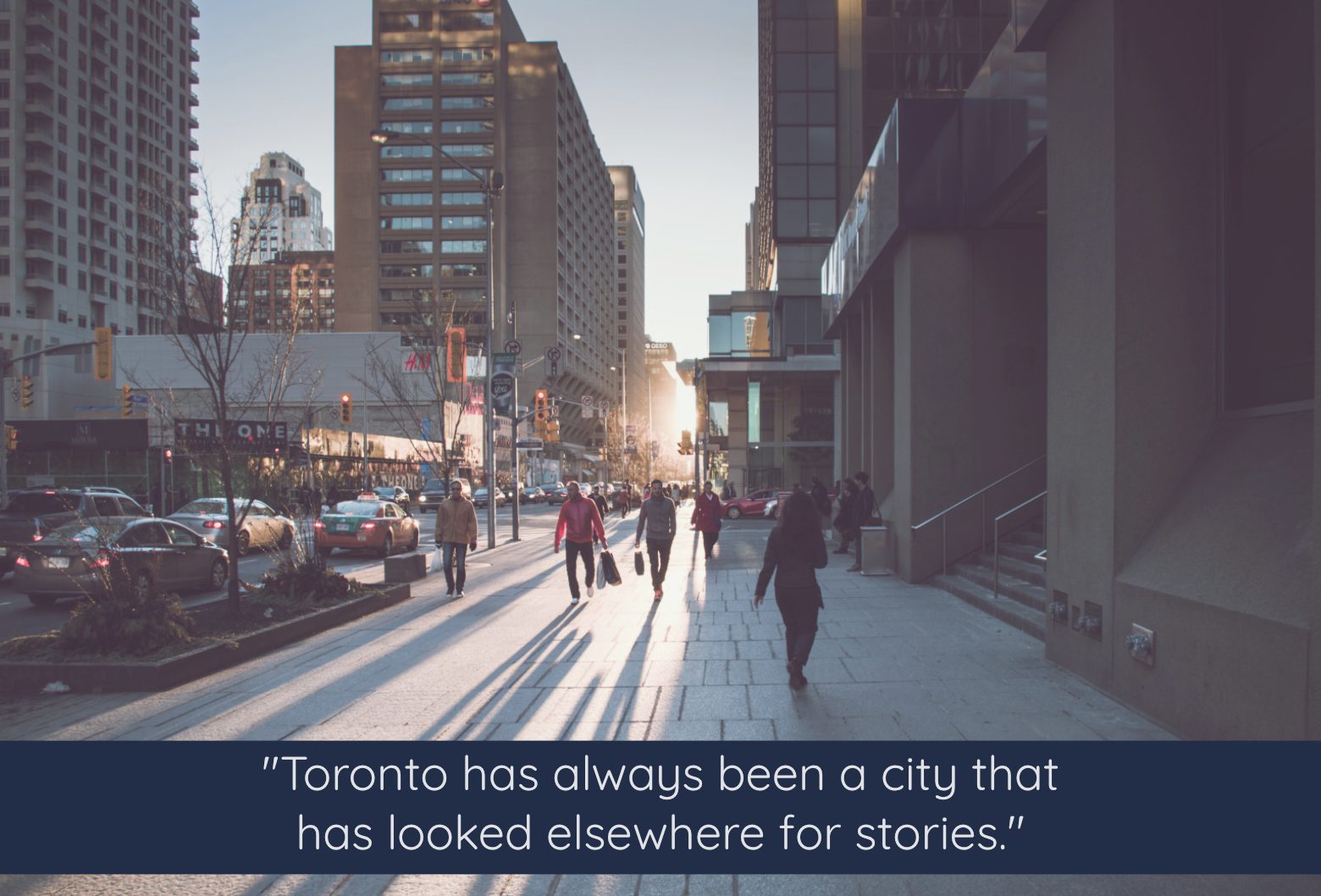
“Because if people don’t have this kind of founding idea of themselves, they won’t care about the place. Toronto has always been a city that has looked elsewhere for stories. You walk around the city and everything’s named after some dead British guy. Maybe a couple Irish guys too.

I’m walking on Richmond street – I think it’s named after the Duke of Richmond. There’s Queen’s Park. King street. Queen street. All these references to take people out of the local and to someplace else. And we’ve sort of become this de facto colony of America, looking to the south.

Think of all the movies we shoot here, and Toronto never gets to play itself; it’s always playing New York or Chicago or some other city. Whereas New Yorkers have this innate sense of themselves. Even my mom in Windsor – if I said something like ‘the Lower East Side of Manhattan’ I think she would kind of have an idea that that’s where punk rock came from. Even though my mom is not into Punk Rock at all. Right? The mythology of it kind of comes out.

Whereas Toronto – and probably Canadians in general – we have not been good at telling our urban stories. The stories inform who we are, so we haven’t had that kind of base knowledge of ourselves. Which leads to not appreciating the city, and overlooking the great things that we have here.”

This reminds me a bit of [murmur], the urban oral history project you did back in 2002.

“Yeah, that WAS basically the motivation for doing [murmur]. It’s having small stories, instead of grand narratives such as the Leafs winning in 1893 – or whenever the last time they won. It’s small, everyday stories pulled from non-professional storytellers.

It would be like walking down the street with your uncle who lived in Toronto. You’re visiting your uncle in Toronto and he tells you about his Toronto. Sometimes it’s personal history and sometimes it’s the city’s history that he knows, but always sort of on this personal level.

And I just wanted to trickle those out onto the streets of Toronto as a way of helping along the founding mythology of the city. And making it more complex. Sometimes the story of Toronto – the official story – tended to be a little more white, a little more British and queen and king and that sort of thing, when there are a lot of sub-stories that are part of that, but different. I wanted people to learn those sub-stories as well, which was the point of [murmur].”

toronto2

In addition to your books, projects and running an online magazine, you’re also teaching some classes at the University of Toronto? What kind of classes?

“I teach one course at U of T all year called Citizenship and the Canadian City, and one I was marking this morning called Blogging the Just City. It’s getting students to write about Toronto but through a social justice lens. So, homelessness, inequality, untold history. Unrepresented history is one of the things we talk about. Whose history gets told in Toronto, and whose doesn’t?”

And what do you teach in the Citizenship and the Canadian city class?

“This is a class about city citizenship, so it’s not national citizenship – it’s not like, getting a passport or swearing allegiance to the crown, or the Queen, or whatever. What are the obligations of a person living in a city? Do you have to love the city? Should you hold a door open for people? Should you stoop and scoop if you have a dog? Kind of everyday things.

It’s a citizenship of the everyday, and a commitment to the place you live in, to do whatever you can to make it a little better. It’s a big, broad umbrella, but I try to discuss that throughout – when we talk about the problems, and the great glory of living in a city.

What can people give back to it, in various different ways? I don’t want students to do what I did – I was oblivious to the city for so long. I want them to think that they CAN make this place better.”

[fvplayer src=”https://www.youtube.com/watch?v=b6wEHg0fwHo” width=”625″ height=”300″ align=”left” caption=”Shawn Micallef at TedEX Toronto” splash=”https://i.ytimg.com/vi/b6wEHg0fwHo/maxresdefault.jpg”]

Any idea what’s next for you?

“A project about Canadian cities, talking about ‘is there a Canadian urbanism?’ Is there something about Canadian cities which seem by-and-large successful (although many cities are experiencing the same kind of inequality and pressures that Toronto has and Rob Ford could be elected in any of them)? So maybe there’s something worth sharing, something worth talking about.

But also, I wonder if talking about Canadian cities – getting Canadians to think about themselves as city dwellers, because 80 percent of us live in cities – maybe that might overcome some of the regionalism that Canada’s been plagued with. You know, East vs. West, and that sort of thing.

And none of this has to be at odds with the countryside. I think town and country need each other – sometimes that relationship is a bit thrown out of whack, but I think getting excited about beyond Toronto is what I’m looking forward to next.”

JN00ML

China, UK, & US: How do their real estate markets differ from Canada’s?

03.10.17 | Business

Our world is becoming increasingly globalised. As a result, traditional employment for many people has become less reliable and more people are looking to other countries for opportunities.

A 2010 report by the Asia Pacific Foundation of Canada (the most recent date for which data is available) found there were 2.8 million Canadians living abroad, a higher population than exists in six of the country’s provinces. With so many Canadians deciding to live abroad we decided to look at some of the differences in real estate markets and processes in the world’s biggest markets.

Buying properties in different countries has a number of benefits. If you have the capital, it can be a good way to diversify and protect your investments. Richard Silver says it’s both:

I think people who are high-net-worth like to have properties all over the world for a couple of reasons. Both for investment, but also to diversify their portfolio. I think they’re often nervous about having all of their property and investments in one country.

Down South

US

Most Canadians who leave the country live in the United States. Luckily for anyone looking to buy property while living there, the processes are remarkably similar.

Canadians base their mortgages on a 25-30 year amortization rate, with the contract renegotiation every five years, adds Silver. Whereas in the United States, the mortgage lasts for 30 years without a renegotiation.

There’s also a thing in the States where you can deduct your mortgage interest payments but you cannot in Canada.

Applying for a mortgage as a Canadian will likely be more tedious. To apply for and secure a mortgage in the U.S. can take up to 45 days. Still, buying property south of the border may be a good investment. Particularly when you look at data released by BMO last year showing Canadian homes were 41 percent more expensive than in the U.S.

Over the Pond

Gazumping

For anyone thinking about hopping the pond to the United Kingdom, it’s advised to do your homework as the process there is quite different.

As Silver points out, one of the biggest differences is that they don’t use a multiple listings system in the U.K.

If you’re working with an agent in the United States and Canada, they can basically show you a whole myriad of properties that are listed with Sotheby’s, they’re listed with Royal Lepage, they’re listed with Bosley. They’re listed with all different companies. But then in the UK, if you see a sign you have to go to that agent. And if you want to buy that property you have to buy it through the agent.

Sherille Layton is originally from England, so she’s intimately aware of the differences between the two countries. Layton says on a recent trip to London, she and Richard gave some presentations on Toronto and the market there and the people at the London branch were impressed.

Layton calls the U.K. system “archaic” as she talks about the differences.

It’s not as organized at all. Because the difference is, to do real estate there you don’t pass any exams, you can just come out of school at 16, walk into an estate agency and get a job and then start showing houses.

The buying process is entirely different as well according to Layton. In Canada, a client usually needs to sign a ‘buyer representation agreement.’ When they find a house they want to put an offer on, they have to sign an ‘agreement of purchase and sale,’ which gives them a finite closing date.

In England, an agreement can be made verbally, which makes things much less clear.

So if you put an offer in and they accept it, one month later they can turn around and say someone else came and they’re giving 5 thousand pounds more. You just never know when you’re going to close until you close. It’s crazy.

Richard Silver agrees with Sherille and adds how much more comfortable the process is in Canada thanks to formal agreements.

[In Canada], once you’ve signed an agreement a contract is a contract. But in the UK they have what they call ‘Gazumping’.

Gazumping is when the seller raises the contracted price of a property after having informally accepted a lower offer from a potential buyer.

Commission structure for agents is also very different. According to Layton, Agents in Britain think our commission structure is outrageous. The commission in Canada is often five percent, split between the selling agent and buying agent. In the UK, a seller will typically pay their agent 1 to 1.5 percent. Another difference, according to Layton, is that most salespeople are paid by salary.

Realtors in Canada are mostly on a hundred percent commission. They’re “independent contractors”.

China

China

China recently relaxed restrictions on foreigners buying property in the country. The move enables “qualified foreign institutional and individual investors to buy more properties on the Chinese mainland,” according to ChinaDaily.com.

Previously, foreigners were restricted to buying one property in mainland China and needed to have worked or studied in the country for at least a year.

But as Richard Silver points out, no one actually owns property in the country.

The problem with China is the government owns the property, so you only get a leasehold. You don’t actually buy the property. So even the property owners, as they call them, are really either a 50-year leaseholder or a 70-year leaseholder.

After the lease ends the property reverts back to government ownership.

In larger cities like Beijing and Shanghai, there are also limits on the number of properties an individual can buy. These were put in place to prevent wild speculation after an incident in 2009. A high-end property was launched in central Shanghai, bringing a wave of foreign investors. According to a report by Xinhua, one extended family purchased 48 units at one time. Properties are most sought after in gateway cities like Beijing and Shanghai, but these limits will put the brakes on speculation.

These new rules don’t mean it will necessarily be easier to buy property, though. The usual process is to pay for a property in full. Mortgages can be obtained by foreigners from Chinese banks, but the documentation process is more arduous. In order for a foreign buyer to qualify, you must:

  • Have worked or studied in the city you wish to buy in for at least one year.
  • Must have a Chinese sponsor who will guarantee you earn enough to repay the loan. Usually an employer.
  • Provide many documents for the approval process.

That said while buying property in China might be possible as a foreigner, in might not be a wise investment. As Silver points out, many people in China are parking their money elsewhere in the world.

You have to remember, China’s a communist country. It’s totally autocratic, So that’s one of the reasons people would move their money out of China. Because they’re nervous that the government can come in and just automatically change the rules.

Buying property in different countries can be a very effective way to diversify your investments. It also leaves you free to travel and can offer you extra income. But whether it’s a country like the United States–where the system is relatively similar to Canada–or a country like Britain or China–where the system can be much different–, it’s important to know the facts. 

TT00ML